

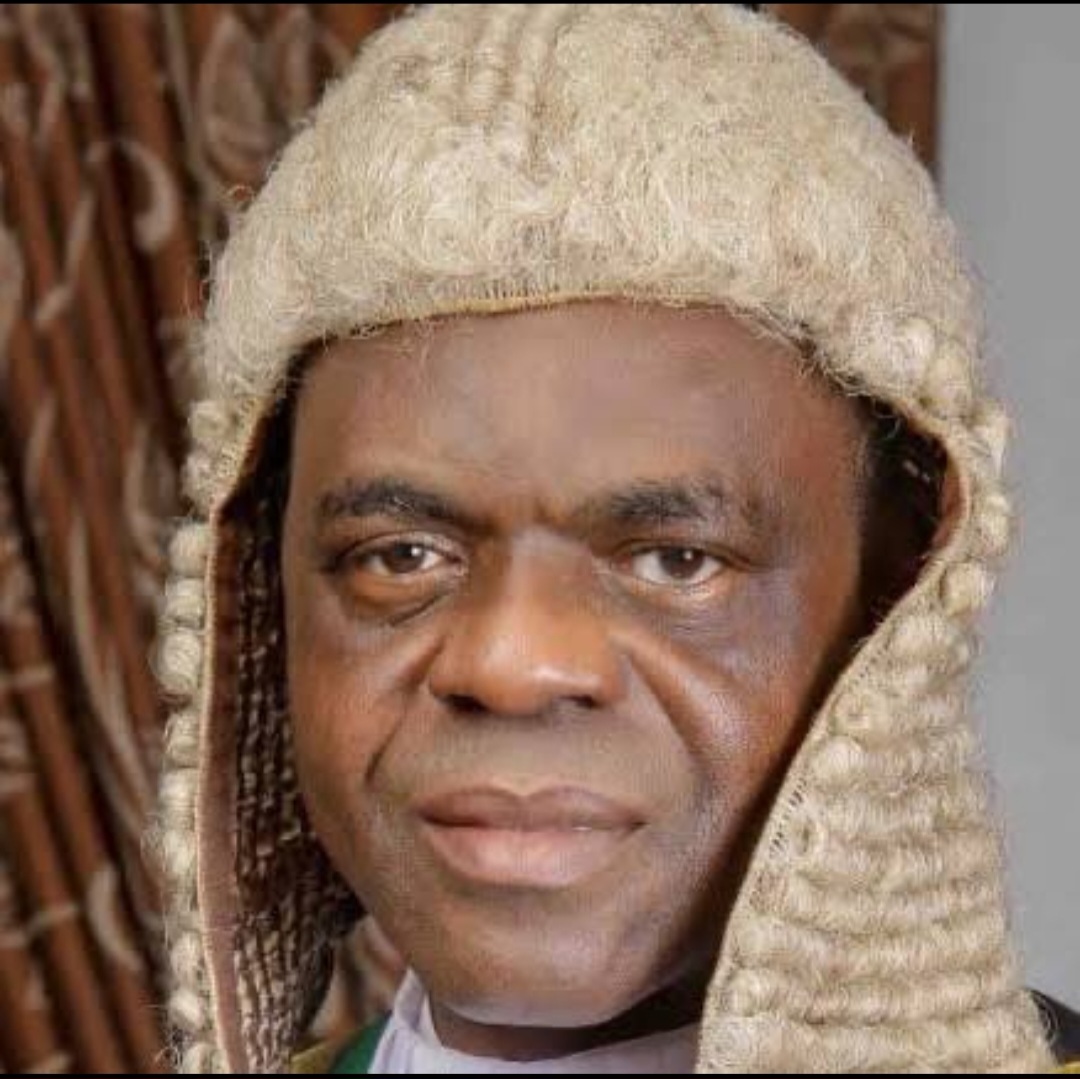

The judgment delivered by Justice Uche Agomoh of the Federal High Court, Ibadan, was not just a ruling; it was a creative writing exercise. One part law, one part prophecy, and one part political consultancy—served with the confidence of someone who believes jurisdiction includes imagination.
On the surface, the case was a mundane PDP quarrel, the sort Nigerian courts see before breakfast. But what emerged from Ibadan was something far more ambitious: a judgment that generously donated reliefs nobody asked for, on issues nobody raised, about structures that did not even exist at the time of filing. If courts now give out unsolicited remedies, INEC should start bringing Christmas hampers.
Let’s start with the small matter of issues before the court. When the suit was filed, there was no National Caretaker Committee in existence. None. Zero. Zilch. It had not been contemplated, discussed, whispered about, or leaked to bloggers. Yet the judgment pronounced authoritatively on its legality. This is judicial clairvoyance. The Federal High Court has apparently acquired time-travel powers.
In law school they taught us that courts do not grant reliefs not sought. In Ibadan, however, the court appears to have adopted a buffet system: come for mandamus, leave with party restructuring, leadership overhaul, and a side of internal administration. Eat all you can. No prayers required.
The actual relief before the court was painfully narrow: an order of mandamus compelling INEC to list the Turaki-led PDP on its portal. That was it. No counterclaim. No ancillary reliefs. No invitation to redesign the PDP’s leadership architecture. Even when the Anyanwu/Wike faction joined, their argument was equally modest: “Please don’t grant mandamus.” Nobody said, “My Lord, while you’re at it, could you also reorganise the party and issue management advice?”
But the judgment went there anyway. Because why not? If you’re already on the pitch, might as well referee, play striker, and sell gala in the stands.
Then there is the small procedural nuisance known as abuse of court process. The same applicants had earlier approached Justice Joyce Abdulmalik seeking the same reliefs. They lost. They appealed. That should have been the end of the story—pending appeal and all that boring respect for judicial hierarchy.
Instead, they tried the Nigerian classic: if one judge says no, try another court of coordinate jurisdiction and hope for a yes. It’s judicial speed dating. Unfortunately, settled law frowns on this practice. Courts are not meant to sit on appeal over their colleagues of equal rank. That’s not coordination; that’s competition.
But perhaps the biggest issue is justiciability. Party leadership, internal administration, and management of party organs are internal affairs. Courts have repeatedly said, “We’re not joining this WhatsApp group.” Yet in this case, the court dived headfirst into PDP politics like a ward chairman with ambition.
Beyond the law lies the optics—and Nigerian law lives and dies by optics. Justice Uche Agomoh, a former associate in JB Daudu SAN’s chambers, was reportedly among Federal High Court judges whose residences were raided by the DSS during the Buhari years over alleged corruption. True, there was initial confusion over identities. Justice Liman publicly denied any raid on his home and politely redirected public attention to Justice Agomoh’s residence instead. These matters remain unresolved, but in Nigeria, perception does most of the damage before facts can even find their shoes.
As if that wasn’t enough, a widely circulated video showed the Chief Judge of the Federal High Court, Justice Tsoho, cap in hand, pleading for land and housing for himself and his colleagues. In a country already suspicious of institutions, that video did not help. It suggested that justice might be less about law reports and more about estate allocation. Nothing undermines the image of judicial independence faster than a judge negotiating real estate like a local government councillor.
So now we have a situation where litigants no longer ask, “Is my argument strong?” They ask, “Is the court in a good mood?” Cases are not lost on the merits; they are lost in the vibes.
When judgments start reading like gifts freely distributed rather than conclusions painfully reasoned, the court risks being seen not as a temple of justice but as Santa Claus—except this Santa only comes to town for certain parties.
If Justice Uche intended to be an activist judge, the minimum expectation was discipline and fidelity to the issues before the court. Activism is not licence. As it stands, the judgment rests on shaky legal ground and looks particularly vulnerable on appeal.
More troubling, however, is what it represents: a deepening crisis of confidence in the Federal High Court. And once public confidence goes, no amount of mandamus can compel it back onto the portal.

