

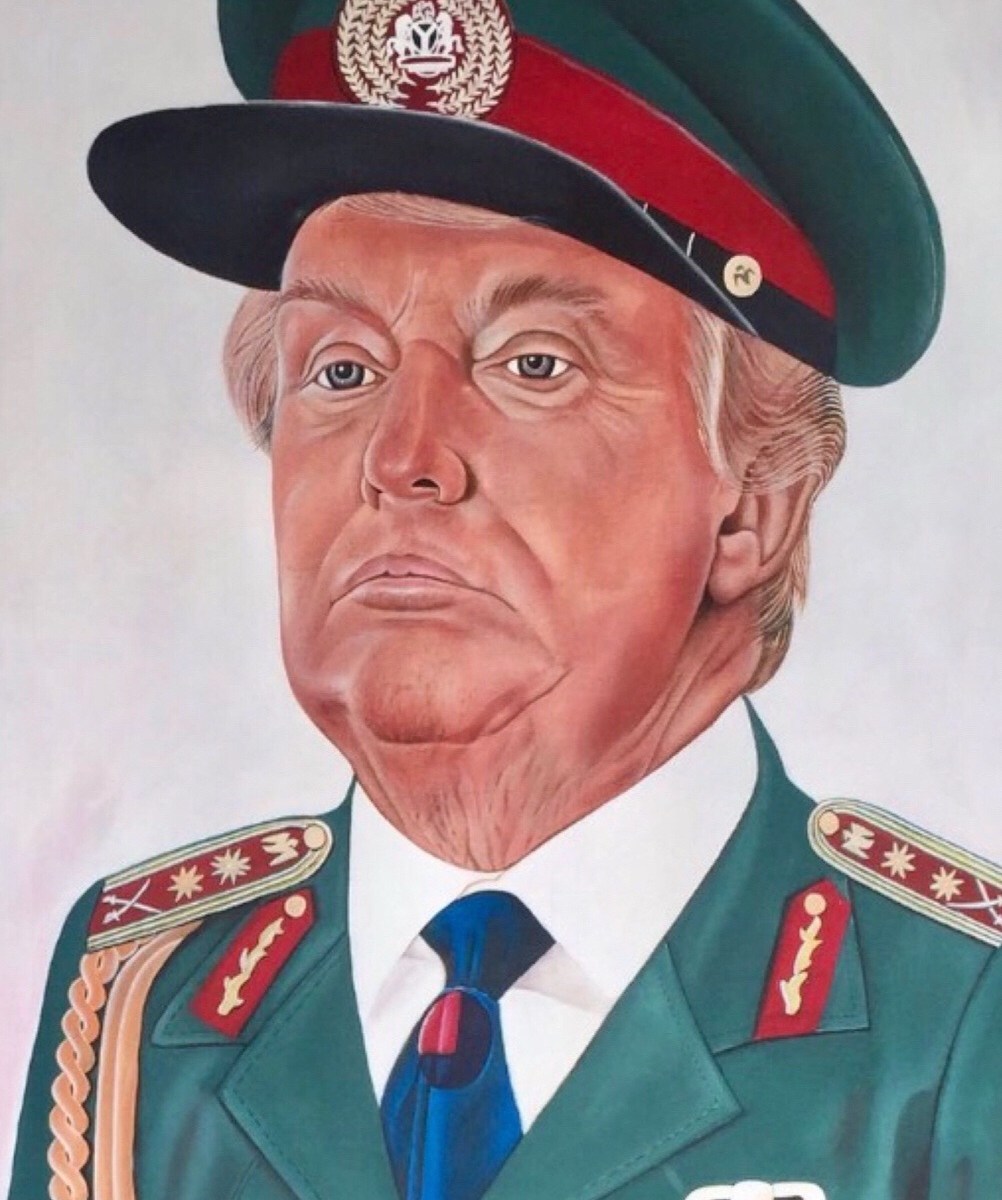
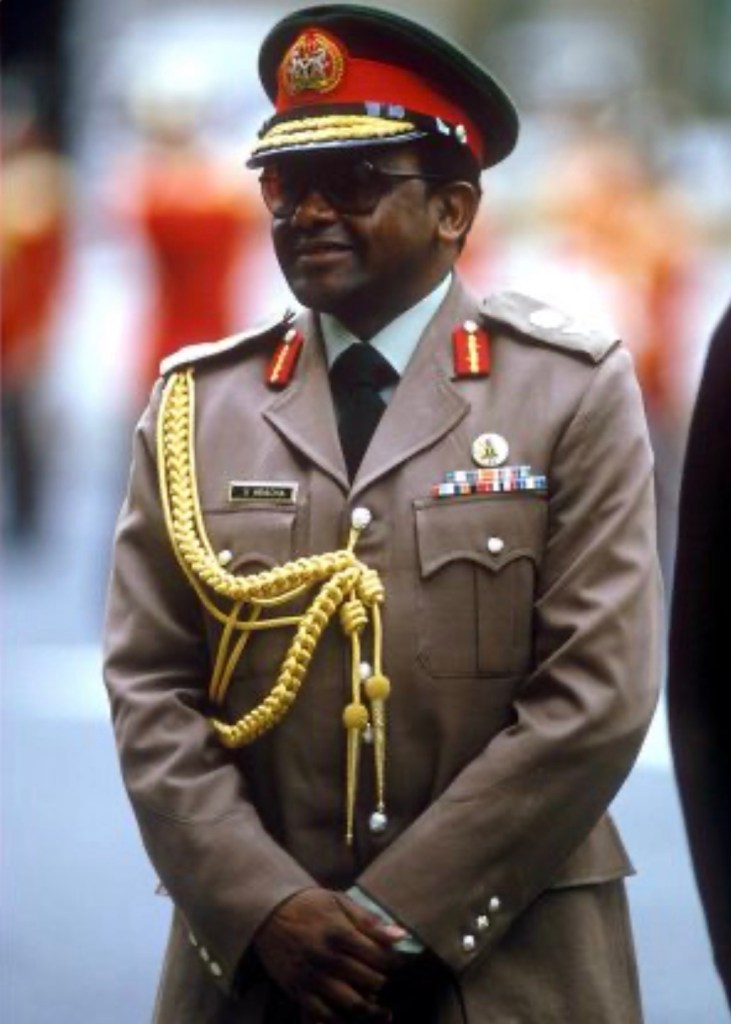
General Sani Abacha, may his dark goggles rest in eternal glory, was not merely a dictator; he was an educator. A pedagogue. A visiting professor of political science long before political science lost shame. His greatest innovation was consensus democracy: five political parties, one candidate, zero confusion. Why waste time with choice when history has already chosen you?
Fast-forward a few decades and a few thousand miles west, and the Abacha School of Advanced Democracy has opened a thriving American campus. The star pupil? Donald J. Trump. The study group? The GOP. The laboratory? The United States of America.
The syllabus is familiar. Step one: convince everyone that competition is chaos. Step two: insist that unity means obedience. Step three: declare yourself the only adult in the room, the only patriot in the village, the only hut that deserves not to burn. Abacha would weep tears of crude oil in admiration.
Once upon a republic, the Republican Party held primaries. Cute little things. Voters queued, ballots were counted, losers sulked. Very inefficient. Today, enlightenment has dawned. Why bother with debates when the anointed one already knows everything? Why test ideas when loyalty tests work faster? Consensus has arrived, wearing a red cap.
Trump did not so much win the GOP as inherit it, like Abacha inherited Nigeria. Party elders who once swore never to kneel now practice yoga-level genuflection. Former critics discover memory loss. Rivals develop sudden respect for “party unity,” which is Latin for please don’t burn my hut.
And burn huts they do. Prosecutors? Deep State. Judges? Traitors. Journalists? Enemies of the people. Civil servants? Saboteurs. Elections? Rigged—unless he wins, in which case they are sacred rituals supervised personally by heaven. Fire everywhere, matches lit with confidence, accelerants supplied by cable news.
But fire, as African villages and American forests agree, is not a loyal party member.
There is an old parable, now fully naturalised in the Midwest, of a man who set his neighbours’ barns on fire so he alone would be the big man of the prairie. He watched the flames rise, clapped, fundraised, and blamed immigrants for the smoke. Then the wind—unregistered, undocumented, and deeply disrespectful—changed direction. By morning, the arsonist’s own barn was ash, and he was on television insisting it was a hoax.
Fire does not attend rallies. It does not chant slogans. It does not recognise red states or blue states. It burns whoever is nearest.
Yet the GOP lights matches with evangelical zeal. Institutions are weakened in the name of strength. Laws are mocked in the name of order. Dissent is criminalised in the name of freedom. The Constitution is treated like an old lease agreement—useful only when it favours the landlord.
Like Abacha’s Nigeria, opposition is not banned; it is simply fractured, confused, litigated, and set on fire from inside. Parallel party committees. Splinter movements. Loyalty oaths disguised as primaries. Anyone insufficiently enthusiastic is labelled a RINO, which is political science shorthand for this hut is next.
The irony, of course, is operatic. The same Republicans who once quoted Madison, Hamilton and Jefferson now quote Trump, Trump and Trump. “As surely as I live,” says the former president, “everyone cheated except me.” And lo, every knee bends. Senators who once swore allegiance to the Constitution now swear they never really read it properly.
The chant is constant. USA! USA!—but always in one key, one voice, one approved lyric sheet. Singing along, as scholars would say, is never innocent. It is survival strategy. In Abacha’s time, people wore badges. In Trump’s America, they wear hats. Same function, different merchandise.
Even governors join the choir. Governors under federal indictment sing louder. Governors with presidential ambitions sing in falsetto. Silence is dangerous; harmony is safety. In this democracy, synchronised voices provide shelter from the flames.
Literature warned us. Shakespeare warned us. Achebe warned us. Arthur Miller practically screamed at us. The Crucible was not meant to be a user manual. Macbeth was not a leadership handbook. Frankenstein was not supposed to be an autobiography. Yet here we are, admiring the monster and blaming the villagers.
Samuel Huntington once categorised authoritarian regimes. America, ever innovative, appears determined to sample the menu: a personal ruler with one-party tendencies, served with a side of populist incense and judicial contempt. Democracy, once again, is being ambushed by those sworn to defend it—this time carrying flags and Bibles.
Abacha died in 1998. Trump lost an election in 2020. Both refused to accept reality. One attempted a transition by decree; the other tried it by riot. Same spirit, different soundtrack.
The lesson remains unchanged. When you burn every hut around you, you leave nothing to block the wind. When you delegitimise every institution, there is nothing left to save you when power slips. Fire always returns home. Always.
So enjoy the warmth. Roast marshmallows on the Constitution. Dance around the blaze of consensus politics. But remember: the wind has no party card, no voter ID, and no respect for kings in baseball caps.
Abacha is smiling somewhere. His students are doing excellent work.

