

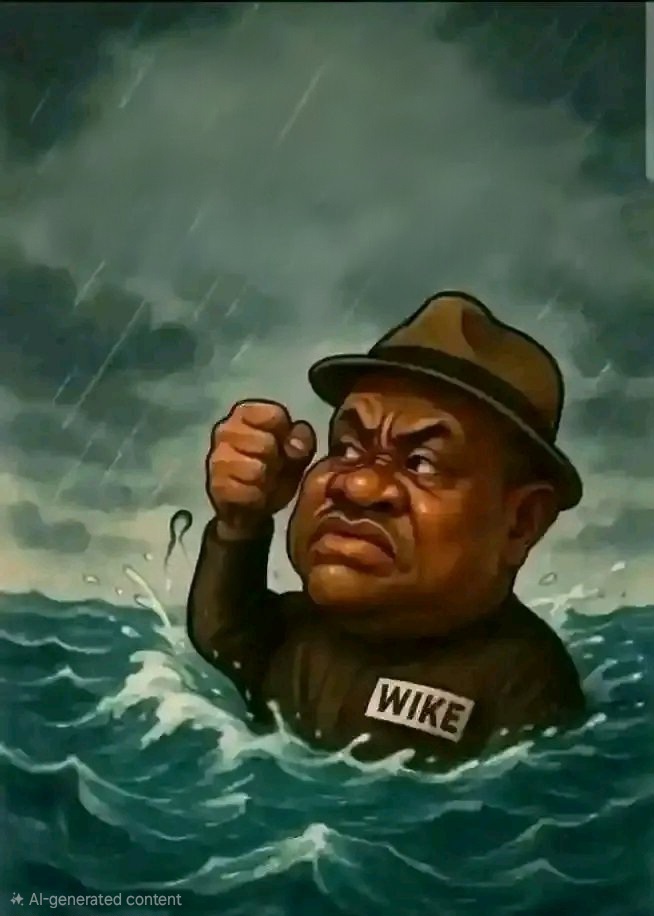
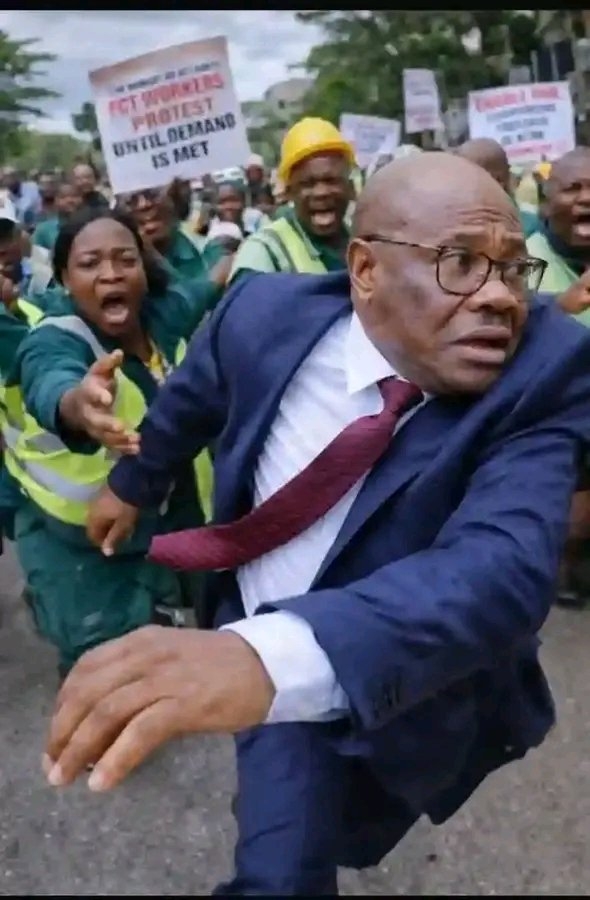
When Late Prof Pius Adesanmi first wrote about the convoy clash between Rotimi Amaechi and Nyesom Wike in Port Harcourt, he advised citizens to conserve their data and their sanity. He said you had no dog in that fight. He said you were the grass beneath two elephants.
I regret to inform you that the elephants have not gone on a diet.
Since that episode, the drama has not de-escalated; it has professionalised. What was once a street quarrel now has choreography. Press statements are drafted before engines are ignited. Security details move like theatre props. The political class in Rivers State has perfected a genre: governance as performance art.
Meanwhile, the rain still falls. The drainage still fails. The streets still flood. The potholes have not picked sides.
Let us be clinical.
Between Amaechi and Wike, we are looking at nearly two decades of concentrated executive and legislative influence over one of Nigeria’s most strategically endowed states. Oil wealth. Gas reserves. Maritime assets. Federal allocations most states can only dream about. Yet, the visual grammar of Port Harcourt remains stubbornly consistent: chaotic urban planning, infrastructural fatigue, and a governance culture driven more by personal supremacy than institutional consolidation.
The clash of convoys was not an aberration. It was a metaphor.
Two political titans, each with extensive control over patronage networks, security architecture, and political loyalists, colliding in a city whose physical infrastructure reflects systemic neglect. The symbolism writes itself. The elite quarrel in bulletproof SUVs while the governed navigate floodwater on foot.
And yes, the matter of soldiers in civilian political convoys remains unresolved in the national psyche.
The deeper issue is not whether Amaechi was legally entitled to military escort under specific federal security classifications. The issue is normalization. When armed soldiers become aesthetic accessories in civilian political rivalry, we cross from constitutional democracy into praetorian theatre. A republic where military presence in ordinary civic space excites applause rather than alarm is a republic with weakened civic reflexes.
Today it is convoy protection. Tomorrow it is “maintaining order.” The gradient is gradual. That is how institutional erosion works — not through dramatic coups, but through incremental accommodation.
Observe public reaction patterns. Partisan lines determine moral judgment. If “our man” deploys the military, it is justified security protocol. If “their man” does so, it is authoritarian excess. Principle is subordinated to loyalty. Democratic ethos becomes transactional.
And so we arrive at the most uncomfortable truth: the political class reflects the incentives we tolerate.
Rivers politics has since evolved into a broader ecosystem of succession battles, federal alignments, defections, reconciliations, and fresh hostilities. The actors change formations; the script remains familiar. Political energy that could be invested in institutional reform is expended on supremacy contests. The state apparatus becomes a chessboard for personal rivalry rather than a platform for policy delivery.
Where does that leave the citizen?
Still the grass.
Still submerged when it rains.
Still paying for diesel when the grid collapses.
Still absorbing the economic shock of inflation while political convoys glide past with sirens.
The tragedy is not that powerful men quarrel. Power has always quarrelled. The tragedy is that the quarrel consistently eclipses governance. Budget cycles are overshadowed by ego cycles. Urban planning loses to political positioning. Institutional memory is replaced by factional memory.
Ken Saro-Wiwa asked a question before the hangman tightened the rope: What manner of a country is this?
Permit a slight amendment for present purposes:
What manner of state devours twenty years and still looks surprised by its own decay?
What manner of leadership wages personal war amid visible infrastructural collapse?
What manner of citizenry cheers the militarisation of politics because it favours their faction?
Until those questions disturb us more than the spectacle of convoys colliding, the elephants will continue their dance. And the grass will continue to learn resilience the hard way.

