

Zoom out far enough and you will notice something remarkable about Britain. We are not just a nation of shopkeepers, nor merely a nation of dog lovers, nor even exclusively a nation that apologises when you step on our foot.
We are a nation that bellyaches about immigration.
This is not new. It is not imported. It is not a Brussels directive. It is as native as drizzle.
In fact, if you leaf through the pages of William Shakespeare, you will find that even in Tudor England, the same anxiety throbbed beneath the surface. In the collaborative play Sir Thomas More, Shakespeare pens a speech in which More confronts an anti-immigrant mob furious about “strangers” taking their work and diluting Englishness.
The rhetoric is uncannily modern. Foreigners. Jobs. Culture. The sense that the nation is a fragile teacup about to crack under the weight of unfamiliar accents.
More’s rebuttal is devastatingly simple: imagine you are the stranger. Imagine you are cast out. Imagine your children reduced to beggars because some other country has decided you do not belong. It is not a moral argument delivered with hashtags; it is a plea for basic human symmetry.
And yet, five centuries later, here we are again.
From the hysteria surrounding “floods” and “invasions” to the electoral choreography of fear performed by outfits like Reform UK and sections of the Conservative Party, the pattern is familiar. Immigration becomes less a policy question and more a cultural ritual. It is the incense burned at every election altar.
What has changed is not the tune, but the musicians.
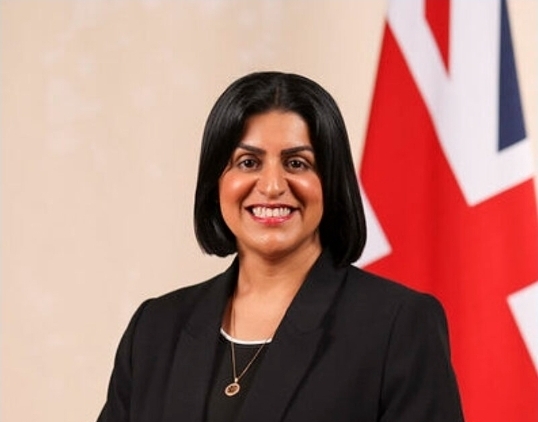
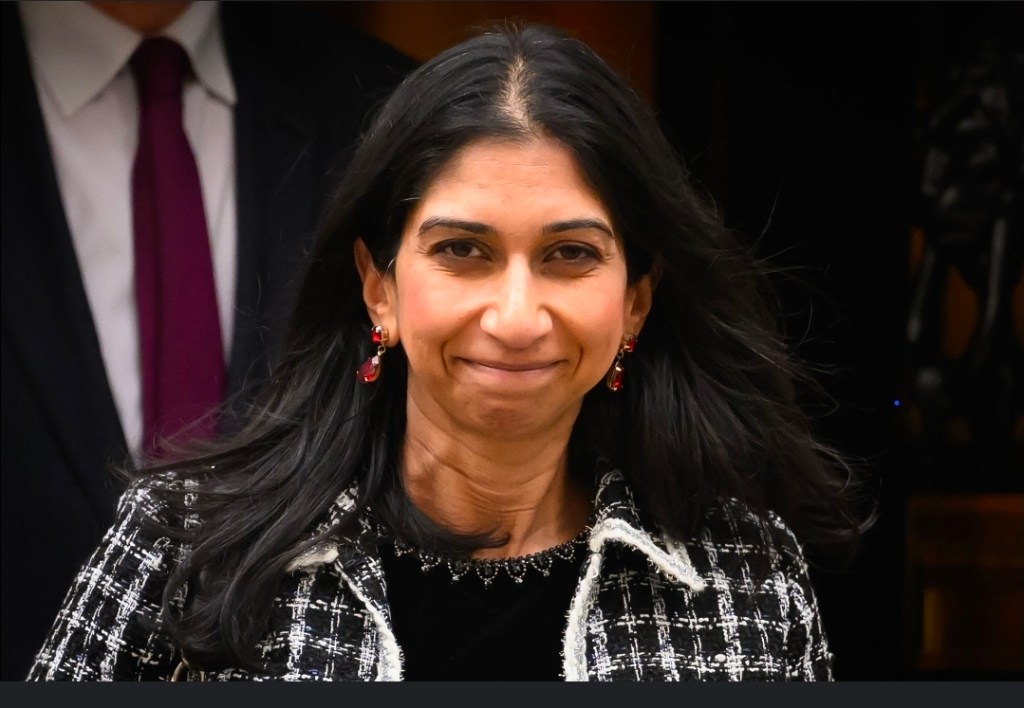
There is something uniquely British — and faintly operatic — about the spectacle of the children of South Asian immigrants now positioning themselves as gatekeepers of Britishness. The sons and daughters of arrivals from Punjab, Gujarat, Sylhet, or Lahore now stand at the ramparts, drawbridge lever in hand, warning that too many newcomers threaten “our values.”
One can almost hear Shakespeare clearing his throat.
This is not a critique of integration. Quite the opposite. It is evidence of how thoroughly assimilation works. The ultimate proof of Britishness is not cricket, nor curry, nor Cambridge — it is the confident complaint that there are too many immigrants.
To pull up the drawbridge is to declare oneself fully at home inside the castle.
Sociologically, this is predictable. Political scientists have long observed that second-generation communities often overcorrect in defence of their adopted national identity. Having climbed the ladder, there is a temptation to stabilise it. It is not always malice; sometimes it is fear — fear that their hard-won acceptance remains conditional.
But politically, it creates an irony so thick you could spread it on toast.
Because Britain itself is an accretive project. The Angles and Saxons displaced the Britons. The Normans displaced the Anglo-Saxon elite. The Huguenots, the Irish, the Jews, the Caribbean Windrush generation, South Asians, Eastern Europeans — each wave was first treated as alien sediment before being folded into the strata of “us.”
At no point did British identity shatter. It stretched. It absorbed. It metabolised.
The problem with the modern immigration debate is not that it exists. A sovereign state is entitled to manage its borders. The problem is the theatrical hysteria — the conversion of complex demographic and economic questions into apocalyptic folklore.
Immigration becomes a scapegoat for stagnant wages, housing shortages, NHS backlogs and cultural malaise. It is easier to blame the newcomer than to interrogate structural policy failures, underinvestment, or decades of economic mismanagement.
And so, as in Shakespeare’s London, the crowd gathers again. The accents change. The placards are printed in higher resolution. The speeches are delivered in better lighting. But the emotional grammar is identical.
“Strangers.”
“Too many.”
“Not like us.”
If Shakespeare were alive today, he would probably still write the same speech. Only now, Thomas More might have a podcast.
The most fascinating twist, however, is that Britain’s immigration anxiety is itself proof of its pluralism. The fact that children of immigrants can credibly run for high office on platforms restricting immigration demonstrates that they are no longer outsiders. They are not guests at the table; they are arguing about who gets an invitation.
That is integration — even if it is integration deployed in defence of narrower borders.
History suggests something comforting: Britain survives these spasms. It always has. The island’s identity is not porcelain. It is clay — shaped, reshaped, occasionally cracked, but never destroyed by contact.
Five hundred years on, the same argument echoes through Westminster and WhatsApp groups alike. Perhaps the real British tradition is not immigration anxiety itself, but the cyclical rediscovery that we have been here before.
And each time, after the bellyaching subsides, the newcomers quietly become British — and eventually complain about the next lot.
Some traditions, it seems, are eternal.
 Centre for Nigeria Progress