

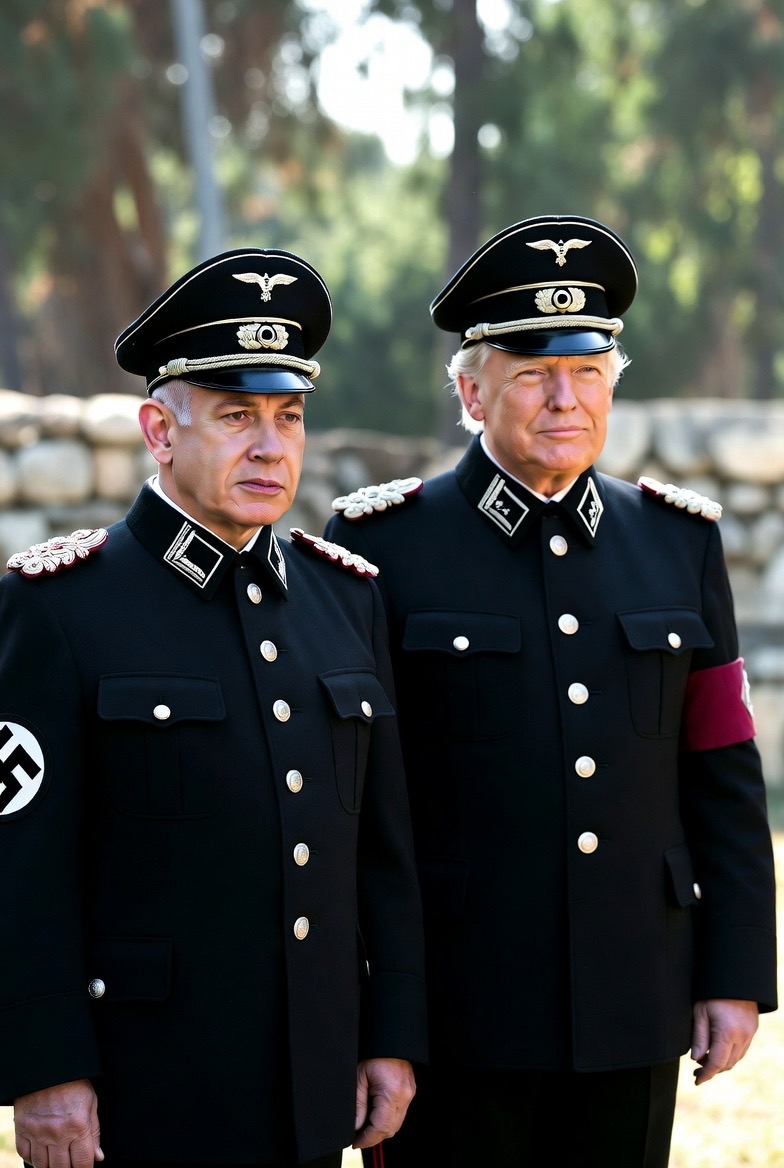
We have been force-fed this same threadbare fiction for so long that it now qualifies as a constitutional convention. When Iran is not “days away” from the bomb, it is “months away.” Sometimes it is “weeks away,” which is the geopolitical equivalent of “the cheque is in the post.” The apocalypse, apparently, runs on a flexible timetable.
This narrative is older than some junior diplomats. It predates TikTok, survived multiple American administrations, outlived at least three British prime ministers, and has the shelf life of a medieval indulgence. It is not prophecy. It is policy theatre. A rolling trailer for a war that never quite premieres but never leaves the box office either.
We have seen this film before.
In 2002 and 2003, we were told with similar solemnity that Saddam Hussein possessed weapons of mass destruction. The legal architecture for that catastrophe was dressed up in UN resolutions and selective intelligence briefings. The result was the invasion of Iraq, an adventure prosecuted under the banner of necessity and retrospectively filed under “regrettable miscalculation.” No stockpiles materialised. The only thing that proliferated was instability.
History students will recall that fear has always been the most profitable currency of empire. The Roman Senate invoked existential threats to expand power. Medieval monarchs invoked heresy. Twentieth-century governments invoked communism. Twenty-first-century leaders prefer uranium enrichment levels. The vocabulary evolves; the technique does not.
And then, like clockwork, the usual voices emerge from their well-upholstered bunkers.
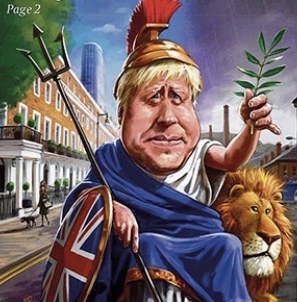
Take Boris Johnson, a man whose political career reads like a case study in the tort of negligent misrepresentation. He presents escalation as moral clarity, disruption as Churchillian destiny. One might admire the rhetorical flourish if it were not so consistently attached to combustible outcomes.
Mr. Johnson’s record as Prime Minister is not merely controversial; it is a syllabus. Brexit turbulence. Pandemic parties. Strategic bombast delivered with the confidence of a barrister who has mislaid his authorities but intends to wing it anyway. His interventions in the Russian–Ukrainian conflict were framed as resolute solidarity. Yet history will ask the dreary but necessary question lawyers always ask: did this conduct mitigate harm, or did it enlarge it?
Because that is the point. Statesmanship is not about sounding brave; it is about reducing the body count.
The world is exhausted. Exhausted by men who confuse theatrics with governance. Who speak in Latin tags and Churchillian cadences while defence contractors update their quarterly forecasts. War, we are told, is tragic but necessary. Curiously, it is always necessary somewhere else.
And the ruins speak.
Libya, once authoritarian but intact, became a fractured chessboard after intervention sold as humanitarian urgency. Yemen remains a humanitarian catastrophe measured in cholera outbreaks and malnourished children. Across swathes of Africa, including Nigeria, the aftershocks of destabilised regions ripple through arms flows, insurgencies, and economic fragility. The speeches have long faded. The consequences have not.
International law, at least in theory, restrains this cycle. The UN Charter prohibits the use of force except in self-defence or with Security Council authorisation. The Nuremberg principles defined aggressive war as the “supreme international crime.” Yet in practice, powerful states draft legal memoranda the way medieval clerics drafted dispensations. With sufficient creativity, almost anything becomes defensible.
But legality is not legitimacy. And strategic impatience is not prudence.
It may interest Mr. Johnson—if only as a thought experiment—that retreat is not always cowardice. In military doctrine, strategic withdrawal can preserve forces and prevent catastrophe. In political life, it can preserve credibility. Nobility, contrary to popular belief, is not a hereditary trait nor a rhetorical device. It is a discipline.
The tragedy is not merely that leaders err. It is that they rarely absorb the jurisprudence of their own failures. Each crisis is marketed as unprecedented. Each intervention is framed as exceptional. Each warning is accompanied by charts, dossiers, and breathless briefings. And yet the pattern remains tediously familiar.
History, unlike the news cycle, does not suffer from amnesia. It is less interested in press conferences than in outcomes. It tallies the dead. It measures the displacement. It notes the precedents set and the norms eroded.
Empires once believed they could outpace memory. They could not. Neither will modern democracies that substitute volume for wisdom.
If Iran is forever months away from the bomb, perhaps it is because perpetual imminence is politically convenient. A crisis always approaching is far more useful than a crisis resolved. It justifies budgets. It unifies factions. It distracts electorates. It manufactures urgency without demanding closure.
But citizens are not juries to be dazzled indefinitely by rhetoric. Eventually, they ask for evidence. Eventually, they demand proportionality. Eventually, they notice that the promised security dividend never arrives.
And when that day comes, history will not be impressed by bravado. It will examine the record, dispassionately, like a judge reviewing submissions. It will ask who profited, who perished, and who knew better.
History, I assure you, keeps impeccable notes.
 Centre for Nigeria Progress