


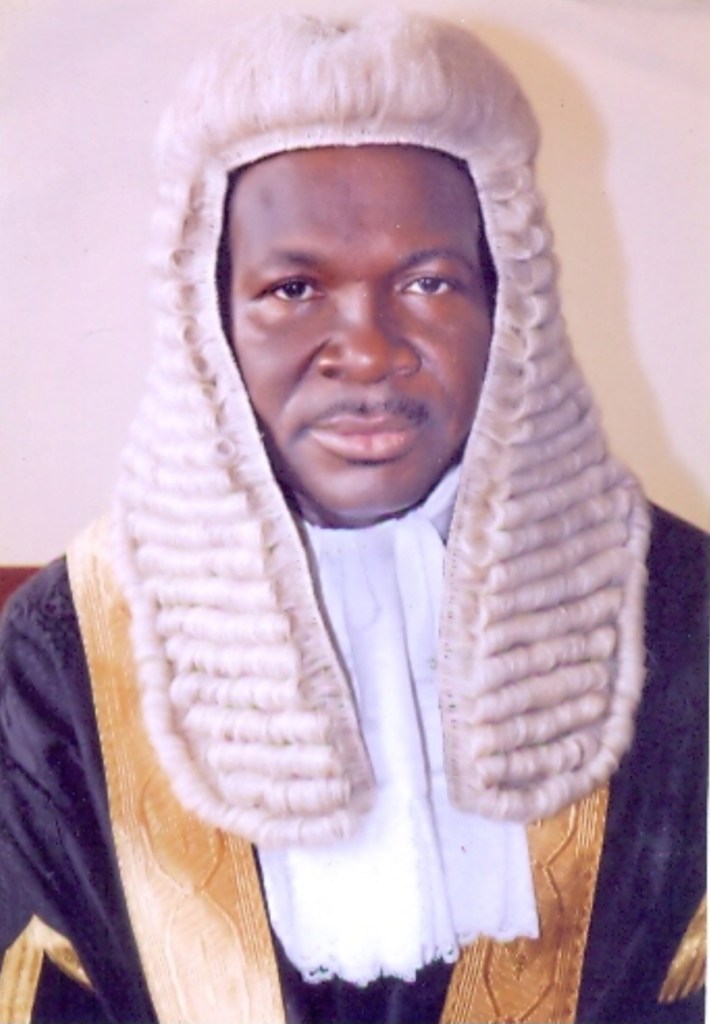
When the Independent Corrupt Practices and Other Related Offences Commission (ICPC) hurriedly presented its earlier charge against Chief Mike Ozekhome, SAN, the drafting left seasoned criminal lawyers blinking in disbelief. The particulars were thin, the narrative skeletal, and the evidential architecture — at least on the face of the charge sheet — appeared insufficiently particularised to withstand a properly taken objection.
Before the dust settled, the Attorney-General of the Federation stepped in.
The Office of the Attorney General of the Federation (OAGF), exercising its constitutional authority, withdrew the three-count charge pursuant to section 108 of the ACJA. Justice Peter Kekemeke of the FCT High Court struck it out. The Director of Public Prosecutions spoke of “synergy” among agencies — ICPC, EFCC, Code of Conduct Bureau — and promised a “holistic” review.
Holistic review, in prosecutorial language, usually means: we are coming back.
They have now come back — with twelve counts.
The New 12-Count Charge: Cosmetic Expansion or Substantive Reinforcement?
The fresh charge centres on alleged dealings regarding property at No. 79 Randall Avenue, London NW2, United Kingdom, said to be linked to the late former FCT Minister, Jeremiah Useni.
The defendants are:
Chief Mike Ozekhome, SAN Ponfa Useni (aka Tali Shani) General Jeremiah Useni (now deceased)
The counts now span:
Criminal conspiracy (s.96 Penal Code) Forgery and making false documents (ss.363–366) Personation (s.179) Cheating by personation (ss.321–322) Abetment (ss.83–84) Possession/control of property reasonably suspected to be unlawfully obtained (s.319A)
At first glance, the prosecution has done three things:
Expanded temporal particulars (2020–2025) Separated conspiracy from substantive offences Added financial-control allegations (rent of £18,000)
The question is whether this is mere multiplication of counts or meaningful strengthening.
1. Particularisation: Has the Drafting Improved?
Criminal charges must disclose:
The specific act complained of The time frame The place within jurisdiction The statutory offence created The essential elements of the offence
The earlier charge reportedly suffered from vagueness. The new charge now specifies:
Passport number (A07535463) Date of Power of Attorney (30 May 2020) Date of alleged false authentication letter (4 May 2023) Amount of rent (£18,000) Specific Penal Code sections
This is unquestionably more detailed.
However, robustness is not about verbosity. It is about whether the prosecution can prove:
The passport was in fact false. It was fabricated by or with the knowledge of the defendants. It was used to assert proprietary interest. The property was unlawfully obtained. The accused had the requisite mens rea.
Without documentary forensic evidence from the Nigeria Immigration Service, authentication records, expert testimony, and cross-border evidential cooperation with UK authorities, the charge sheet remains only ink on paper.
2. The Dead Man in the Dock
An interesting procedural curiosity: several counts include General Useni “now deceased.”
A criminal court cannot convict a deceased person. The inclusion may be narratively explanatory for conspiracy, but legally, prosecution against a dead defendant abates. The State must prove conspiracy between living defendants. One cannot meaningfully conspire with a corpse.
This may create evidential complications.
3. Section 319A: Possession of Suspected Property
Counts alleging control of property “reasonably suspected to have been unlawfully obtained” are strategically significant.
Section 319A offences often shift litigation focus from proving original theft or corruption to proving:
Suspicion grounded in objective facts. Knowledge or recklessness on the part of the accused.
But “reasonable suspicion” is not a mantra. It must be tethered to admissible evidence. The prosecution must establish the illegality of the original acquisition by Useni — a man no longer alive to defend himself.
That evidential burden is heavy.
4. The Constitutional Overlay: Section 174 Powers
The Attorney-General’s substitution and withdrawal of the initial charge is anchored in Section 174 of the 1999 Constitution (as amended). The AGF may:
Institute proceedings Take over proceedings Discontinue proceedings (nolle prosequi)
Legally unassailable.
Politically controversial.
Strategically revealing.
When the AGF withdraws weak charges and returns with expanded counts, it suggests either:
Initial prosecutorial over-eagerness by ICPC, or Inter-agency fragmentation now consolidated
Either way, it underscores the centralisation of prosecutorial authority in Nigeria’s constitutional design.
5. Are the New Charges More Robust?
Technically: Yes, they are more structured.
Substantively: The real test lies ahead.
Strengths of the new charge:
Clearer statutory anchoring Better factual chronology Financial dimension introduced Multiple legal theories (forgery, conspiracy, abetment, possession)
Weaknesses or vulnerabilities:
Dependence on proving falsity of passport and authentication document Cross-jurisdictional property issues (UK land records, beneficial ownership) Proving mens rea of a Senior Advocate in a transaction framed as professional engagement Conspiracy involving a deceased alleged co-conspirator
Multiplicity of counts can sometimes signal prosecutorial confidence. It can also signal anxiety.
Courts are unimpressed by numerical theatrics. They look for proof beyond reasonable doubt.
6. The Optics: Anti-Corruption or Legal Chess?
Given Nigeria’s prosecutorial history, high-profile charges often unfold in three predictable acts:
Dramatic filing Technical objection Procedural recalibration
We are currently between Acts II and III.
If the OAGF has genuinely consolidated evidence from ICPC, EFCC, Immigration authorities, and foreign counterparts, this case may proceed substantively.
If not, we may see preliminary objections on:
Abuse of process Duplicity of counts Want of jurisdiction Insufficient particulars
And possibly another prosecutorial retreat.
Conclusion: Law, Not Headlines, Will Decide
Are the new charges more capable of prosecution?
On drafting alone — yes.
On evidential sustainability — uncertain.
Criminal law is not theatre. It is proof. It is precision. It is burden. It is mens rea tied to admissible facts.
Twelve counts look formidable on paper.
In court, they must walk.
And in Nigeria, that is where many cases quietly collapse — not with a bang, but with a preliminary objection.

