

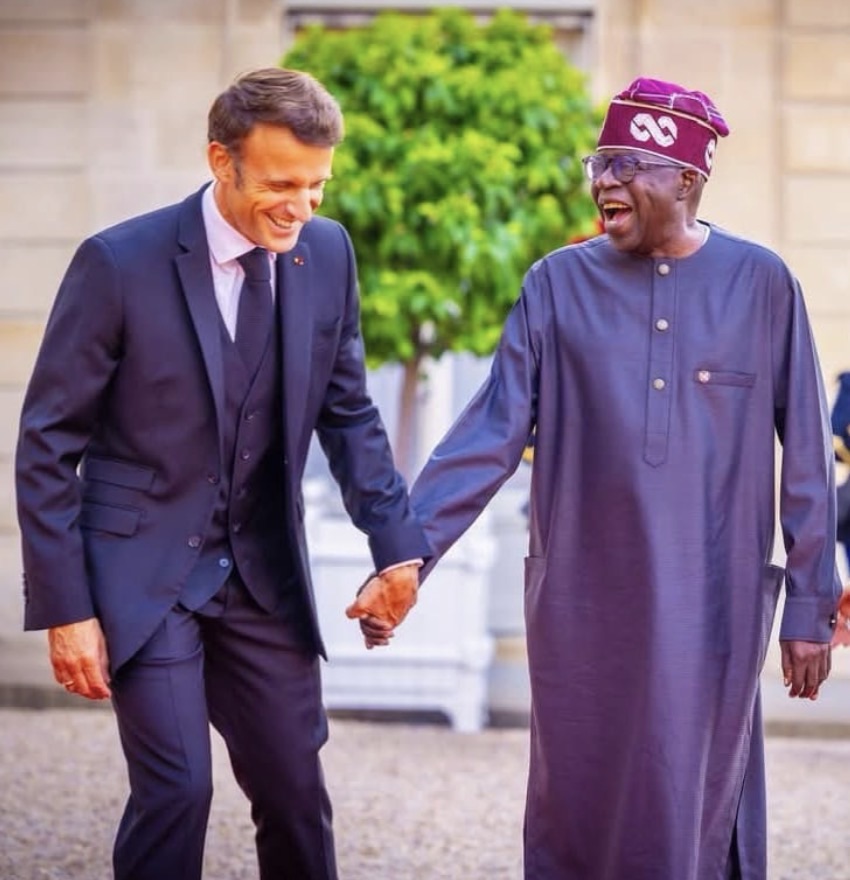
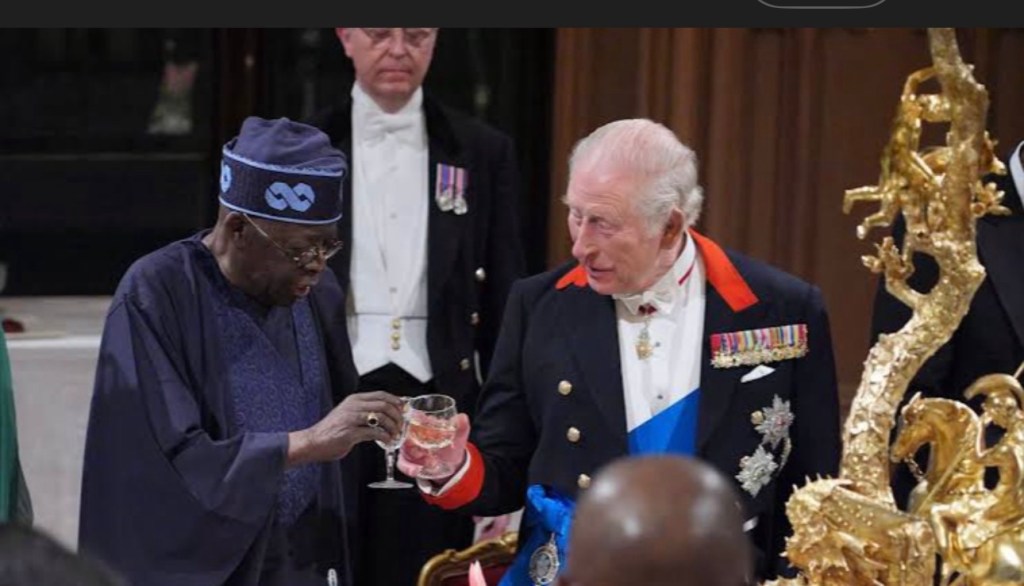
There is an old imperial habit that never quite dies—it simply changes accent. In today’s West Africa, that habit is resurfacing not through gunboats, but through influence, access, and elite alignment. And at the centre of this evolving contest sits Nigeria, with President Bola Ahmed Tinubu as both participant and prize.
France’s Quiet Courtship
From the outset of Tinubu’s presidency, his perceived proximity to Emmanuel Macron and the French political establishment drew attention. Diplomatic engagements, extended stays in France, and policy signalling suggested a warming relationship between Abuja and Paris—an unusual development given Nigeria’s historically cautious posture toward French influence in West Africa.
France, long dominant in its former colonies through the Françafrique system, has in recent years faced a steady erosion of its authority. Countries such as Mali, Burkina Faso, and Niger have witnessed coups accompanied by strong anti-French sentiment. Military juntas in these states have actively sought to dismantle French military and economic presence.
Against this backdrop, Nigeria—Anglophone, populous, and regionally dominant—became strategically invaluable. A cooperative Abuja could serve as a counterweight to the Francophone drift away from Paris.
The Niger Flashpoint
The crisis in Niger following the 2023 coup became the defining moment of this alignment. Under Tinubu’s leadership as chairman of ECOWAS, Nigeria took a hardline stance, including the threat of military intervention to restore constitutional order.
To many observers, this posture aligned conspicuously with French interests. Niger had been one of France’s last reliable security partners in the Sahel. Its loss represented not just a diplomatic setback, but a strategic rupture.
Yet, intervention never materialised. Domestic resistance—particularly from Northern Nigerian political actors with deep ethnic, cultural, and economic ties to Niger—proved decisive. The National Assembly of Nigeria effectively stalled any military action, illustrating a critical constraint on executive ambition: regional geopolitics cannot override domestic political realities.
Commerce, Policy, and Influence
Beyond security, there were signs of growing French economic engagement. Reports of French technical involvement in Nigeria’s fiscal reforms—particularly around tax systems—raised eyebrows. Whether framed as capacity-building or influence projection, such involvement fed into a broader narrative: France was not merely rebuilding ties; it was embedding itself within Nigeria’s policy architecture.
For a country historically wary of French intentions—dating back to France’s controversial support for Biafra during the Nigerian Civil War—this shift marked a significant recalibration.
Britain Re-enters the Game
If France was advancing, Britain was not going to remain a spectator.
The United Kingdom, Nigeria’s former colonial power, has long maintained deep economic, political, and social ties with the country. But recent developments appear to have triggered renewed urgency in London. The fear is simple: strategic drift.
The British response has been subtle but unmistakable—high-level engagements, diplomatic warmth, and symbolic gestures designed to reaffirm Nigeria’s place within its sphere of influence.
At the centre of this recalibration are concerns not just about geopolitics, but about leadership vulnerabilities. Allegations and controversies surrounding President Tinubu—particularly historical legal issues in the United States and scrutiny over the activities of Seyi Tinubu—have not gone unnoticed in Western capitals. These factors create both leverage and risk in diplomatic relations.
Nigeria: Sovereign Actor or Strategic Pawn?
What emerges is a familiar pattern dressed in modern language: great powers competing not for territory, but for alignment.
Nigeria’s geographic reality compounds the stakes. Surrounded largely by Francophone neighbours, it sits at the intersection of competing spheres of influence. Its decisions ripple across West Africa.
Yet the more pressing question is internal: whose interests are being served?
Critics argue that Tinubu’s foreign engagements reflect a personalised diplomacy—one driven less by institutional strategy and more by elite networks and external validation. In this framing, Nigeria risks becoming reactive rather than strategic, a state whose foreign policy is shaped by the gravitational pull of external powers rather than a coherent national doctrine.
The Cost of External Validation
There is nothing inherently wrong with cultivating strong international relationships. Indeed, in a globalised world, such engagement is essential. But the distinction lies in agency.
A state acting in its own interest negotiates from a position of clarity, leveraging relationships without surrendering autonomy. A state seeking validation, however, risks becoming a theatre in which others play out their rivalries.
Nigeria today stands at that crossroads.
The Franco–British contest for influence is real, even if understated. But the decisive factor will not be Paris or London—it will be Abuja’s ability to define and defend its own strategic interests.
Until then, the optics remain troubling: a regional giant behaving less like a pole of power and more like an arena for it.
 Centre for Nigeria Progress