


There are moments in a country’s economic trajectory when infrastructure stops being just about steel and concrete and becomes a map of power. Nigeria’s latest port developments in Lagos—one private, one state-backed—sit squarely in that category. On paper, the Snake Island Port Terminal deal and the UK-backed port refurbishment programme are distinct transactions. In practice, they form a tightly interwoven ecosystem of capital, influence, and strategic positioning.
Two Deals, One Maritime Vision
At a structural level, both projects aim to resolve the same chronic dysfunction: congestion, inefficiency, and capacity deficits at Lagos ports.
The Snake Island Port Terminal is a $1 billion privately financed concession. The involvement of MSC Group signals serious global logistics ambition. A 45-year operational horizon gives MSC long-term control over throughput, tariffs, and terminal efficiency. Construction is being handled by ITB Nigeria Ltd.—linked to Gilbert Chagoury—alongside Belgium’s DEME Group, a major player in marine engineering.
Parallel to this sits the UK-backed port upgrade programme, underwritten by UK Export Finance (UKEF), which has guaranteed £746 million in loans. This financing targets the refurbishment of the Lagos Port Complex (Apapa) and Tin Can Island Port—both state-owned, both long overdue for modernization.
Critically, the UK deal is not merely financial; it is strategic. A minimum of 20% local content allocation to British firms—highlighted by a £70 million contract for British Steel—anchors British industrial participation within Nigerian infrastructure.
So while one project builds new capacity, the other rehabilitates existing bottlenecks. Together, they form a dual-track expansion: greenfield development plus brownfield optimization.
The Convergence Point: Chagoury’s Expanding Footprint
If infrastructure is the skeleton, contractors are the connective tissue—and here the overlap becomes difficult to ignore.
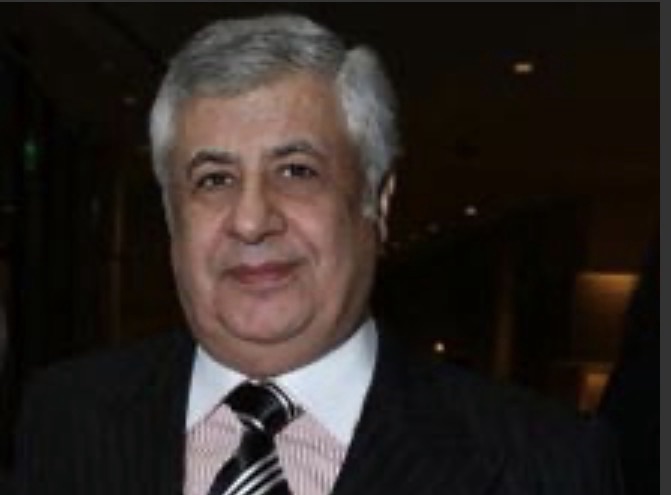
Gilbert Chagoury, through ITB Construction, is not merely a participant but a central node across multiple high-value projects:
Contractor for the Snake Island terminal Selected for the refurbishment of Apapa and Tin Can ports (reportedly worth ₦1.1 trillion) Awarded the Lagos–Calabar Coastal Highway project
This concentration raises a classic political economy question: at what point does participation become dominance?
When the same corporate actor is embedded across both privately financed and sovereign-backed infrastructure, the distinction between “separate deals” becomes largely formalistic. Functionally, the projects begin to resemble a coordinated network of influence.
Governance Concerns: Procurement and Proximity
The concerns intensify when viewed through a governance lens.
Allegations that these contracts were not subjected to standard public procurement frameworks introduce legal and constitutional implications. Public procurement laws exist to enforce transparency, competitive bidding, and value-for-money principles. Deviations—especially at this financial scale—are not procedural footnotes; they are structural vulnerabilities.
The presence of Seyi Tinubu on the board of a company linked to these contracts adds another layer of scrutiny. Even absent proven wrongdoing, the optics of proximity between political authority and commercial beneficiaries create reputational risk and potential conflict-of-interest questions.
Diplomacy, Optics, and Soft Power
Then comes the international dimension.
Gilbert Chagoury was part of Nigeria’s delegation at a high-profile state banquet hosted by King Charles III at Windsor Castle in March 2026. His presence—confirmed by multiple global outlets—signals more than ceremonial inclusion.
Chagoury is not merely a businessman; he operates within diplomatic circuits, serving as Saint Lucia’s ambassador to the Vatican and holding prior roles with UNESCO and in Benin’s presidency. This blend of commercial and diplomatic capital positions him as a transnational intermediary—equally comfortable in boardrooms and state functions.
In that context, the UK loan arrangement begins to look less like a standalone financing deal and more like part of a broader geopolitical alignment: trade, diplomacy, and infrastructure converging in one space.
The Strategic Logic: Complementarity or Consolidation?
From a policy standpoint, the Nigerian government can argue—correctly—that both deals are necessary:
New ports reduce congestion Upgraded ports improve efficiency Foreign capital reduces fiscal strain
However, the counterargument is not about necessity but about structure. When multiple critical infrastructure assets—new builds, refurbishments, and transport corridors—are tied, directly or indirectly, to overlapping actors, the risk shifts from inefficiency to concentration.
This is where complementarity shades into consolidation.
The Bigger Picture
What emerges is not a story about two port projects, but about a model of development:
Heavy reliance on foreign-backed financing (UK) Strategic concessions to global operators (MSC) Concentration of execution within a narrow contractor base (ITB/Chagoury network) Blurred lines between political, commercial, and diplomatic spheres
In isolation, each element is defensible. Combined, they form a system that demands scrutiny—not because it is unusual, but because it is highly consequential.
Conclusion: Infrastructure as Influence
Nigeria’s maritime expansion is undeniably necessary. Lagos cannot remain the choke point of West African trade while aspiring to be its commercial capital.
But infrastructure is never neutral. It allocates power, redistributes opportunity, and embeds long-term economic control.
The Snake Island project and the UK-backed port upgrades may be legally separate. Yet in their execution, actors, and implications, they are deeply intertwined. The real question is not whether Nigeria is building ports—it clearly is.
The question is: who ultimately controls the gateways to its economy?

