


There is a peculiar stubbornness in certain corners of political commentary—the kind that refuses to accept that history has already closed the file, stamped it “settled,” and moved it to archives. Instead, like a disgruntled clerk, they keep reopening it, hoping the ink might rearrange itself into a different ending.
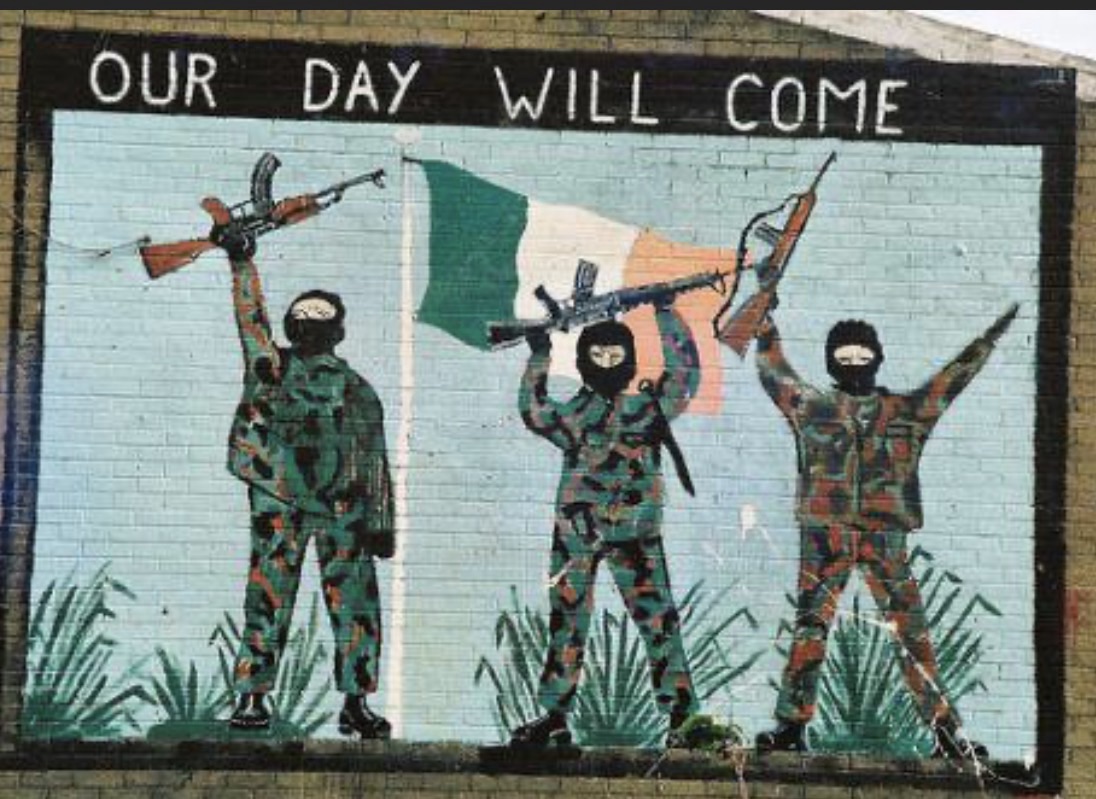
Take the long and bitter conflict in Northern Ireland. For decades, it was not a polite disagreement to be litigated in courtrooms; it was, in every meaningful sense, a political war. The British state and the Irish Republican Army were not exchanging legal briefs—they were exchanging force, ideology, and, tragically, lives. That conflict did not end because one side secured a clever legal argument. It ended because both sides reached the limits of what violence could achieve.
The settlement—embodied in the Good Friday Agreement—was not a victory parade for either camp. It was something far more mature and, to hardliners, far more frustrating: a compromise. No vanquished, no victor. Just an uneasy but necessary peace.
Yet, for some, peace is not enough. There are those—particularly among diehard British right-wing commentators—who seem constitutionally incapable of accepting that the war did not end in total triumph. And so, having lost the argument on the battlefield of politics, they have sought to reopen it in the courts.
Enter the legal pursuit of Gerry Adams, long regarded as the პოლიტიკური face of the republican movement. Victims of IRA bombings, understandably seeking justice and closure, were drawn into civil proceedings aimed at linking Adams directly to IRA activities. The emotional weight of such cases is undeniable; grief does not obey political settlements.
But courts, unlike columnists, are constrained by rules—evidence, procedure, and time. And in this instance, the proceedings have collapsed under the familiar but unforgiving burdens of procedural limitations, evidentiary gaps, and the expiration of time. The legal system, in its dry and methodical way, has effectively said: there is nothing more to adjudicate here.
That should have been the end of it.
But for those still chasing a retrospective victory, it is not. They persist, as though a courtroom might succeed where decades of military, political, and diplomatic struggle did not. It is a curious form of denial—less dramatic than war, but no less stubborn.
At some point, however, societies must learn to accept “yes” for an answer—even when that “yes” is not the emphatic triumph they desired, but a negotiated settlement they merely have to live with. Peace processes are not designed to satisfy the emotional ledger of every participant; they are designed to stop the bleeding.
The lesson here extends far beyond the Irish Sea.
Nigeria, with its own unresolved historical tensions—most notably the enduring echoes of the Biafran question—would do well to pay attention. Not every political struggle can be retroactively “won” decades later through courts, rhetoric, or revisionism. Some conflicts reach a point where the only rational outcome is cessation, not conquest.
The temptation to keep fighting—whether through legal instruments, media campaigns, or ideological posturing—is strong. It offers the illusion of unfinished business, of justice deferred but still attainable. But more often than not, it simply reopens wounds that political settlements were designed to heal.
There is a time to fight, and there is a time to sheath the sword.
The British state and the Irish republican movement, after a century of conflict, recognised that reality. They stepped back from the abyss not because they had achieved everything they wanted, but because they understood that continuing the struggle would achieve nothing more.
Those still searching for total victory in the aftermath are not pursuing justice—they are resisting history.
And history, inconveniently, has already moved on.

