

A masterclass in multinational generosity, offshore creativity, and the beautiful art of the victimless crime — if you don’t count the victims.
There is a particular kind of audacity that deserves not merely condemnation but a standing ovation, a Champagne toast, and perhaps a Harvard Business School case study. The Halliburton-KBR bribery scandal involving Nigeria’s Bonny Island liquefied natural gas project is that kind of audacity. It is corruption so elegant, so meticulously engineered, so gloriously multinational in its ambitions, that one almost forgets that real people, roughly 200 million of them — were on the receiving end of the bill.
Pull up a chair. This one is a masterpiece.
The Setup: “We’re Here to Help”
In the 1990s, a consortium of construction giants, Kellogg Brown & Root (KBR), a subsidiary of America’s beloved Halliburton; along with partners from France, Italy, and Japan, gazed upon Nigeria’s Niger Delta and saw opportunity. Not in the way that poets see opportunity in a sunset, but in the way that very serious men in very expensive suits see opportunity: a $6 billion natural gas contract ripe for the taking.
Now, anyone who has ever done business in Nigeria, or read a newspaper, or seen a Nollywood film, understands that certain introductions need to be made. Certain doors require certain keys. Certain envelopes must be passed across certain mahogany tables. The consortium understood this perfectly. They were, after all, professionals.
So they hired Jeffrey Tesler. A British lawyer. Based in London. With shell companies registered in Gibraltar. Because when you are an American oil services firm trying to bribe a series of Nigerian governments, what you obviously need is an Englishman and a tiny Mediterranean territory that Britain retained after the 1713 Treaty of Utrecht specifically, one suspects, for moments such as this.
Tesler was the “consultant.” In the technical sense that a locksmith consulted for a burglary is a consultant.
The Mechanism: Paying for Your Own Mugging, With Interest
Here is where the story graduates from mere scandal to a kind of dark, infernal genius.
One might assume that the $182 million in bribes, distributed obligingly across three successive Nigerian administrations, because bipartisanship is important, was paid out of the consortium’s own corporate profits. A cost of doing business, written off somewhere between “miscellaneous expenses” and “Nigerian relationship management.”
One would be wrong.
The consortium inflated the construction invoices. They simply charged more for the project than it cost to build, and the difference, quietly, seamlessly, with the precision of a Swiss watch (and indeed, several Swiss bank accounts), flowed outward: through Gibraltar, through Monaco, through Tesler’s carefully tended offshore garden, and into the personal accounts of the very Nigerian officials responsible for protecting the Nigerian public interest.
In plain English: Nigerian taxpayers funded the bribes paid to Nigerian government officials to approve a deal that disadvantaged Nigerian taxpayers.
This is not corruption. This is performance art. This is the Sistine Chapel of self-inflicted wounds. This is a country being handed a shovel and politely asked to dig its own pocket.
If there is a more poetic illustration of what development economists carefully call “the resource curse,” I have not encountered it. The oil is Nigerian. The gas is Nigerian. The contract money is Nigerian. The bribes are, surprise, also Nigerian. The only things that are not Nigerian in this entire arrangement are the people who actually profited from it.
The Cast of Characters: An International Production
Credit where credit is due: the Halliburton-KBR scandal was a triumph of globalisation. At a time when critics worried that multinational corporations were failing to integrate developing nations into the world economy, TSKJ proved the cynics wrong.
Consider the sheer geographic ambition of the operation:
- American executives designed the scheme from Houston, Texas, God’s own country, home of NASA, barbecue, and, apparently, creative accounting.
- A British lawyer served as the bagman, because the British have centuries of experience facilitating the extraction of African wealth and saw no reason to stop now simply because the Empire had technically ended.
- Shell companies in Gibraltar held the funds, because Gibraltar has long specialised in being technically part of Britain while being conveniently unavailable for scrutiny.
- Secret accounts in Switzerland and Monaco received and dispersed the money, because Swiss banking discretion is a gift to the world, and Monaco exists as proof that God has a sense of humour.
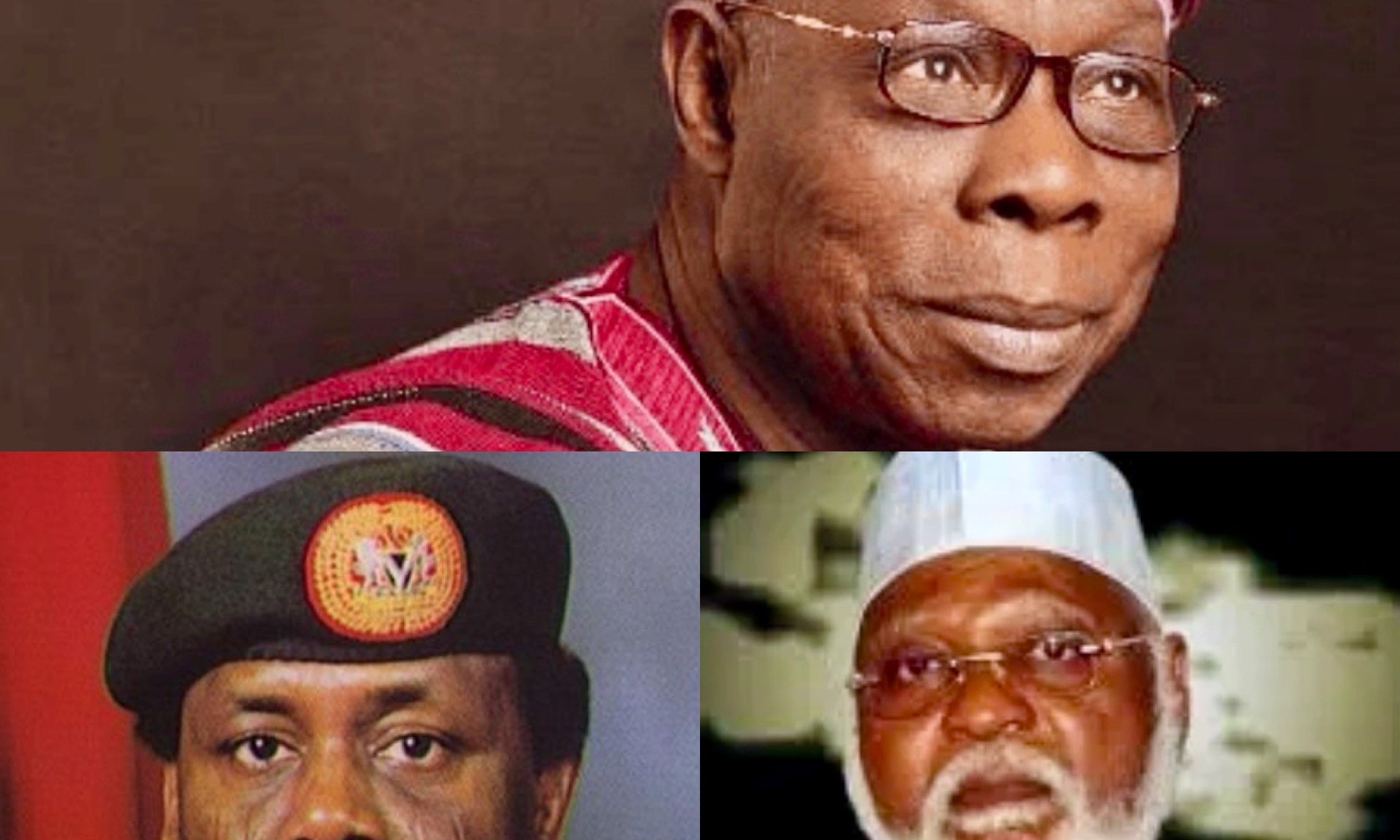
- Three Nigerian administrations spanning military dictatorship and civilian democracy alike, because bribery, unlike most things in Nigeria, works regardless of who is in power, received their envelopes and signed the papers.
It was, in every sense, a coalition of the willing.
The Trial: Justice, American-Style
When the United States Department of Justice eventually arrived at the party, fashionably late, as law enforcement tends to be, it did what American prosecutors do best: it prosecuted Americans.
KBR and Halliburton were fined $579 million. This money went to the United States Treasury. The American executives pleaded guilty. Jeffrey Tesler, the British lawyer, was extradited to the United States, a country he had presumably never defrauded, and also prosecuted.
And the Nigerian officials who received the $182 million in bribes? Who took money that belonged to their own people, from their own treasury, routed through a British lawyer and a Gibraltar shell company, to approve a contract that overcharged their own government?
They were not imprisoned.
A few faced investigations. There were settlements. There were fines paid by the Nigerian state, to the Nigerian state, which is roughly the equivalent of a man stealing his own wallet and then paying himself a fine. The money moved in circles. The circles were called “accountability.” And then everyone went home.
This is the part of the story that the DOJ press release does not dwell upon. The United States collected its $579 million, declared victory, and moved on. That the underlying theft, the systematic looting of Nigerian public funds, was never truly addressed, that no Nigerian official of consequence went to prison, that the Nigerian people remain without the infrastructure revenues that this gas project was supposed to generate: these are, apparently, details.
Details are not prosecutable.
The Deeper Lesson: Corruption as a Multinational Joint Venture
Nigeria has spent decades being lectured, by the World Bank, by Western governments, by NGOs with very sincere pamphlets, about the importance of fighting corruption. The Transparency International index. The OECD guidelines. The Foreign Corrupt Practices Act. The UK Bribery Act.
All of this is perfectly well-intentioned. It is also, in light of the Bonny Island scandal, spectacularly ironic.
Because what the Halliburton-KBR case reveals is that the corruption was not a Nigerian problem that infected a foreign corporation. It was a joint venture. A fifty-fifty arrangement, or, more precisely, a multinational consortium arrangement, which is actually more sophisticated. The American company brought the technical expertise. The British lawyer brought the offshore infrastructure. The Swiss banks brought the discretion. The Nigerian officials brought the signatures. Everyone contributed according to their comparative advantage. Adam Smith would have wept with pride.
What Nigerian officials took in bribes, they took because there was a global architecture, legal, financial, corporate, specifically designed to make the taking easy, invisible, and enormously profitable. That architecture is headquartered not in Lagos or Abuja, but in Houston, London, Geneva, and Gibraltar.
When the music stopped, it was Nigeria that was left without a chair. And without $182 million. And without accountability. And, naturally, without adequate gas infrastructure.
A Final Note on Fines
There is something philosophically interesting about the idea that the primary remedy for stealing $182 million from Nigerians was a $579 million fine paid to Americans.
It is the kind of justice that satisfies everyone except the people who were actually robbed.
But then, their satisfaction was never really the point, was it?
The Bonny Island LNG project continues to operate. Nigeria continues to face an energy crisis. Jeffrey Tesler paid his fine. The Swiss accounts were closed. The Gibraltar companies were dissolved. And somewhere, presumably, a very expensive lesson remains entirely unlearned, ready to be repeated, with minor variations, the next time a consortium of very serious men in very expensive suits gazes upon a country’s resources and sees opportunity.

