

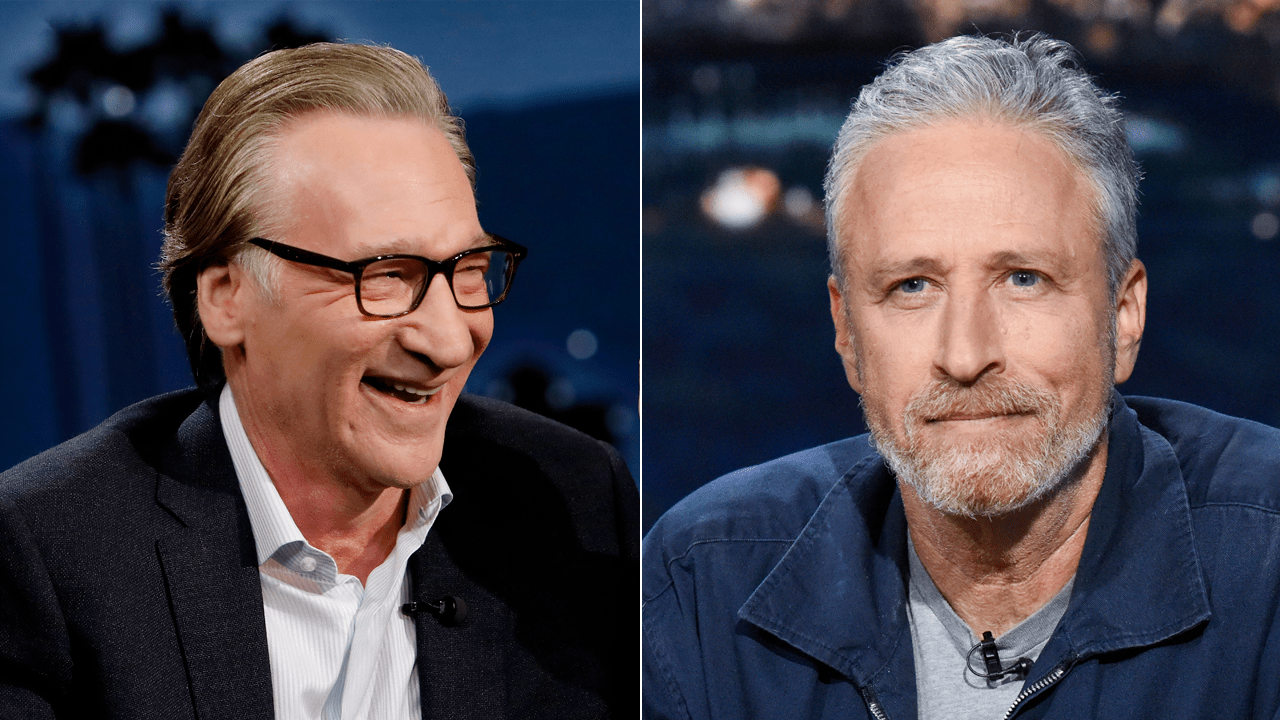
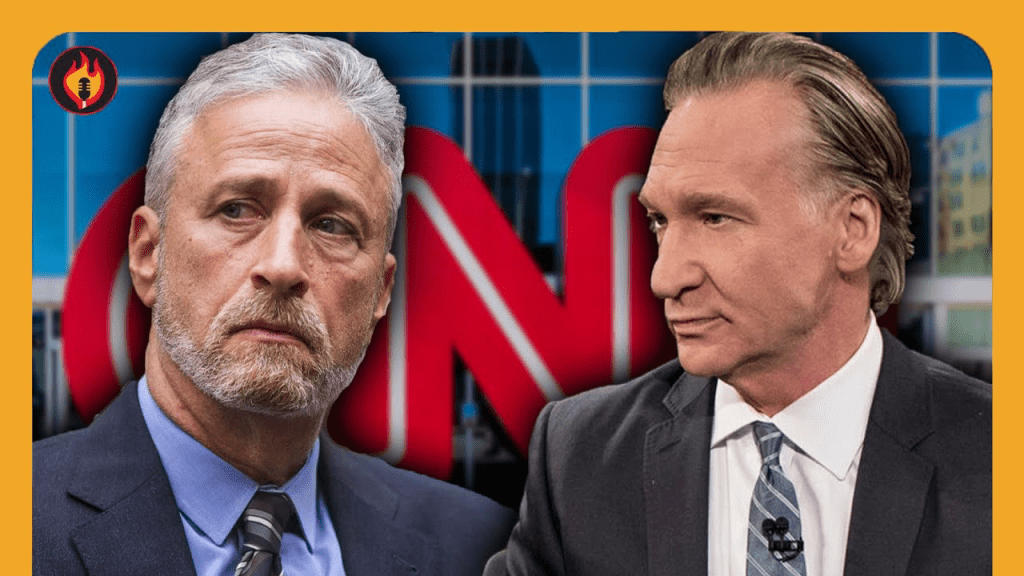
Bill Maher and Jon Stewart represent two prominent trajectories in American political comedy over the past three decades. Both rose to prominence in the 1990s and early 2000s as sharp, irreverent voices skewering power, hypocrisy, and media spin—Maher through Politically Incorrect and later Real Time with Bill Maher, Stewart via The Daily Show. Yet their evolutions diverge in revealing ways, particularly when viewed through the lens of my 2026 article, “The Curious Case of Bill Maher: Liberal by Brand, Conservative by Behaviour.”
I sought to portrays Maher as a figure whose liberal branding—rooted in cultural rebellion like mocking religion, casual drug use, and anti-authoritarian snark—masks increasingly conservative instincts on substantive issues. Maher critiques power selectively, champions rugged individualism without historical context, and applies principles inconsistently (e.g., zero nuance on Israel versus contextual lectures for Russia, China, Nigeria, or Venezuela).
Stewart’s path, by contrast, shows greater continuity in his core liberal framework, with adaptations that reflect self-awareness, institutional critique, and responsiveness to events rather than a wholesale drift toward conservative behavioral patterns.
Early Parallels: Shared Satirical Roots
In the 1990s and 2000s, both comedians embodied a post-Cold War, anti-establishment liberalism. Maher’s Politically Incorrect mixed guests across the spectrum for chaotic debates, often targeting religious conservatism and political correctness. Stewart transformed The Daily Show into a news parody that exposed media bias, government incompetence (especially under George W. Bush), and partisan theater. They occasionally clashed publicly—Maher criticized Stewart’s 2010 “Rally to Restore Sanity” for lacking punch, while Stewart pushed back on perceived false equivalences between left and right.
Both benefited from the era’s “both-sides” fatigue while leaning left on issues like the Iraq War, civil liberties, and corporate influence. Their humor relied on absurdity, clip montages, and moral clarity against obvious hypocrisies.
Divergent Evolutions in the 2010s–2020s
Bill Maher’s Trajectory (Liberal Brand, Conservative Behaviour):
I think Maher has not “updated his software” since his 1990s cultural rebellion. What once felt edgy—snarking at Christians or young idealists—now serves reactionary ends. He retains the liberal cachet (anti-Trump rhetoric, pro-choice stances, libertarian flair) but exhibits conservative behaviors:
- On Wokeness and DEI: Maher frames diversity efforts as a “Marxist plot” driven by overzealous activists, downplaying systemic racism and historical disadvantage. He prioritizes individualism and meritocracy, discomforted by group-based solidarity or discussions of identity. This mirrors right-wing critiques (e.g., Fox News on migrants) more than traditional liberal empathy for marginalized organizing.
- Foreign Policy Inconsistencies: Maher offers blanket, uncritical defense of Israel (“right, always right, even when visibly wrong”), equating nuance with antisemitism. Yet on other conflicts (Russia’s actions, Venezuelan crises, alleged issues in Nigeria), he deploys context, history, and moral lectures. This selective allergy to complexity highlights ethno-nationalist leanings he would otherwise mock.
- Cultural vs. Political Progress: Maher confuses ongoing cultural snark with political evolution. His smug style persists, convinced of his outsider edge, while resisting self-reflection on how his views align with power retention for “people like himself.”
Other commentators note Maher’s shift as aging into “old man yelling at clouds” bitterness, questioning progressive excesses while maintaining a liberal self-image. He has critiqued “cancel culture” and identity politics, positioning himself as a truth-teller against left-wing overreach.
Jon Stewart’s Trajectory (Adaptive Liberalism with Institutional Skepticism):
Stewart’s evolution appears more as refinement than rupture. He stepped away from The Daily Show in 2015, pursued projects like The Problem with Jon Stewart (Apple TV+), and returned in 2024 for weekly hosting amid another Trump era. His core remains rooted in moral satire, media accountability, and calls for decency—often with a progressive bent—but he shows willingness to critique his own side.
- On Wokeness and DEI: Stewart has pushed back against “cancel culture” excesses (famously reaming Maher’s takes on it), yet he avoids Maher’s full-throated dismissal. He engages issues like male voter shifts toward Republicans post-2024, exploring economic and cultural alienation without reducing them to “Marxist plots.” His approach leans toward understanding grievances rather than outright rejection of identity concerns.
- Foreign Policy, Especially Israel/Palestine: Here lies a stark contrast. Stewart has criticized Israel’s actions in Gaza harshly, describing civilian suffering as “self-evidently inhumane,” interrogating U.S. support as lacking courage to admit wrongs, and even referencing it in terms of moral clarity drawn from his Jewish background. He calls out inconsistencies (e.g., condemning Russia while equivocating on Gaza) and proposes solutions like demilitarized zones backed by Arab states. Unlike Maher’s context-free defense, Stewart applies consistent humanitarian scrutiny and rejects blanket endorsements.
- Domestic and Electoral Critique: Upon returning, Stewart mocked Biden’s age and debate performance, challenged Democratic spin, and analyzed why Democrats lost ground with certain demographics (e.g., working-class men, unions). He supported more progressive figures like Bernie Sanders/Elizabeth Warren in primaries and even a socialist mayoral candidate in 2025, while maintaining anti-Trump energy. This reflects pragmatic liberalism: willing to hold power accountable across aisles without abandoning solidarity or historical context.
Other observers describe Stewart as becoming “wiser and more reasonable” with age, using satire for systemic diagnosis rather than personal grievance. His return faced backlash from some liberals for “both-sides-ism” or insufficient purity, yet he persists in bafflement at institutional failures.
Key Comparisons Across Multiple Angles
- Consistency vs. Selective Principles: Maher’s evolution features ideological drift masked by branding—liberal aesthetics (weed, atheism, anti-religion) paired with conservative substance on race, merit, and certain foreign policies. Stewart maintains broader liberal consistency, applying skepticism evenly (critiquing Biden, media, and Gaza policies) while adapting tone to evidence.
- Empathy and Solidarity: I fault Maher for lacking empathy toward organized marginalized groups and historical nuance. Stewart’s work often centers human cost and shared bafflement, fostering a form of empathetic satire—even when uncomfortable for his audience.
- Self-Reflection and Adaptation: Maher resists updating views, camping “inside liberalism” without evolving. Stewart has shown flexibility: leaving daily hosting, experimenting with formats, and critiquing Democratic shortcomings without defecting.
- Audience and Cultural Role: Maher appeals to older, libertarian-leaning liberals frustrated with “woke” excesses. Stewart retains broader millennial/Gen Z crossover, functioning as a liberal opposition voice during Republican administrations while occasionally alienating purists.
- Nuances and Edge Cases: Both face accusations of hypocrisy—Maher for anti-PC rants while wielding platform power; Stewart for past “false equivalence” critiques now seen as insufficiently partisan. In a polarized era, Maher’s contrarianism risks enabling right-wing talking points; Stewart’s moral clarity risks performative outrage. On religion, Maher’s militant atheism contrasts Stewart’s more restrained cultural Judaism. Post-2024 election dynamics amplify differences: Maher’s pre-existing skepticism of progressive strategies aligns with analyses of Democratic losses, while Stewart dissects them with data-driven humor.
Implications
Maher’s case illustrates how personal brand inertia can decouple self-perception from behavioral reality, contributing to “curious” political realignments among boomer-era liberals. Stewart’s path suggests satire can evolve without abandoning core values, serving as a check on power (left or right) while engaging complexity.
This divergence reflects broader tensions in American liberalism: cultural rebellion versus structural empathy, individualism versus solidarity, and selective versus consistent application of principles. Neither is static—Maher’s “evolution” feels like stasis in motion, while Stewart’s involves iterative adjustment amid changing realities. In 2026, their styles highlight why political comedy remains potent yet polarizing: one comforts through unchanging edge, the other through evolving moral inquiry.
 Centre for Nigeria Progress