

Nigeria’s security architecture has long displayed a quiet but consistent pattern: senior officers of the Nigerian Army being redeployed to head entirely different arms of the state’s coercive machinery. It is a peculiarly Nigerian institutional habit—part pragmatism, part centralisation instinct, and part elite trust network.
At first glance, it raises eyebrows. Why should a career infantryman end up running immigration, customs, or even the police? But once you examine the career trajectories and political logic behind these appointments, a clearer picture emerges: in Nigeria, the Army is not just a fighting force—it is a leadership factory for the entire security ecosystem.
The Army as the Foundation
The Nigerian Army has historically been the most politically influential branch of the armed forces. From the coups of the 1960s through decades of military rule, it developed not just battlefield competence but administrative reach, strategic planning capacity, and, crucially, political trust.
Army officers are trained to manage complexity under pressure—logistics, personnel, intelligence, and civil-military relations. In a system where loyalty and control often matter as much as technical specialization, this makes them ideal candidates for redeployment across agencies.
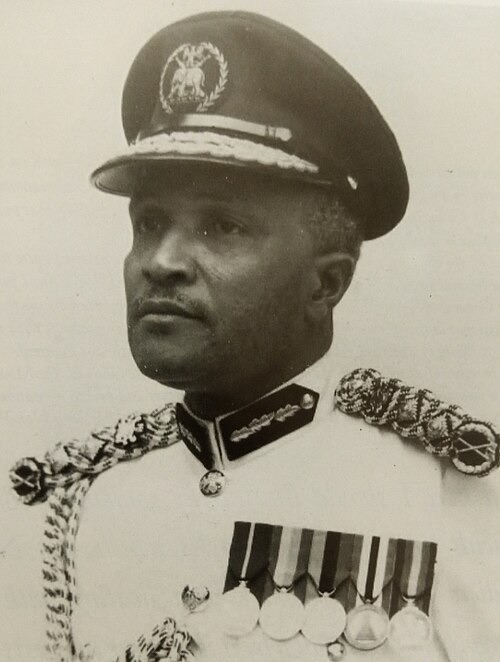
From Khaki to Police Command: Mohammed Dikko Yusuf
Mohammed Dikko Yusuf began his career firmly rooted in the Nigerian Army. His early military experience exposed him to command structures, discipline enforcement, and internal security operations—skills that translate almost seamlessly into policing at the highest level.
When he was appointed Inspector General of Police, it was less a leap across institutions and more a lateral shift within Nigeria’s broader security logic. His tenure reflected a military-style approach to policing—centralised command, emphasis on order, and a hierarchical enforcement culture.
This kind of appointment underscores a key reality: Nigeria often treats internal security (policing) as an extension of national security (military concern), rather than a purely civilian function.
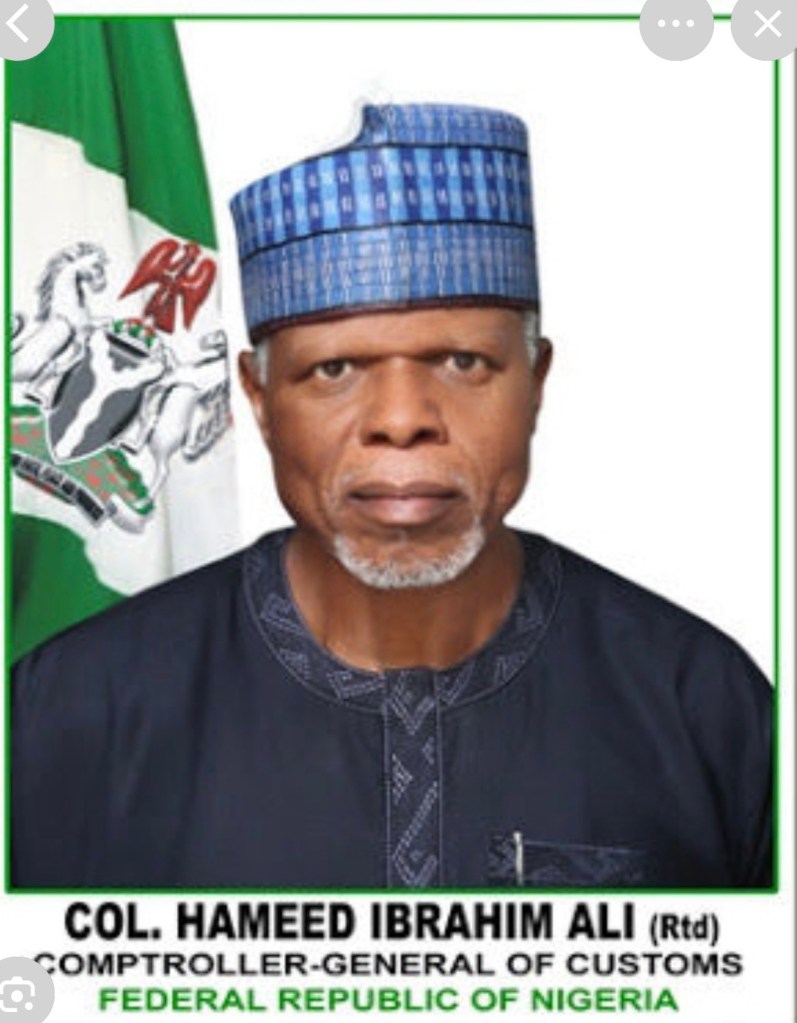
Military Discipline Meets Revenue Control: Hameed Ibrahim Ali
Colonel Hameed Ibrahim Ali is perhaps one of the most prominent modern examples of this cross-institutional migration. A career Nigerian Army officer and former military administrator of Kaduna State, Ali built his reputation within the rigid command structure of the military before transitioning into a civilian-facing but security-sensitive role.
His appointment as Controller-General of the Nigeria Customs Service under President Muhammadu Buhari was emblematic of the state’s preference for trusted military figures in strategic economic-security roles.
Customs, on paper, is a revenue and trade facilitation agency. In practice, it sits at the intersection of:
Border security Anti-smuggling operations Economic regulation National security enforcement
Ali’s tenure reflected a distinctly military imprint—strict enforcement posture, centralised authority, and a combative stance against entrenched interests within the service.
Critics argued that this approach deepened institutional tensions, particularly around issues of reform and compliance culture. Supporters, however, viewed it as necessary shock therapy for a system long perceived as compromised.
Crossing Into Air Power: Shittu Alao
Air Marshal Shittu Alao’s case is slightly different but still illustrative. While he ultimately led the Nigerian Air Force, his career pathway reflects the early-era fluidity within Nigeria’s armed services, where foundational military training and inter-branch movement were more common.
Starting within the broader military establishment, Alao rose through the ranks during a period when Nigeria was still consolidating its air capabilities. His leadership symbolised a generation of officers who were less siloed and more “joint” in orientation—long before joint operations became modern doctrine.
The Real Logic: Trust Over Technicality
If you strip away the formal justifications, the recurring theme behind these appointments is trust.
Presidents and military rulers alike have tended to appoint individuals they:
Have worked with in the Army Understand within a rigid hierarchy Believe can enforce directives without institutional resistance
The Army, being the most structured and politically embedded institution, naturally becomes the talent pool.
The Trade-Off
This system is not without consequences.
Advantages:
Strong command discipline Rapid decision-making Cohesion across security agencies
Disadvantages:
Weak institutional specialization Over-centralisation of power Blurring of civilian vs military roles Reduced innovation in technically complex agencies
In essence, Nigeria gains control but risks competence in specialised domains.
Conclusion: A System by Design, Not Accident
The movement of Army officers into leadership roles across Nigeria’s security and paramilitary institutions is not random—it is systemic.
It reflects a state that prioritises control, loyalty, and continuity over strict professional boundaries. Whether that model remains sustainable in an era requiring cyber expertise, financial intelligence, and sophisticated policing is another question entirely.
But for now, one thing is clear: in Nigeria, the road to commanding almost any security institution still begins in khaki.
 Centre for Nigeria Progress