

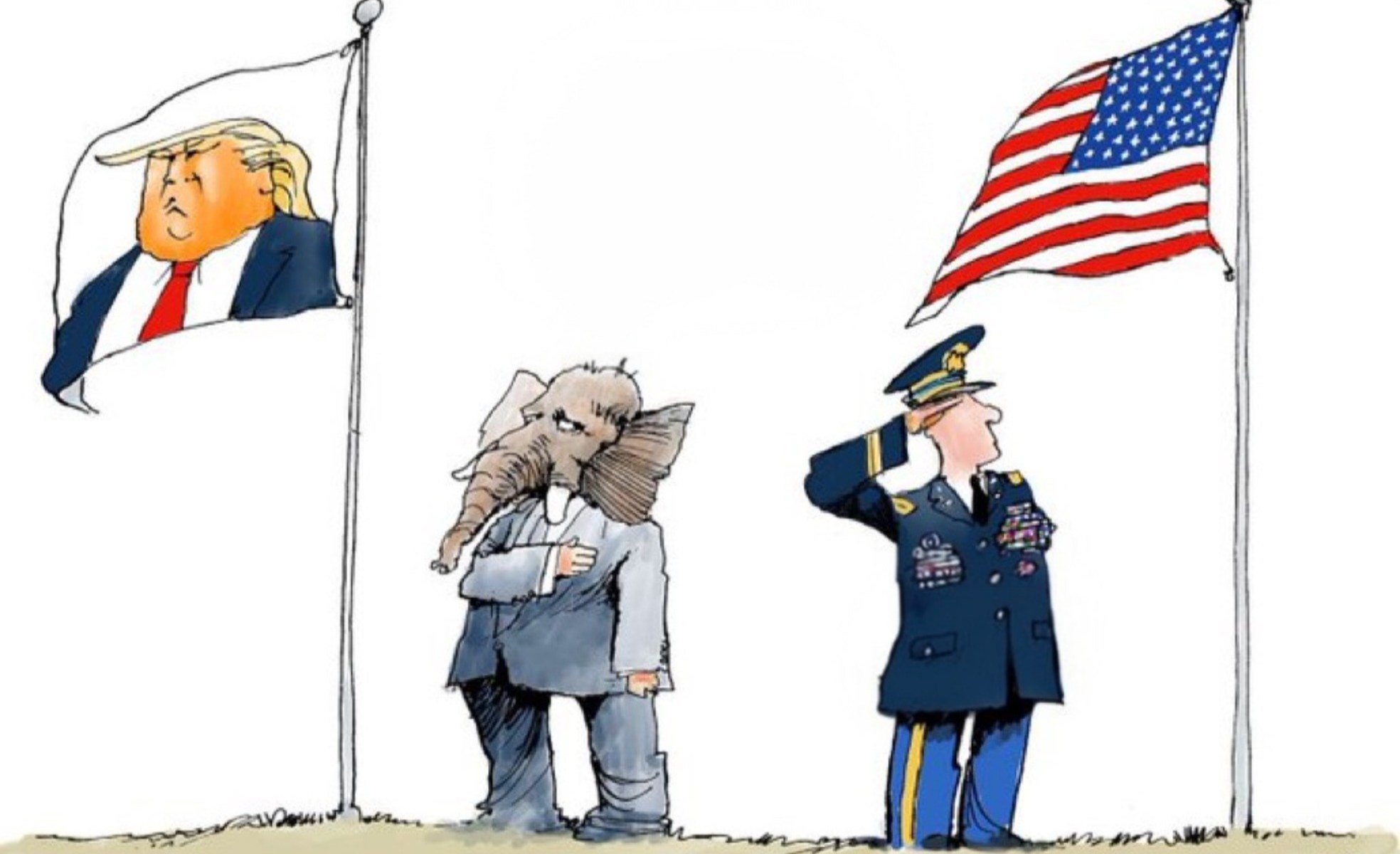

There is something almost poetic about the current state of American politics. The Republican Party controls the United States Congress—both the United States Senate and the United States House of Representatives—and their man, Donald Trump, is sitting comfortably in the White House.
In football terms, they have the striker, midfield, defence, goalkeeper, referee, and—if we’re being honest—the VAR room.
And yet, somehow, they keep dribbling past their own teammates just to shoot from impossible angles.
Tariffs: Why Ask Permission When You Can Vibes It?
Now, let’s start with tariffs.
Under the Constitution, tariffs are Congress’s job. Not “sort of,” not “on weekends,” not “when the president is busy”—but explicitly Congress. Article I says so in very clear, lawyer-proof language.
So what does Trump do?
Instead of walking down Pennsylvania Avenue, knocking on Congress’s door and saying, “Gentlemen, kindly pass me a tariff bill,” he decides to freestyle it. Executive actions here, statutory gymnastics there—essentially governing tariffs the way a DJ mixes tracks: confidently, loudly, and hoping nobody notices the transitions don’t quite match.
The strange part? Congress would probably say yes. This is not a hostile legislature. This is not a divided government. This is, politically speaking, a group chat where everyone already agreed before the meeting started.
Yet Trump behaves like he’s locked out of the house… when he owns the keys.
War Powers: “Congress, I’ll Loop You In Later”
Then we get to war. The Constitution, again trying its best, says Congress declares war and the president conducts it.
Simple division. Clean lines. No confusion.
But Trump treats this arrangement the way people treat terms and conditions—technically important, but nobody really reads them.
If there’s a potential conflict with Iran, the logical move is obvious: go to Congress, get authorization, wrap it in patriotic speeches, and collect bipartisan applause. With his level of influence over the party, he’d likely get the votes before the coffee goes cold.
Instead, the approach leans toward: act first, explain later, and if necessary, tweet the justification in all caps.
Congress, meanwhile, watches like a supporting actor who forgot their lines in a play they’re supposed to be co-starring in.
Birthright Citizenship: Constitutional Gymnastics
Now to the main event: birthright citizenship.
This isn’t just policy—it’s constitutional bedrock, anchored in the Fourteenth Amendment to the United States Constitution and embodied in the doctrine of Birthright citizenship.
Changing it requires a constitutional amendment. That means Congress initiates the process, states ratify it, and everyone pretends they enjoy civics again.
But Trump looks at this long, structured, constitutionally approved process and says, “Or… we could just try something else.”
Executive action. Legal challenges. A hopeful glance toward the Supreme Court of the United States as if it’s a constitutional customer service desk: “Hi, yes, I’d like to return this amendment and get a different interpretation, please.”
Again, the irony is delicious. The hard route—constitutional amendment—is politically easier for him because his party controls Congress. The easy shortcut—executive action—is legally harder and far more uncertain.
And yet, guess which one he picks?
Is Trump the Government… or Just Acting Like It?
So we must ask the obvious question.
Does Trump see himself as the entire government—Congress optional, Constitution flexible, process negotiable?
Or is this what happens when a legislature becomes so passive that the president stops bothering to include it?
Because let’s be honest: if Congress had any real objection, it could assert itself. Loudly. Publicly. Constitutionally. But instead, it often responds like a group of relatives watching a chaotic wedding—concerned, slightly confused, but unwilling to intervene.
Strength Theatre, Institutional Weakness
On the surface, Trump’s approach looks strong. Decisive. Unilateral. Action-oriented.
But underneath, it reveals something else entirely.
If you control Congress and still don’t use it, what does that say? Either you don’t want the scrutiny, or you don’t want the constraints, or—most intriguingly—you’ve grown so accustomed to going solo that collaboration feels like inconvenience.
It’s the political equivalent of owning a fully staffed kitchen and still ordering takeaway every night.
Final Thought: A One-Man Government in a Three-Branch System
The American system was designed like a three-legged stool: executive, legislature, judiciary. Remove one leg—or simply ignore it—and the whole thing starts wobbling.
Right now, the wobble isn’t coming from opposition. It’s coming from within alignment.
Trump doesn’t need to bypass Congress.
He chooses to.
And in that choice lies the real story—not of a divided government, but of a unified one that behaves like a one-man show.
Which, for a system built on checks and balances, is less “strong leadership” and more “constitutional improv comedy.”

