

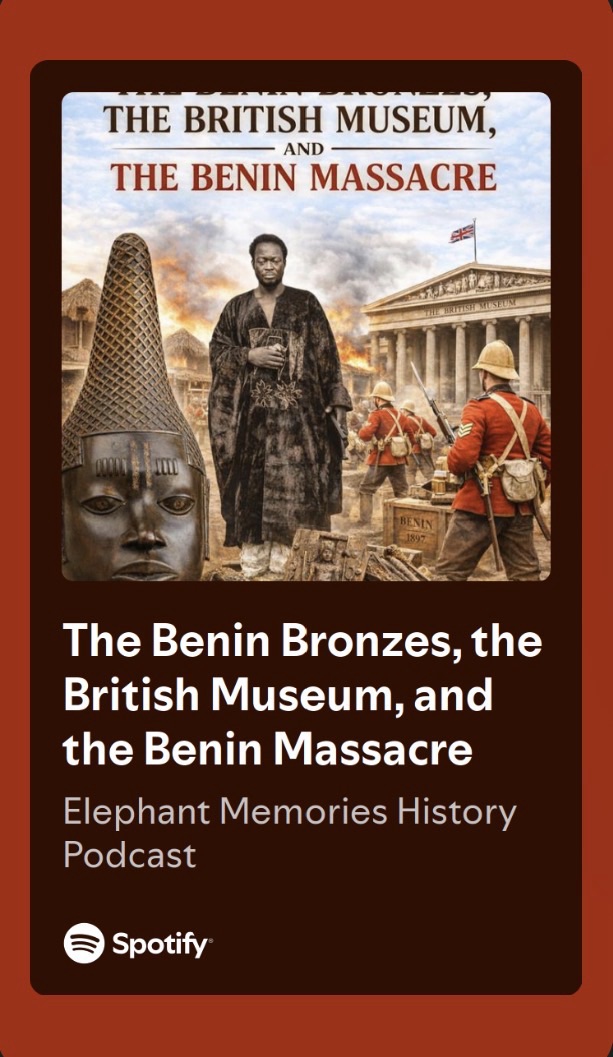
Historical Context: The Benin Kingdom and the 1897 Events
The Kingdom of Benin flourished for centuries (roughly 13th–19th centuries) as a major power in the region, with a highly organized court, guilds of artisans, and a thriving trade network. Its art—particularly the bronzes—served not just as decoration but as historical records, religious objects, and symbols of royal power, often depicting court life, warriors, Portuguese traders (from early contact in the 15th–16th centuries), and mythological elements.
In January 1897, a British diplomatic party led by Acting Consul General James Phillips (accompanied by several Europeans and hundreds of African carriers) approached Benin City. The British claimed it was a peaceful mission to negotiate trade and end practices like human sacrifice, but tensions were high amid Britain’s broader “Scramble for Africa” and efforts to control trade routes. The party was ambushed, resulting in the deaths of most Europeans (only two survived) and many Africans—this incident became known in British accounts as the “Benin Massacre” or “Phillips Massacre.”
Britain responded swiftly with a large-scale military expedition in February 1897. British forces captured Benin City, burned much of the royal palace, exiled the Oba (ruler), and looted an estimated 2,500–5,000 artifacts (official figures vary; some sources cite over 3,000–4,000 items). These included the famous Benin Bronzes (brass/bronze plaques and sculptures), ivories, and other treasures. Many were auctioned off in London to offset expedition costs, with a significant portion entering the British Museum (around 800–900 items today), German museums (e.g., Berlin’s Ethnological Museum with hundreds), and private collections. The dispersal influenced European modernism, as artists like Picasso drew inspiration from African forms.17
Nuances in the narrative:
- British perspective at the time: Framed as retaliation for the ambush and a “civilizing” mission against alleged barbarism (e.g., human sacrifice, though the scale and context are debated).
- African and modern critical perspectives: View it as unprovoked aggression tied to imperial expansion, economic motives (oil palm trade, rubber), and a pretext for conquest. The expedition involved significant violence, including civilian casualties, destruction of cultural sites, and the burning of the city—described by some as a massacre far exceeding the initial incident.
- Edge cases and debates: Evidence suggests the punitive expedition may have been planned or anticipated in advance. Not all bronzes were “ancient”—some reflected recent history—but all represented profound cultural loss. Post-1897, the kingdom was incorporated into British colonial Nigeria, with lasting impacts on local governance and identity.
Broader Implications and Related Considerations
- Cultural Restitution Debates: The episode likely touches on calls for repatriation. Nigeria and the Benin Royal Court have long sought the return of these objects. Some museums (including in Germany and the U.S.) have begun returning or loaning pieces, while the British Museum has faced protests and legal/ethical challenges. Arguments for retention often cite preservation, universal access (“encyclopedic museums”), or legal acquisition under 19th-century norms. Counterarguments emphasize moral ownership, the violence of acquisition, and the objects’ role as living heritage rather than mere “art.” Initiatives like the Digital Benin project catalog artifacts globally to aid research and potential returns.
- Impact on Art History and Museums: The bronzes challenged European assumptions about African “primitivism,” contributing to a reevaluation of non-Western art. Today, they symbolize colonial legacies in cultural institutions.
- Modern Relevance: Discussions intersect with decolonization efforts, identity politics, and how history is taught/narrated. In Nigeria, the bronzes hold symbolic importance for national pride and cultural revival (e.g., efforts to rebuild a Benin museum). Globally, similar cases (e.g., Elgin Marbles, other looted artifacts) raise questions about universal vs. source-community claims to heritage.
- Podcast’s Angle: Given Siollun’s focus on “dramatic blow-by-blow reconstructions” and African-centered storytelling, the episode probably humanizes both sides while critiquing imperial actions, explores the kingdom’s sophistication to counter stereotypes, and reflects on memory and “elephant memories” (long remembrance of historical injustices).
Listening Recommendations and Further Exploration
If you’re interested in this episode, it’s available on Spotify (and likely other platforms like Apple Podcasts, Amazon Music, and RSS feeds). As the debut of the series, it sets the tone for deep dives into African history—expect vivid narratives, context on pre-colonial achievements, and reflections on how events echo today.
For deeper reading:
- Books like The Brutish Museums by Dan Hicks (critiques museum narratives around Benin).
- Loot: Britain and the Benin Bronzes by Barnaby Phillips (explores restitution complexities).
- Wikipedia and academic sources on the Benin Expedition of 1897 for primary accounts and timelines.
- Other episodes in Elephant Memories for broader African history (the podcast promises coverage of revolutionaries, intellectuals, and pivotal events without Eurocentric filters).
 Centre for Nigeria Progress