

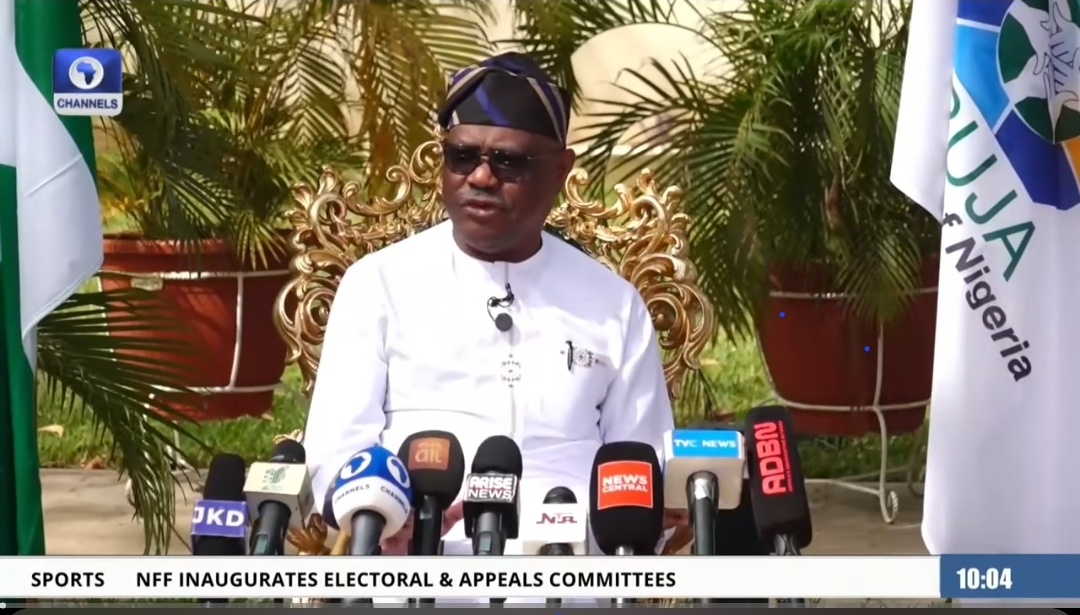
There are moments in politics when the mask slips—not dramatically, not with fireworks, but with a stray sentence that reveals the wiring beneath the polished exterior. On the 4 April 2026, such moment came courtesy of Nyesom Wike, a minister of the Federal Republic, the minster for the Federal Capital Territory and former Governor of Rivers State, who mused aloud that he could have shot a journalist—Seun Okinbaloye—during a media chat with senior journalists in his office. This was because Seun Okinbaloye during a live broadcast of the Politics Today at the Channels TV station, had mused on the country’s apparent road to a one party state which Wike obviously disagreed.
Pause there. Not metaphorically silenced. Not politically defeated. Shot.
Now, in saner ecosystems, such a statement would trigger outrage, resignation letters, perhaps even a constitutional tutorial for the speaker. But in our clime, it instead triggers something closer to déjà vu. Because, as it turns out, Rivers State leaders have form—and not the harmless, fill-in-the-blanks variety.
A Short Trip Down Memory Lane (Bring a Helmet)
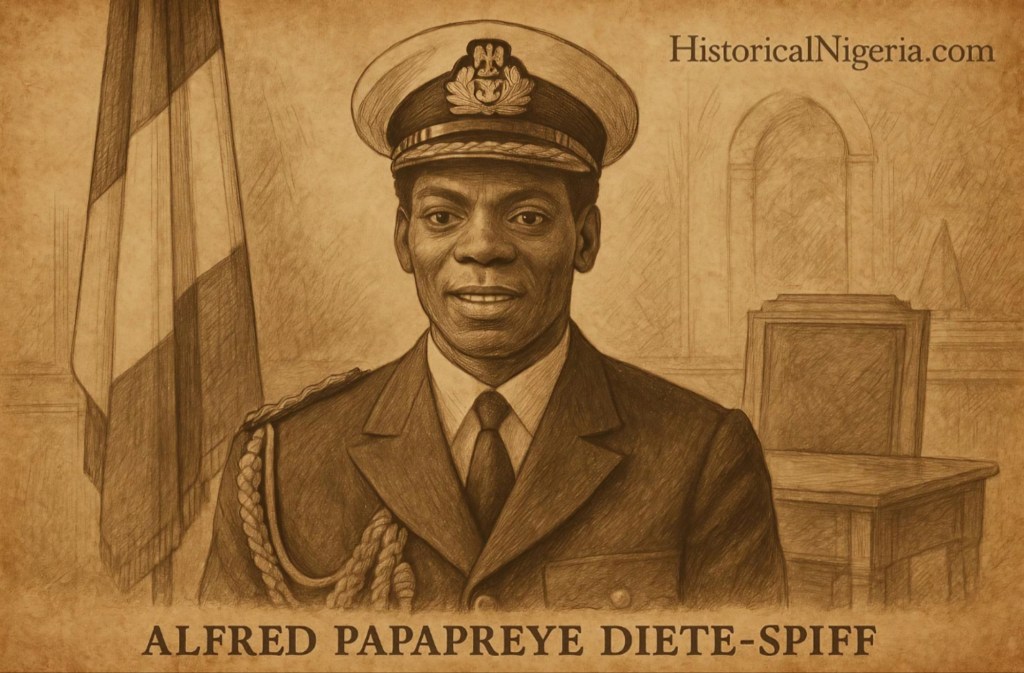
In 1973, under the military governorship of Alfred Diete-Spiff, a correspondent for the Nigerian Observer committed the grave sin of journalism: he wrote about an impending teachers’ strike. Unfortunately for him, the article happened to be published on the governor’s birthday.
This coincidence was interpreted not as poor editorial timing, but as lèse-majesté. Enter Ralph Iwowari, who responded with a level of proportionality that would make medieval monarchs blush: the reporter’s head was publicly shaved, and he was administered 24 strokes of the cane.
A birthday misunderstanding, resolved with corporal punishment. As one does.
Same Script, New Actors
Fast forward half a century, and while the uniforms have changed—from khaki to designer agbada—the reflex appears stubbornly intact. The instinct is not to rebut dissent, nor to out-argue it, but to discipline it. Physically, if possible. Verbally, if one must pretend to be civilised.
Wike’s outburst is not an anomaly; it is a continuation. A through-line connecting eras: from military decree to democratic entitlement, from canes to casual references to bullets.
The Journalist’s Paradox
But this is not a one-sided affair. Seun Okinbaloye is not merely a passive recipient in this theatre. He has, over time, provided Wike with generous airtime—some might say unfiltered oxygen—to ventilate his political grievances.
And yet, when the conversation briefly flirted with accountability—specifically, the small matter of how a public servant came to possess a Rolls-Royce—the moment dissolved as quickly as it appeared. Wike’s response: “So what?” Seun’s follow-up: conspicuously absent.
In journalism, there is a delicate balance between access and interrogation. Tilt too far toward access, and you become a stenographer with a microphone. Tilt too far toward confrontation, and your guests mysteriously develop scheduling conflicts. The skill lies in walking that tightrope without falling into complicity.
Under this doctrine, disagreement is not a democratic feature; it is a personal affront. Journalists are not watchdogs; they are either allies or enemies. And once you are categorized as the latter, the rhetoric escalates—from insults to threats, from “fake news” to fantasies of retribution.
The Real Issue
The real problem is not that a politician lost his temper on live television. That is almost expected. The problem is that the underlying mindset—the belief that dissent deserves punishment—remains socially and politically tolerable.
Until that changes, we will continue to recycle the same script:
- A politician expresses outrage at criticism
- A journalist provides a platform, sometimes without sufficient challenge
- The public reacts briefly
- And then we all move on, until the next outburst
Final Thought
Democracy is not tested by how loudly leaders speak, but by how well they tolerate being spoken against. When the response to dissent is a nostalgic longing for canes—or worse, bullets—what we are witnessing is not strength, but fragility dressed up as authority.
And history, as Rivers State kindly reminds us, has seen this performance before. The only question is whether we intend to keep applauding.

