


Every few years, Nigerians gather—physically or digitally—to ask the same question: is this the moment? The moment when the long-suffering public finally says, “enough,” and the political establishment hears it not as background noise, but as a termination notice.
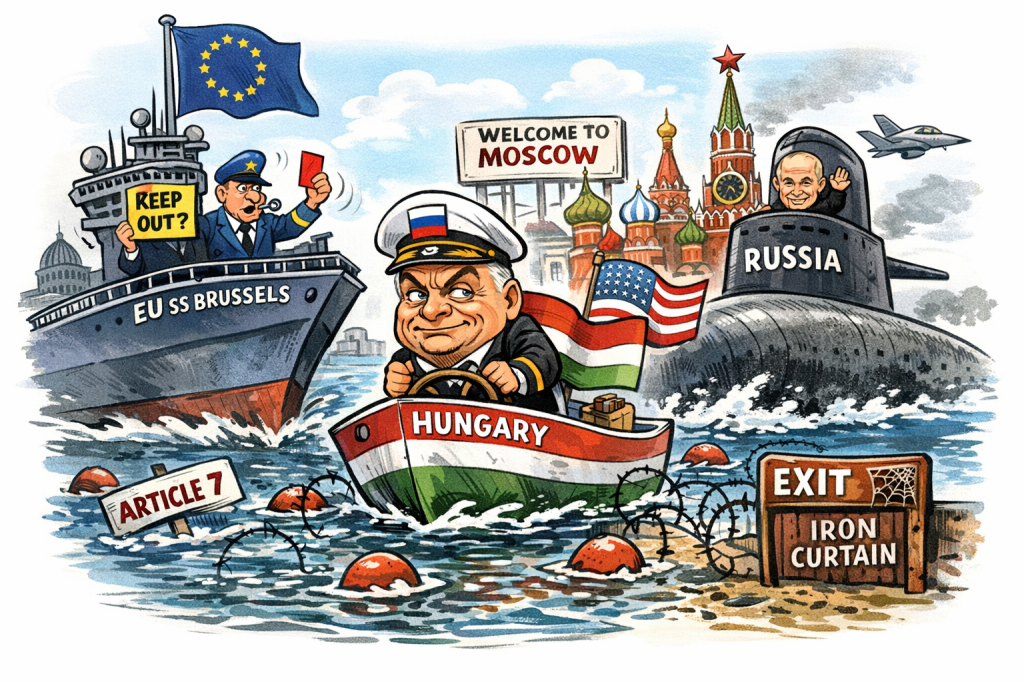
Recently, some have pointed to Hungary—where opposition mobilisation and sheer voter turnout have, at different moments, shaken entrenched power—as a possible template. The theory is simple: overwhelm the system with numbers so large that even the most creatively inclined electoral magician cannot abracadabra the result away.
Simple. Elegant. Almost European.
But Nigeria is not Hungary. Nigeria is Nigeria—where even the impossible requires proper documentation, three passport photographs, and a “facilitation fee.”
The Ghost of #EndSARS: Energy Without Steering
Let’s begin with the closest thing Nigeria has had to a spontaneous civic uprising in recent memory: the End SARS protests.
It had everything:
Youthful energy Nationwide coordination International visibility And, crucially, a shared grievance: police brutality
For a brief, shining moment, Nigeria looked like a country where citizens had discovered both their voice and their collective spine.
But then came the fatal flaw: no political outlet.
It was a movement powered by outrage but allergic to structure. No candidates. No ballot strategy. No translation of street legitimacy into institutional power. In Nigerian terms, it was like cooking a perfect pot of jollof rice… and then forgetting to bring plates.
The state, experienced in the ancient art of waiting things out, simply did what it does best: absorbed the shock, recalibrated, and carried on.
Enter Obi: Structure Without Enough Shock
Then came Peter Obi—the candidate who turned what is usually a sleepy electoral exercise into something resembling a music festival with PVCs.
His support cut across demographics:
Urban youth Diaspora enthusiasts First-time voters Even that one uncle who had sworn off voting since 1983
For once, hope was not whispered—it was trending.
But here too, there was a limitation. The movement had a political outlet, yes—but not enough systemic penetration. The enthusiasm did not fully translate into control of the levers that matter: party machinery, electoral logistics, and the quiet but decisive corridors where results are sometimes “managed.”
In short, the spirit was willing, but the structure met a structure that had been doing this since before WhatsApp was invented.
The Status Quo: Masters of the Ground Game
The incumbency machine in Nigeria is not just a political system—it is an ecosystem.
It has:
Institutional familiarity Resource advantage Tactical patience And an almost artistic understanding of timing
It knows when to delay, when to accelerate, and when to produce results with the confidence of a student who has already seen the exam paper.
So while citizens debate revolution on Twitter (or X, for those who enjoy rebranding exercises), the system is busy doing what it has always done: maintaining equilibrium—just enough stability to avoid collapse, just enough dysfunction to remain in control.
The Hungary Hypothesis: When Numbers Break the Machine
Now, back to Hungary.
The key argument is turnout. At sufficiently high levels of voter participation, manipulation becomes statistically, logistically, and politically difficult. You cannot easily hide an elephant in a room full of people who are all counting elephants.
This is the seductive logic: if Nigerians vote in overwhelming numbers, the system will have no choice but to reflect the will of the people.
And here’s where things get interesting.
What If the Two Nigerias Finally Meet?
Nigeria currently has two parallel forces:
The EndSARS Nigeria Angry, mobilised, leader-skeptical, allergic to old politics The Obi Nigeria Politically engaged, structured (to a degree), electorally focused
Individually, each has already tested the system:
One shook it The other stretched it
But neither broke it.
Now imagine—purely as a thought experiment—that these two streams converge.
Outrage meets organisation.
Street energy meets ballot discipline.
Hashtags meet polling units.
That is not a protest. That is a political event.
And if, on top of that, turnout reaches levels that make logistical “adjustments” impractical, then yes—the Hungary scenario stops being fantasy and starts becoming a case study.
The Real Problem: Nigerians and Consistency
Before we get too excited, however, there is one stubborn obstacle: Nigerians themselves.
We are a people capable of:
Outrage on Monday Resignation by Wednesday And Premier League analysis by Saturday
Sustained civic engagement is not our strongest suit. We sprint brilliantly but struggle with marathons—especially when the marathon involves queueing under the sun while an INEC official searches for a missing cable.
High turnout requires discipline, patience, and a willingness to endure inconvenience without immediate gratification. In other words, it requires the exact opposite of everything Nigerian traffic has trained us to be.
So, Can Hungary Happen in Nigeria?
The short answer: Yes—but only under very specific conditions.
Mass mobilisation (EndSARS energy) Clear political channel (Obi-style candidacy or equivalent) Overwhelming voter turnout And, crucially, sustained pressure before, during, and after elections
Miss one of these, and the system survives.
Hit all of them, and the system… negotiates.
Final Thought: The Dam and the Drip
Nigeria is often described as a country perpetually on the brink. The dam is always “about to break,” yet somehow continues to hold—patched together with elite consensus and public fatigue.
But dams don’t fail because of one dramatic moment alone. They fail when pressure builds consistently, relentlessly, until even the smallest crack becomes catastrophic.
So yes, Hungary can happen in Nigeria.
The real question is not whether the system can be overwhelmed.
It is whether Nigerians can agree—just long enough—to do the overwhelming.
 Centre for Nigeria Progress