

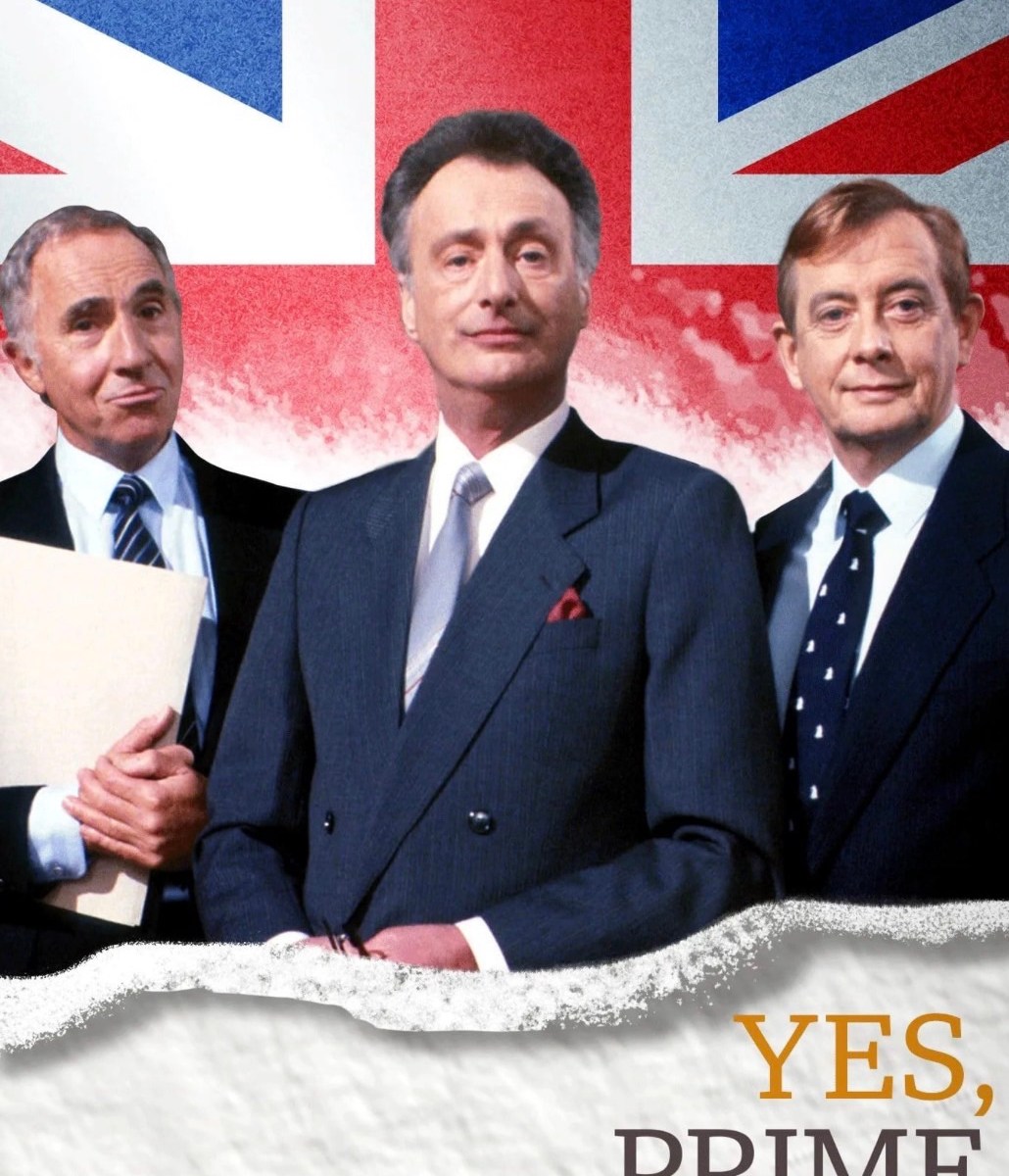
1/12
Sir Humphrey: “So, I gather you denied that Mr Halifax’s phone had been bugged?”
PM Hacker: “Well obviously! It was the one question today to which I could give a clear, simple, straightforward, honest answer.”
2/12
Sir Humphrey: “Yes, unfortunately, although the answer was indeed clear, simple and straightforward, there is some difficulty in justifiably assigning to it the fourth epithet you applied to the statement.”
Sir Humphrey: “In as much as the precise correlation between the information you communicated and the facts as so far they can be determined and demonstrated is such as to cause epistemological problems of sufficient magnitude as to lay upon the logical and semantic resources of the English language a heavier burden than they can reasonably be expected to bear.”
3/12
PM Hacker: “Epistemological? What are you talking about?”
Sir Humphrey: “You told a lie.”
PM Hacker: “A lie?!”
PM Hacker: “But what do you mean by ‘a lie’?”
Sir Humphrey: “I mean you *lied*.”
Sir Humphrey: “Oh yes, I know. This is a difficult concept to get across to apolitician.”
4/12
PM Hacker: “You mean we *are* bugging Mr Halifax’s telephone?”
Sir Humphrey: “We *were*. We stopped 17 minutes ago.”
PM Hacker: “Well you can’t call that lying!
Sir Humphrey: “What would you call the opposite of telling the truth?”
PM Hacker: “But there was no intent and I didn’t mean to deceive them. I’d never knowingly mislead the House.”
Sir Humphrey: “Nonetheless you have done so.”
PM Hacker: “Wasn’t my fault. I didn’t know he was being bugged.”
5/12
Sir Humphrey: “Prime Minister, you are deemed to have known. You’re ultimately responsible.”
PM Hacker: “Why wasn’t I told?”
Sir Humphrey: “The Home Secretary might not have felt the need to inform you.”
PM Hacker: “Why?”
Sir Humphrey: “Perhaps he didn’t know either. Or perhaps he’d been advised that *you* did not need-to-know.”
6/12
PM Hacker: “Well I *DID* need to know!”
Sir Humphrey: “Apparently the fact that you needed to know was not known at the time. But now that the need-to-know is known, those who needed to advise and inform the Home Secretary perhaps further information that we needed as to whether to inform the highest authority of the known information… was not yet known. And therefore there was no authority for the authority to be informed.”
7/12
Sir Humphrey: “Because the need-to-know was not, at that time, known or needed.”
PM Hacker: “What?!
Sir Humphrey: “We would not know that you were denying it in the House?”
Sir Humphrey: “Well obviously I would — if I didn’t know and I asked. We did not know you’d be asked when you didn’t know. There is bound to be…”
PM Hacker: “But I didn’t know! If I didn’t know…”
Sir Humphrey: “It was thought it was better not to inform you.”
8/12
Sir Humphrey: “You see, Hugh Halifax is one of your government team and as such it was thought that it was better not to create distrust. We only tell you what you should be aware of.”
PM Hacker: “When’s that?”
Sir Humphrey: “You should *now* be aware — because you have just denied it.”
PM Hacker: “Well it would have been rather more helpful if I’d been aware *before* I denied it.”
PM Hacker: “Why did you decide that I didn’t need to know?”
Sir Humphrey: “On the contrary, Prime Minister. If you had been aware before you denied it, then you wouldn’t have denied it. But you needed to know.”
9/12
Sir Humphrey: “We do not always tell you about bugging when you need to know. You see, at times Prime Minister, we need you *not* to know.”
PM Hacker:: “I didn’t. Who did?”
Sir Humphrey: “Nobody?”
Sir Humphrey: “It was just that nobody decided to tell you.”
PM Hacker: “Well it’s the same thing.”
Sir Humphrey: “On the contrary, Prime Minister. To decide to conceal information from you is a heavy burden for any official to shoulder. But to decide not to reveal information to you is routine procedure.” Kadiri
10/12
PM Hacker: “Humphrey, I need to know *everything*. Everything!”
Sir Humphrey: “Everything? Very well. Stationery deliveries this week to the government offices: four dozen packets of size two paper clips.”
PM Hacker: “Don’t be silly, Humphrey. I mean important things.”
Sir Humphrey: “Who should decide what is important?”
11/12
PM Hacker: “Humphrey, how can you possibly defend this cock-up?”
Sir Humphrey: “Well as you said in the House, ‘We got it wrong.’
Sir Humphrey: “Aye, Prime Minister. I am merely a humble servant — a lowly official. The Home Secretary made the decision.”
PM Hacker: “*You* got it wrong!”
PM Hacker: “Can you think of any reason why I shouldn’t ask him to resign?”
Sir Humphrey: “With respect, Prime Minister, you should only ask him to resign when he has made a mistake which could have been seen at that time — and not with benefit of hindsight.”
12/12
Sir Humphrey: “But you see, the trouble today has arisen because of *your own* error of judgment in making this denial. You should not have denied something about which you did not know. That was *your* fault.” “This system works perfectly well as long as the Prime Minister tells the Civil Service everything he is going to say before he says it. But if precipitately he says something without first clearing it with his officials, he has only himself to blame. You must learn discretion, Prime Minister. In government there is *always* something to be discreet about.”
 Centre for Nigeria Progress