

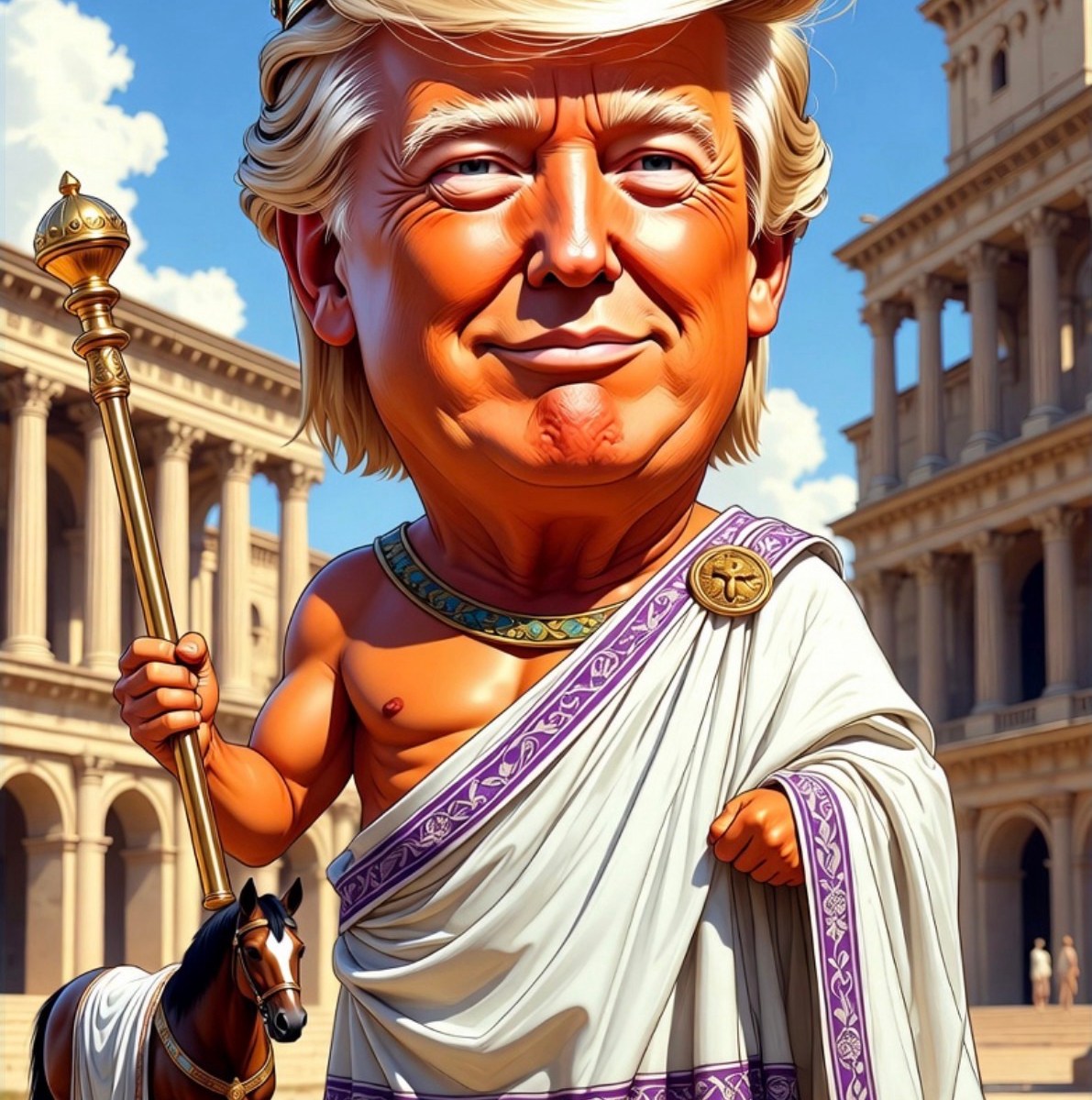
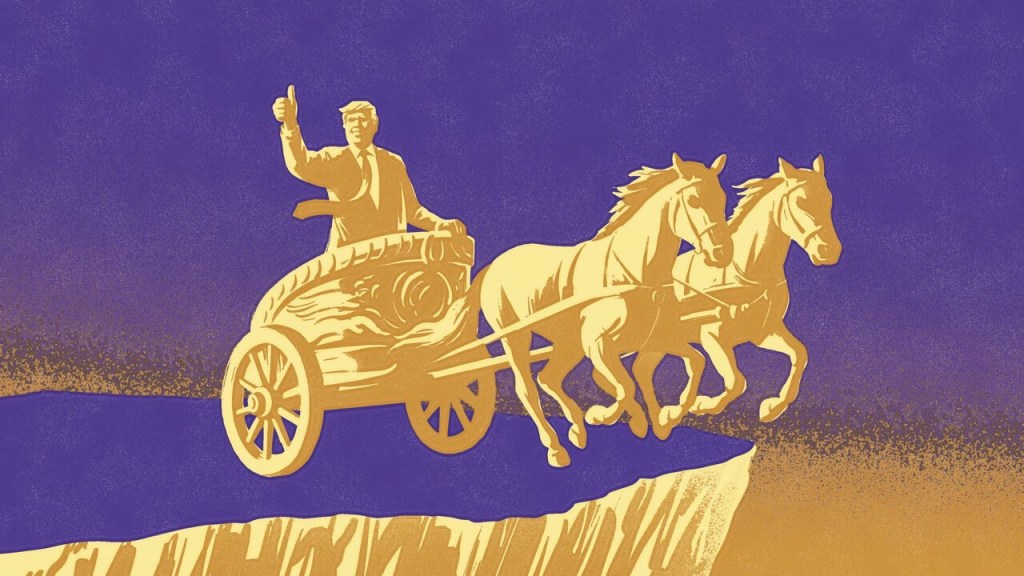
The impulse to reach for Roman emperors when critiquing modern leaders is understandable. Nero (r. 54–68 CE), like Caligula before him, embodies decadence, tyranny, and civilizational risk in the popular imagination. As discussions of Trump’s second term (2025–2028) continue, some commentators explicitly invoke Nero to highlight perceived narcissism, norm-breaking, extravagance, and authoritarian tendencies.But, as with Caligula, the analogy demands careful dissection of historical evidence, contextual differences, and substantive realities rather than rhetorical heat.
Nero in Historical Context: Excesses, Real and Exaggerated
Nero Claudius Caesar Augustus Germanicus ascended at age 16, initially guided by his mother Agrippina, tutor Seneca, and the Praetorian prefect Burrus. Early years saw competent administration, including tax reforms and public works. His reign turned darker, marked by personal and political excesses.
Key excesses attributed to Nero:
- Family murders and personal cruelty: He ordered the killing of his mother Agrippina (59 CE), wife Octavia, and later Poppaea (allegedly kicked to death while pregnant). He eliminated rivals and critics through poison, forced suicide, or execution. Sources describe sexual debauchery, including alleged incest and forced marriages.
- The Great Fire of Rome (64 CE): A massive blaze destroyed large parts of the city. Nero was absent at Antium; rumors claimed he “fiddled” (played the lyre) while Rome burned and started it to clear land for his Domus Aurea (Golden House), a vast, opulent palace. He provided relief but faced accusations of profiting from reconstruction. He blamed Christians, initiating brutal persecutions, torture, crucifixion, burning as human torches, earning him lasting infamy as a persecutor.
- Artistic megalomania and extravagance: Nero fancied himself a great artist, singer, and charioteer. He competed in festivals (often winning by default), performed publicly, and drained resources on spectacles, the Golden House, and lavish projects. This alienated the elite while appealing to the masses initially. Financial strain, debasement of currency, and heavy taxation followed.
- Tyranny and downfall: Rebellions erupted (e.g., Vindex in Gaul, Boudicca earlier). Senate opposition grew. In 68 CE, declared a public enemy, Nero fled and committed suicide at age 30. His death ended the Julio-Claudian dynasty.
Nuances from modern scholarship: Primary sources (Tacitus, Suetonius, Cassius Dio) were written decades later under Flavian emperors who needed to legitimize their rule by discrediting Nero. Many lurid tales likely mix fact with elite propaganda and senatorial bias. Nero enjoyed genuine popularity among the lower classes for his generosity and entertainments. Economic and cultural vitality occurred under him. The “monster” image served political purposes, though core issues, murders, persecution, fiscal irresponsibility, have historical grounding.
Surface Parallels with Trump
Critics draw Nero-like lines:
- Personality and spectacle: Both are portrayed as narcissistic showmen craving applause. Trump’s rallies, branding, and media dominance parallel Nero’s theatrical performances and chariot racing. Both faced accusations of prioritizing personal image.
- Elite alienation: Nero humiliated senators; Trump is accused of attacking institutions, media, and “the swamp.”
- Extravagance and self-interest: Nero’s Golden House versus critiques of Trump’s properties, golf outings, or perceived focus on personal brand amid national challenges. Some liken rhetorical style or policy decisions (e.g., tariffs, foreign policy assertiveness) to resource-draining vanity.
- Scapegoating and division: Nero’s persecution of Christians compared by some to Trump’s immigration policies, culture wars, or rhetoric against opponents. Claims of undermining truth or institutions echo “fiddling while Rome burns” tropes.
- Authoritarian drift: Second-term actions, stronger executive use, foreign policy muscle (strikes, threats), loyalty emphasis, fuel “imperial” comparisons.
Profound Differences: Context, Power, and Consequences
The analogy collapses under scrutiny due to structural and ethical gaps:
- Violence and Atrocity: Nero’s documented murders of family, political killings, and sadistic spectacles (Christians as torches) have no parallel in Trump’s record. U.S. controversies involve rhetoric, lawsuits, January 6 interpretations, or policy disputes, not state-sponsored executions or family assassinations.
- Institutional Framework: Nero ruled an autocracy with minimal checks; the emperor’s whim often prevailed, backed by legions. Trump navigates a constitutional system with courts, Congress, states, elections, free press, and civil society. Midterms, lawsuits, and public opinion constrain actions. Democratic accountability (two elections won) contrasts with Nero’s hereditary/intrigue-based power.
- Policy Substance vs. Personal Excess: Trump’s agenda (America First trade, immigration control, deregulation, judicial appointments, energy policy) reflects populist voter priorities with measurable first-term outcomes (pre-COVID economy, Abraham Accords). Nero’s artistic pursuits and building projects mixed patronage with personal indulgence, contributing to instability. Trump’s business background and age (79 in 2026) differ from Nero’s youthful volatility.
- Persecution and Scapegoating: Nero’s Christian persecution was lethal and targeted a religious minority for political cover. Trump’s policies, however contentious (e.g., border security), operate within legal frameworks and democratic debate, not empire-wide terror. No equivalent to burning dissenters.
- Economic and Fiscal Reality: Nero strained the treasury through extravagance and debasement. Trump’s era involves complex fiscal debates (deficits, tariffs, spending) in a modern superpower economy with global reserve currency status, vastly different scale and tools.
- Media Environment: Ancient gossip vs. today’s polarized, instantaneous information ecosystem. Trump excels in it; Nero had no equivalent direct channel or counter-narratives.
Edge cases: Prolonged polarization could erode norms regardless of leader. Executive overreach risks precedent for future administrations. Foreign policy assertiveness in Trump’s second term tests restraint vs. strength. Yet, no credible path to Nero-style collapse exists in America’s resilient framework.
Implications: Why Analogies Endure and Why They Mislead
Nero comparisons, like Caligula’s, serve emotional and political signaling, evoking decadence and warning of decline for opponents, or highlighting elite overreaction for supporters. They persist because Rome offers dramatic archetypes for power’s corruptions. However, they flatten history and distract from specifics.
Better Roman parallels for populist disruption might involve late Republic figures (e.g., populares reformers) or stabilizing autocrats like Augustus amid crisis. America’s challenges, economic inequality, cultural fragmentation, geopolitical strains, predate any single leader and require substantive engagement beyond caricature.
We should hope Trump is no Nero, just as with Caligula: not because of inevitable tyranny, but because emulating such figures would signal a republic’s failure to channel ambition through institutions. Nero’s Rome teaches the perils of unchecked personal power, elite alienation, and scapegoating in fragile systems. The U.S. system, tested by polarization and strong personalities, retains tools for accountability and renewal.
Judging leaders demands focus on verifiable actions, results (economic metrics, security, cohesion in 2025–2028), and voter sovereignty, not ancient morality plays. Hyperbole inflames; evidence illuminates. The republic’s strength lies in its capacity to debate, elect, and correct course without descending into imperial tragedy.

