

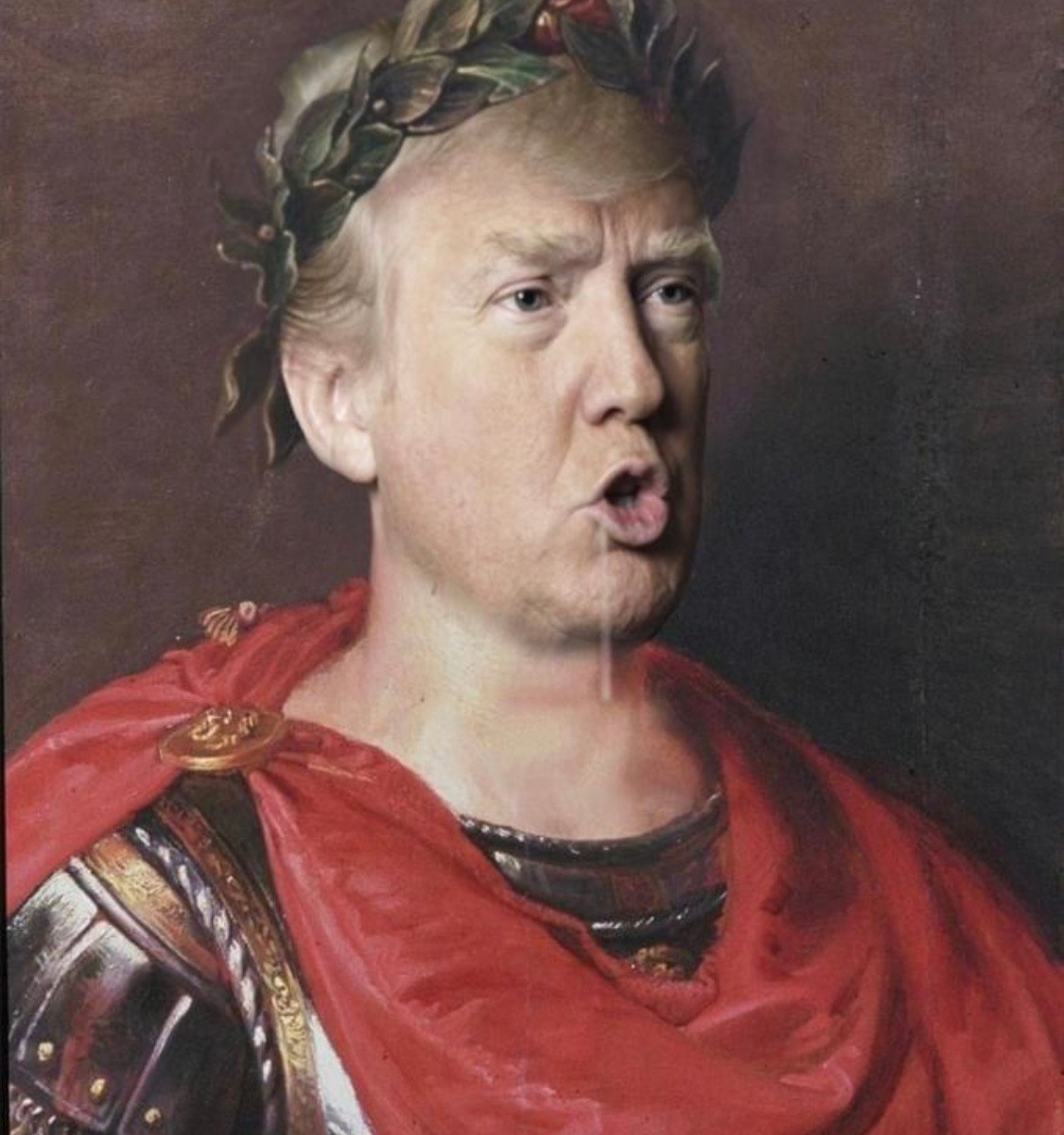
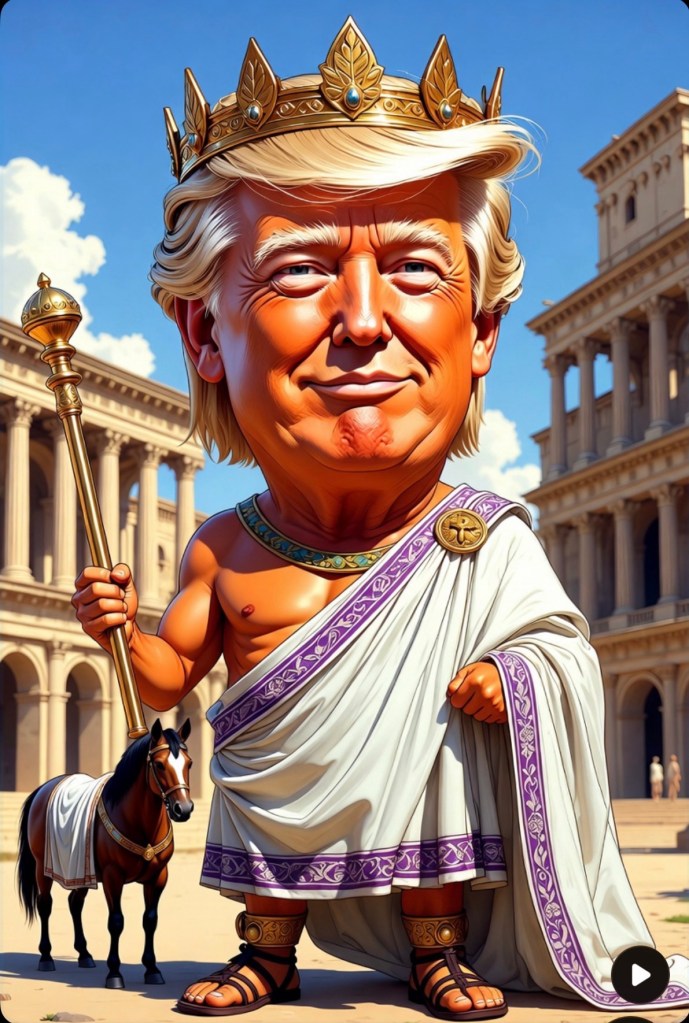
History has a habit of recycling its characters, sometimes as tragedy, sometimes as farce, and occasionally as a reality TV reboot with nuclear codes. Which brings us to the question: is Donald Trump a modern-day Caligula, or are we flattering him, and terrifying ourselves, by reaching for that particular analogy?
Let’s proceed with caution. Caligula, after all, allegedly made his horse a senator. Trump merely made a few television personalities cabinet-level adjacent. There are levels to this.
The Caligula Template
Caligula’s short reign (37–41 AD) has come down to us through a fog of hostile historians, lurid anecdotes, and the unmistakable scent of imperial decay. He is remembered less as a statesman and more as a cautionary tale: erratic, narcissistic, contemptuous of institutions, and apparently convinced that governance was a personal improv exercise.
The parallels people reach for are not entirely accidental. Trump’s political style, personalised, combative, allergic to constraint, has often treated institutions not as guardrails but as inconveniences. Where traditional presidents saw norms, Trump saw suggestions. Where others saw offices, he saw stages.
But here’s the first problem with the analogy: Caligula operated in an autocracy. Trump, whatever his instincts, has had to operate within a constitutional republic stubbornly resistant to becoming a Roman court drama.
Power: Absolute vs. Negotiated
Caligula did not need Congress. He was Congress, Senate, judiciary, and, on a bad day, the entertainment industry. Trump, by contrast, has had to wrestle with courts, legislatures, state governments, elections, and a press ecosystem that, though fragmented, remains capable of scrutiny and resistance.
Even at his most defiant, Trump could not simply decree reality into existence. Executive orders met injunctions. Policies met elections. Allies became liabilities. The machinery of the American state, creaky as it is, did not collapse into a personality cult overnight.
This distinction matters. Comparing any modern elected leader to a Roman emperor risks overstating both the leader’s power and the system’s fragility. It turns analysis into theatre, ironically, the very medium both men seem to enjoy.
The Politics of Spectacle
Where the analogy does gain traction is in the realm of spectacle. Caligula reportedly thrived on shock value, humiliating elites, upending expectations, and turning governance into a series of dramatic gestures. Trump’s political method has often followed a similar script: dominate the news cycle, redefine the conversation, and ensure that attention, favourable or not, never strays too far.
In both cases, outrage becomes a currency. The more scandalised the opposition, the more energised the base. Governance risks becoming secondary to performance; policy, a prop.
But again, context intrudes. Caligula’s audience had no ballot box. Trump’s does. Spectacle in a democracy is constrained by periodic accountability, imperfect, yes, but real.
Institutions: Bent or Broken?
The more serious question is not whether Trump is “another Caligula,” but whether his approach to power erodes the institutions that prevent anyone from becoming one.
Critics argue that sustained attacks on electoral legitimacy, judicial independence, and bureaucratic neutrality chip away at the very idea of a shared political reality. Supporters counter that he exposes entrenched elites and forces a long-overdue confrontation with a complacent establishment.
Both claims can be true in part. The danger lies in cumulative effect. Institutions rarely collapse in a single dramatic moment; they corrode gradually, normalising what would once have been unthinkable. Caligula did not invent Roman imperial excess, he merely accelerated and embodied it.
The Comfort of Bad Analogies
There is also a psychological comfort in calling Trump “Caligula.” It suggests that the problem is singular, a rogue personality, rather than systemic. Remove the man, and the republic heals. History, unfortunately, is less tidy.
Rome did not become unstable because of one emperor; it produced emperors like Caligula because of deeper structural shifts. Likewise, Trump is as much a symptom as a cause: a product of polarisation, media fragmentation, economic anxiety, and institutional distrust.
Labeling him a mad emperor risks missing the point, and the warning.
So, Should We Hope He Is Not?
Hope is not a strategy, but clarity is. Trump is not Caligula in the literal sense; the United States is not ancient Rome, and the constitutional order has proven more resilient than its critics feared, and more strained than its defenders admit.
The more useful question is whether democratic systems can absorb leaders who test their limits without eventually normalising those tests. If every boundary pushed becomes the new baseline, the distance between republic and empire narrows, not dramatically, but incrementally.
Caligula is a metaphor, not a diagnosis. The real issue is whether the guardrails hold when repeatedly treated as optional.
And that, unlike a Roman anecdote, is still being written in real time.

