

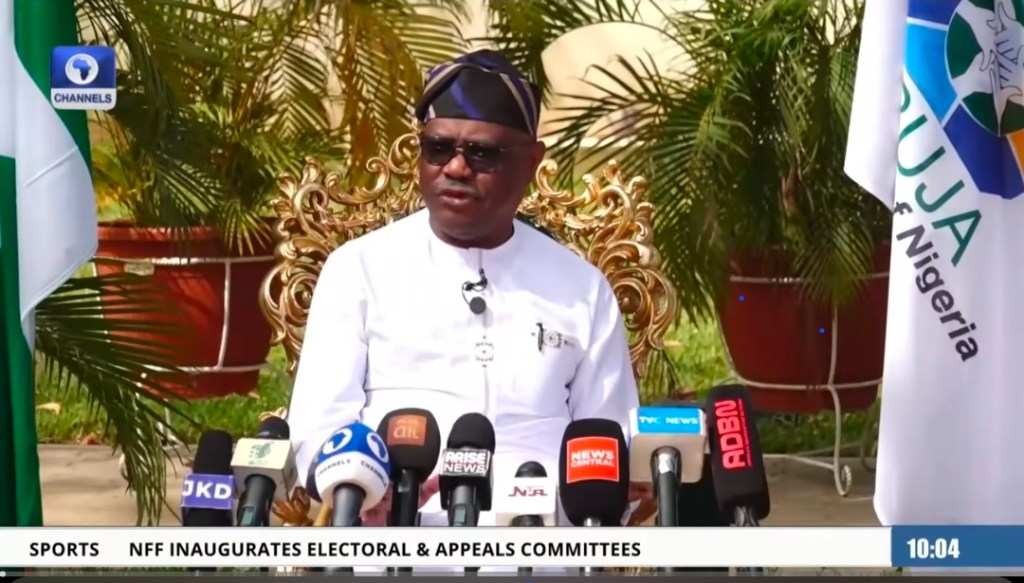
Nyesom Wike’s governance tactics exhibit strong continuity from his Rivers State governorship (2015–2023) to his current role as Minister of the Federal Capital Territory (FCT) since August 2023 under President Bola Tinubu. His approach remains assertive, enforcement-heavy, project-focused, and politically muscula, often described as turning governance into a “contact sport.” Supporters praise decisive action and visible results; critics highlight overreach, selective application, and blending of administrative power with political battles.
1. Infrastructure Delivery and Urban Renewal (Core Continuity)
- Rivers Era: Wike earned the “Mr. Project” moniker through aggressive road construction, flyovers (e.g., Garrison, Rumoukoro), bridges, and urban renewal in Port Harcourt. He conducted high-profile inspections and commissions, emphasizing tangible deliverables in a flood-prone, oil-rich but underdeveloped state.
- FCT Era (2023–2026): He has accelerated similar efforts in Abuja, focusing on roads, bridges, city gateways, and infrastructure upgrades. Key pledges include major project completions by May 2026 (marking Tinubu’s third anniversary) and ambitious targets like 80% 2026 budget implementation by January 2027. Initiatives span transportation, education, health, judiciary, security, and recreation (e.g., Jabi Lake redevelopment). He frequently inspects sites and warns contractors against abandonment.
Nuances: Projects often build on or revive prior plans, but Wike’s branding and acceleration create visible momentum. In Abuja’s master-plan context, this includes reclaiming neglected or misused spaces. Critics question costs, quality, rural/equity balance, and potential displacement.
2. Enforcement Tactics: Sealing, Demolition, and Regulatory Muscle
This is the clearest thread linking Rivers to FCT and the origin of the “Seal & Squeeze” label.
- Rivers Precedent: Wike personally oversaw demolitions (e.g., two hotels during COVID-19 lockdown violations in 2020) and used task forces for illegal structures, cultism, and defiance. This projected strength but raised due-process concerns.
- FCT Application (Ongoing):
- Ground Rent Enforcement: Repeated threats and actions to seal properties (residential, commercial, even government agencies like FIRS) for unpaid ground rent. In 2025, thousands of properties faced sealing.
- Master Plan Violations: Orders for demolitions of illegal estates (e.g., on green/recreational areas in Guzape), structures on diplomatic lands (Katampe Extension), and unapproved buildings (e.g., post-collapse in Jikwoyi with developer arrests).
- Political Enforcement (“Seal & Squeeze”): In May 2026, Wike threatened to seal any Abuja building used by the rival Turaki-led PDP faction for secretariats or forms sales, while warning banks against processing related transactions, framing them as fraud and court defiance.
Implications and Edge Cases: These tactics enforce compliance and urban order in a chaotic capital but blur lines between administration and politics. Legal questions arise over proportionality, court orders (some demolitions allegedly defied stays), and institutional neutrality. Banks face compliance dilemmas; residents and businesses encounter uncertainty. Supporters see rule-of-law restoration; detractors view weaponization against opponents (political or financial).
3. Political Control, Patronage, and Polarization
- Rivers: Mastered godfatherism, handpicking successor Siminalayi Fubara, then clashing bitterly when independence emerged. Strong PDP control, verbal combat, and loyalty networks defined his style.
- FCT/Current: As a PDP heavyweight in an APC-led government, Wike pragmatically supports Tinubu while maintaining influence in Rivers and national PDP factions. He leads efforts asserting control over PDP structures (post-Supreme Court rulings) and denies anointing specific 2027 candidates while staying vocal. His outspokenness (monthly briefings, criticisms of opponents like Peter Obi) generates both support and controversy, sometimes prompting curbs on his media engagements.
Broader Context: Wike’s cross-party accommodation (Tinubu alliance post-2022 PDP primary fallout) shows transactional pragmatism. In FCT, he leverages its “neutral” status and land powers for enforcement, echoing Rivers executive dominance.
4. Communication and Leadership Style
Fearless, direct, and combative rhetoric persists. Wike frames actions as law enforcement, development, and anti-fraud, while dismissing critics. He positions himself as results-driven under Tinubu’s support, promising transformed Abuja by 2026–2027. This builds a strongman image but fuels polarization and occasional backlash.
Overall Assessment: Strengths, Risks, and Implications
Strengths: Visible infrastructure gains, enforcement against impunity, and ability to navigate complex federal politics. In Rivers, he delivered amid volatility; in FCT, he tackles long-standing planning abuses and decay.
Criticisms and Risks: Over-reliance on executive fiat risks eroding institutions, investor confidence (via sudden seals/demolitions), and rule of law. The “contact sport” approach excels in short-term wins but perpetuates cycles of conflict (e.g., Rivers succession crisis, PDP factions). Economic implications include uncertainty for property owners and banks. Human rights and due process concerns recur across both roles.
Edge Cases: Actions against powerful entities (agencies, parties, diplomats’ lands) test boundaries. Future reversals by successors or courts could undermine gains. In a polarized 2027 election cycle, his dual role (FCT delivery vs. political actor) will intensify scrutiny.
In summary, Wike’s tactics form a consistent philosophy: bold execution backed by state levers, prioritizing results and loyalty over consensus. Effective for rapid transformation in dysfunctional systems, they carry significant democratic and stability trade-offs. His FCT tenure amplifies Rivers-era patterns on a national stage, making him one of Nigeria’s most consequential, and divisive, figures in contemporary governance. Outcomes will hinge on whether enforcement evolves into sustainable institutions or remains tied to personal and factional power.

