

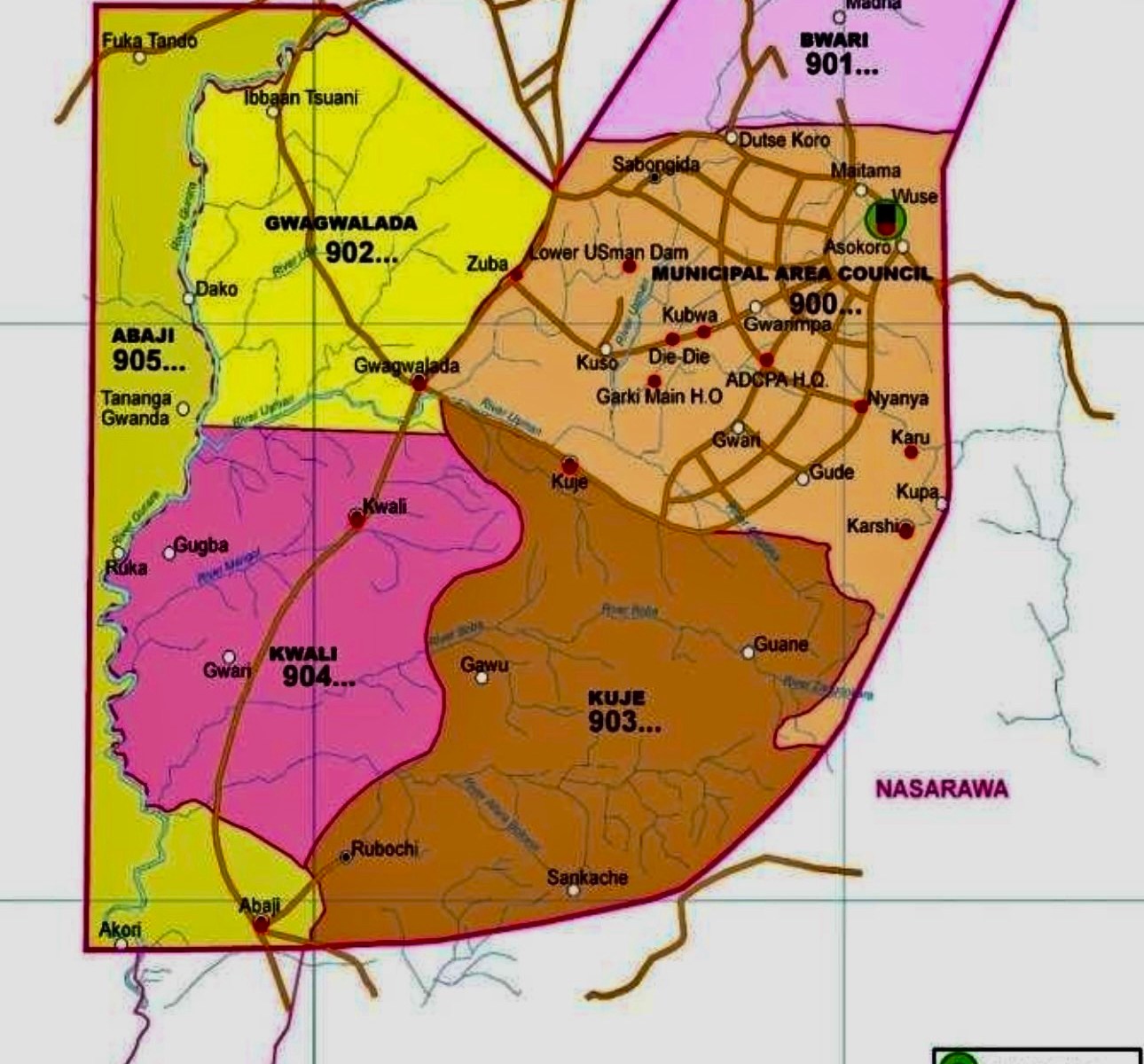
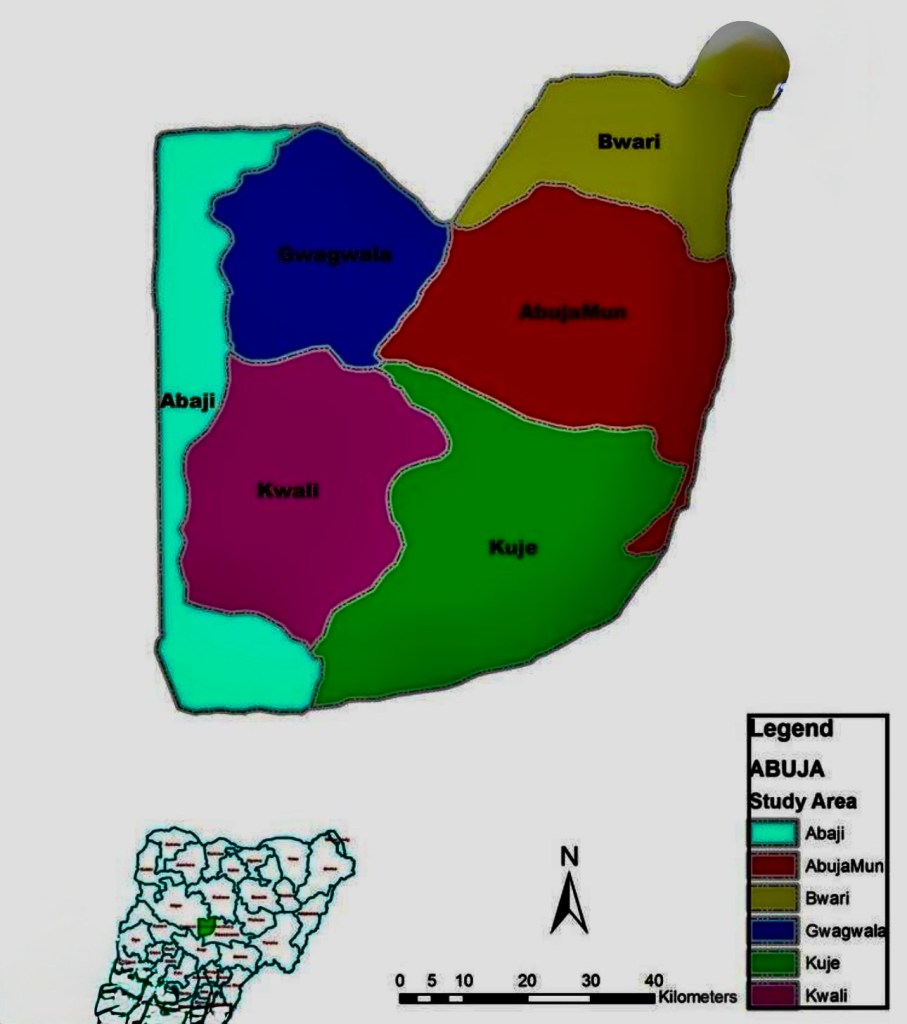
The constitutional and administrative structure of the Federal Capital Territory is unusual within Nigeria because it is neither a full state nor an ordinary federal territory. It is directly administered by the Federal Government under a hybrid arrangement combining executive administration with limited democratic representation.
Constitutional Basis of the FCT
The legal foundation is primarily found in:
- The 1999 Constitution of the Federal Republic of Nigeria
- The Federal Capital Territory Act
- Various statutes establishing agencies under the FCT Administration (FCTA)
Under Section 299 of the Constitution:
The provisions of the Constitution apply to the FCT as if it were one of the states of the federation.
However, the important caveat is that the powers normally exercised by a state governor are exercised by the President through the Minister of the FCT.
This makes Abuja effectively:
- a federal territory,
- under presidential control,
- but constitutionally treated in many respects like a state.
Executive / Administrative Arrangement
The President
The President of Nigeria is constitutionally the ultimate authority over the FCT.
Unlike governors elected by citizens of states:
- Abuja residents do not elect a governor.
- The President appoints a Minister for the FCT.
The President can:
- issue directives,
- approve budgets,
- supervise land administration,
- appoint key officials.
Minister of the FCT
The FCT Minister functions in many ways like an executive governor, though without electoral legitimacy.
The Minister:
- is appointed by the President,
- confirmed by the Senate,
- heads the Federal Capital Territory Administration (FCTA),
- controls land allocation,
- supervises development authorities,
- oversees municipal services and planning.
Examples of powers include:
- land administration under the Land Use Act,
- infrastructure approvals,
- transport,
- sanitation,
- urban planning,
- enforcement actions,
- oversight of area councils.
The Minister is assisted by:
- Minister of State for FCT,
- Permanent Secretaries,
- Secretariats and agencies.
This is why powerful FCT ministers such as Nyesom Wike often operate with powers comparable to state governors, though technically acting as delegates of the President.
Federal Capital Territory Administration (FCTA)
The FCTA is the bureaucratic machinery of Abuja.
It contains:
- Education Secretariat
- Health Services Secretariat
- Transportation Secretariat
- Agriculture Secretariat
- Legal Services Secretariat
- Social Development Secretariat
- Treasury and Budget divisions
It also supervises agencies like:
- Abuja Metropolitan Management Council (AMMC)
- Development Control Department
- Abuja Environmental Protection Board (AEPB)
- Federal Capital Development Authority (FCDA)
Legislative Representation of the FCT
Although Abuja is not a state, it has representation in the National Assembly.
Senate Representation
The FCT elects:
- 1 Senator only.
Every state has 3 senators, but the FCT has a single senator representing the entire territory.
The seat is officially:
- Senator representing the FCT Senatorial District.
Currently the office is occupied by Ireti Kingibe (subject to future electoral changes).
House of Representatives Representation
The FCT has:
- 2 members in the House of Representatives.
The constituencies are:
- Abuja Municipal/Bwari/Gwagwalada/Kuje
- AMAC/Bwari depending on delimitations and electoral arrangements
(Constituency structures occasionally change through INEC reviews.)
Compared to states, this is relatively limited representation given Abuja’s population explosion.
Standing Committees on FCT in National Assembly
Yes — both chambers of the National Assembly maintain dedicated committees overseeing FCT matters.
Senate Committee on FCT
The Senate has a:
- Senate Committee on Federal Capital Territory.
Functions include:
- oversight of the FCTA,
- budget scrutiny,
- investigation of land matters,
- review of contracts,
- confirmation-related oversight,
- inquiries into development authorities.
The committee can summon:
- the FCT Minister,
- agencies,
- contractors,
- officials.
Because Abuja controls enormous land values and infrastructure budgets, this committee is politically influential.
House Committee on FCT
The House of Representatives also maintains:
- House Committee on Federal Capital Territory.
Its duties mirror the Senate committee:
- legislative oversight,
- budget examination,
- public petitions,
- investigations,
- infrastructure monitoring.
The House additionally often handles:
- disputes involving demolitions,
- compensation,
- indigenous rights,
- resettlement issues.
Local Government Structure in the FCT
The FCT does not have constitutionally recognised Local Government Areas exactly like states.
Instead, it has:
Six Area Councils
These function similarly to local governments.
They are:
- Abuja Municipal Area Council (AMAC)
- Bwari Area Council
- Gwagwalada Area Council
- Kuje Area Council
- Abaji Area Council
- Kwali Area Council
These councils have:
- elected chairmen,
- councillors,
- local administrative functions.
Powers of the Area Councils
They handle:
- primary education,
- local markets,
- sanitation,
- local roads,
- community services,
- birth and death registration,
- rural administration.
However, unlike local governments in states:
- they are heavily dependent on the FCTA,
- financially weaker,
- administratively constrained.
The FCT Minister and FCTA maintain substantial supervisory influence.
Structure of Abuja Itself
The FCT is divided broadly into:
Abuja Municipal Area
The urban core:
- Central Business District,
- Maitama,
- Asokoro,
- Wuse,
- Garki,
- Jabi,
- Guzape,
- Katampe.
Satellite Towns
Rapidly expanding outer settlements:
- Kubwa,
- Lugbe,
- Nyanya,
- Karu axis,
- Gwagwalada,
- Kuje,
- Bwari.
Rural Communities
Large indigenous settlements inhabited by:
- Gbagyi,
- Bassa,
- Gade,
- Koro,
- Ganagana peoples.
These communities were significantly affected by:
- land acquisition,
- resettlement policies,
- urban expansion.
Key Constitutional Peculiarity
The biggest constitutional anomaly is this:
Abuja residents:
- pay taxes,
- elect legislators,
- contribute massively to the economy,
but:
- cannot elect a governor,
- do not possess a state assembly,
- are governed largely through presidential appointees.
This creates periodic debates over:
- “statehood” for Abuja,
- democratic deficits,
- indigenous rights,
- excessive powers of the FCT Minister.
Critics sometimes describe the arrangement as:
“A capital city administered like a federal estate rather than a fully democratic subnational unit.”
That tension has existed since the military-era conception of Abuja as a “neutral federal territory” replacing Lagos as Nigeria’s capital.
Elected Leaders of FCT
Sen. Ireti Kingibe – FCT Senatorial District
Hon. Joshua Chinedu Obika – AMAC/Bwari Federal Constituency
Hon. Abdulrahman Ajiya – Abaji/Gwagwalada/Kuje/Kwali
Chairpersons of FCT-Related Committees
The National Assembly has specific standing committees that oversight the affairs of the FCT, including its administration, budget, and judiciary.
Senate Committees (10th Senate)
• Committee on FCT:
• Chairman: Sen. Ibrahim Bomai (Yobe South)
• Vice Chairman: Sen. Samson Akpan Ekong
• Committee on FCT Area Councils:
• Chairman: Sen. David Jimkuta (Taraba South)
• Vice Chairman: Sen. Saliu Mustapha
House of Representatives Committees (10th House)
• Committee on FCT:
• Chairman: Hon. Aliyu Mukhtar Betara (Biu/Bayo/Shani/Kwaya Kusar)
• Vice Chairman: Hon. Chinedu Emeka Martins
• Committee on FCT Area Councils and Ancillary Matters:
• Chairman: Hon. Frederick Agbedi (Sagbama/Ekeremor)
• Committee on FCT Judiciary:
• Chairman:

