

There is a particular kind of comedy that only constitutional lawyers and long-suffering Nigerian voters can truly appreciate. It is the comedy of a document that says one thing with great solemnity, and a government that does the opposite with even greater solemnity, and both parties nodding at each other as though the contradiction is not hanging in the room like a chandelier made of unpaid electoral budgets.
The Independent National Electoral Commission. Independent. The word sits in that name like a retired footballer sits in a television pundit’s chair, technically present, serving a decorative function, and unlikely to do anything strenuous.
Let us examine, with the seriousness the situation deserves and the laughter it invites, exactly how Nigeria constructed a referee and then handed the whistle to one of the teams.
The Appointment: Or, How To Pick Your Own Umpire
Section 154 of the Nigerian Constitution grants the President the power to appoint the Chairman of INEC. Let us pause here and allow that sentence to settle. The President, who leads a political party, who will contest or whose party will contest subsequent elections, who has a direct and considerable interest in the outcome of electoral processes, appoints the person who oversees those elections. This is the institutional equivalent of asking a defendant to select the judge, handing them the shortlist, and then congratulating the system on its independence.
It does not stop at the Chairman. The same executive hand reaches further. Twelve National Commissioners. Thirty-seven Resident Electoral Commissioners spread across every geopolitical corner of the country. The President appoints them all. This is not a referee. This is an entire officiating crew hired by the home team.
The case of Loretta Onochie is instructive and ought to be studied in political science departments alongside terms like “audacity” and “brazenness.” Nominated as a National Commissioner while serving as a Presidential Adviser and card-carrying APC member, her nomination occasioned a brief national outrage before being quietly resolved in the manner Nigeria often resolves such things, by the people forgetting about it and the matter proceeding. She was eventually redeployed. The point, however, had been made with the subtlety of a billboard.
The New Chairman and the Inconvenient Social Media Archive
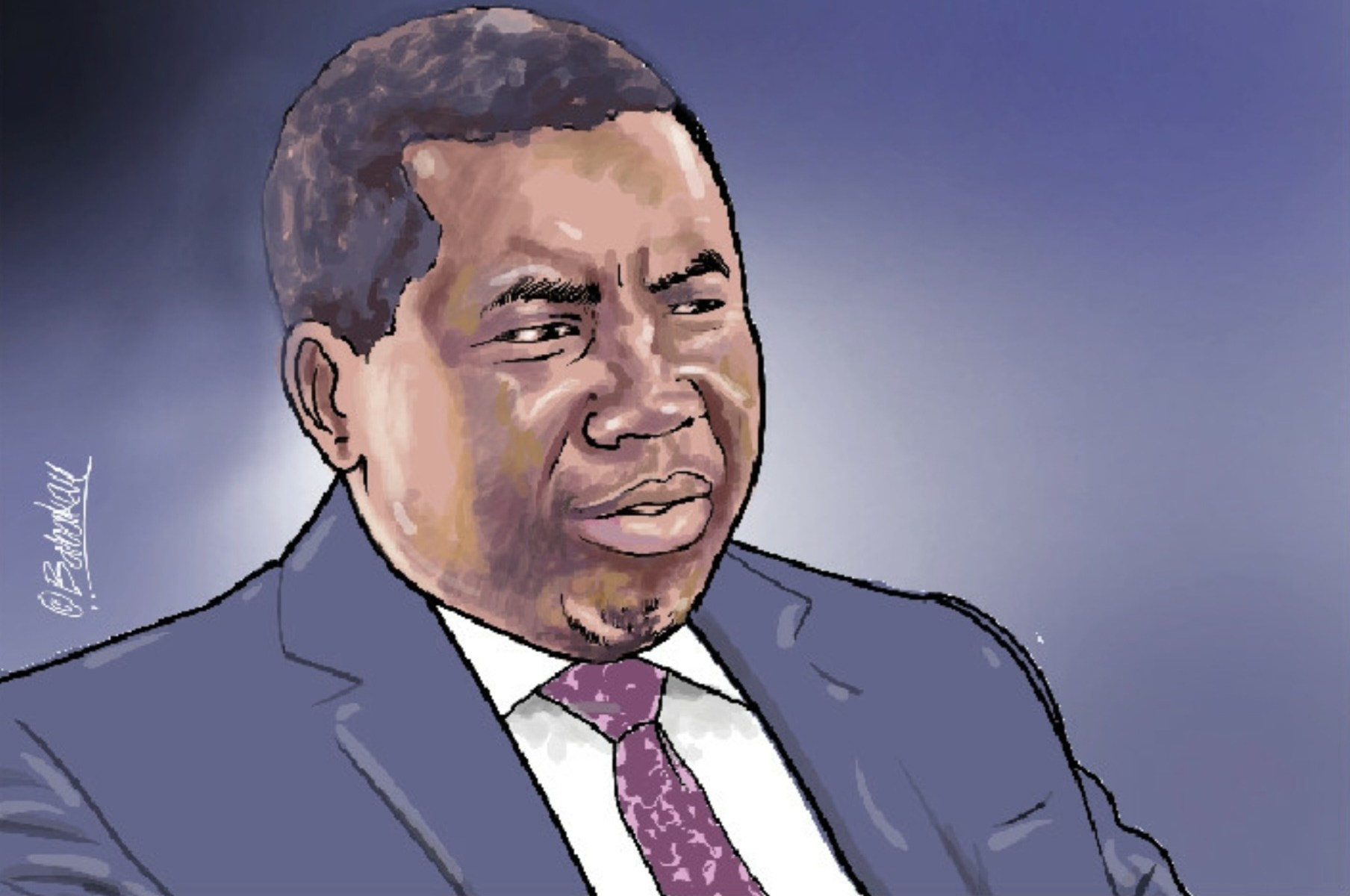
In October 2023, Professor Joash Ojo Amupitan was sworn in as INEC Chairman. Professor Amupitan is, by all accounts, an accomplished jurist. His curriculum vitae is impressive. His legal scholarship is notable.
Unfortunately, the internet also has a curriculum vitae, and it is considerably less selective about what it archives.
Reports emerged of social media posts allegedly linked to Professor Amupitan that showed enthusiasm for President Tinubu and the APC during the very electoral cycle whose results his commission had been responsible for managing. The Professor has not confirmed the posts. The posts have not been conclusively authenticated. And yet here we are, in the familiar Nigerian situation where the denial requires nearly as much energy as the original allegation, and public confidence, always a fragile thing, does not wait for due process before packing its bags.
The structural problem, of course, is not about Professor Amupitan specifically. It is about a system in which these questions are not only possible but inevitable. When a sitting president makes the appointment, every subsequent action of the appointee will be read through that lens. That is not a conspiracy theory. That is how institutional optics work. That is, in fact, why institutional independence exists, not merely as a philosophical luxury, but as a practical mechanism for public trust. A referee whose impartiality is permanently in question cannot referee effectively, regardless of whether they are actually impartial.
The Money: Where Independence Goes to Negotiate
The constitution, bless its aspirational heart, mandates that INEC receive its funding directly from the Consolidated Revenue Fund. This was a deliberate design choice: remove the commission from the annual budget negotiation, insulate it from executive financial leverage, give it the resources it needs without strings.
In 2024, INEC requested 89 billion naira. It received less than half.
Less. Than. Half.
This means that the commission responsible for organising Nigeria’s elections, a country of over 220 million people, with 36 states and a Federal Capital Territory, with a logistics challenge that would humble a military operation, received roughly 40 cents of every naira it said it needed.
The consequence is entirely predictable and presumably intended. INEC must return to the executive for supplementary funding. And in that return, whatever theoretical independence the constitution imagined evaporates into the warm air of political negotiation. You cannot be financially dependent on the entity you are supposed to supervise impartially. This is not a subtle point. It is a point so obvious that it should not require making, and yet here we are, making it, again.
For 2027, INEC has informed the National Assembly that it will need over 873 billion naira. One awaits with the particular dread of someone who knows exactly how this story goes.
2023: When the Technology Blinked at a Crucial Moment
The 2023 presidential election introduced Nigeria to the Bimodal Voter Accreditation System, the BVAS, amid considerable fanfare. This was the technological solution to the problem of result manipulation. Results would be uploaded in real time. Transparency would be built into the architecture of the process itself. The machine would make fraud structurally difficult.
Then the results upload portal experienced what was described as a “technical glitch.”
Not before voting. Not during a test run. During the transmission of presidential election results, at precisely the moment the technology’s integrity mattered most. The glitch was eventually resolved. Results were eventually uploaded. Official figures were eventually announced.
But data from Yaga Africa, comparing official INEC results against independent projections, showed significant discrepancies in states including Rivers and Imo, states which, it is worth noting, are not famous for the tranquillity of their electoral processes.
The technology did not fail entirely. But trust is not a technical specification. Trust is built on consistent, verifiable, unimpeachable performance at the precise moments when it matters. A referee who makes suspicious calls in the decisive minutes of a match does not restore confidence by correctly calling a throw-in in extra time.
The Uwais Report: A Perfectly Good Prescription Collecting Dust Since 2008
In 2008, seventeen years ago, when the iPhone had just been invented and Nigeria’s current political elite were busy being considerably younger, the Justice Uwais Electoral Reform Committee delivered a comprehensive report on fixing Nigeria’s electoral architecture. Among its central recommendations: remove the President’s power to appoint the INEC Chairman. Transfer that authority to an independent judicial body. Insulate the appointment from executive influence entirely.
The recommendation has not been implemented.
Seventeen years. Four presidential administrations. Countless electoral cycles, disputed results, court petitions, and national conversations about electoral credibility. The report sits on the shelf with the patient dignity of a solution that was not politically convenient for any of the governments that inherited it.
This is the central irony of Nigeria’s electoral reform discourse: the diagnosis has been made, the prescription written, and the medicine deliberately left uncollected. It is not that nobody knows what to do. It is that the people who would need to do it are the precise people who benefit most from leaving things as they are.
The Conclusion: Language on Paper
Independent. The word means something. In constitutional design, it means that an institution operates free from the political pressures of the entities it oversees. It means appointments made through processes insulated from partisan interest. It means funding that cannot be weaponised. It means technology that works when it matters and results that reflect the actual preferences of actual voters.
What Nigeria has instead is a commission whose chairman is chosen by the president, whose commissioners are chosen by the president, whose budget is determined by the executive it supervises, and whose technological credibility was comprehensively damaged in the election cycle whose integrity it was meant to guarantee.
“Independent” in this context is not a description. It is a aspiration that has been consistently and systematically denied the conditions necessary for its realisation.
Until the Uwais reforms are implemented, or something equivalent, the 2027 elections will be conducted under the same structural shadow. Different people, same architecture. New equipment, same incentives. The names will change. The problem will not.
Nigeria deserves elections it can believe in. It also deserves, frankly, to stop being surprised when it does not get them.

