


How INEC confused the power to organise elections with the power to reorganise political parties, and why the Federal High Court was quite right to say so.
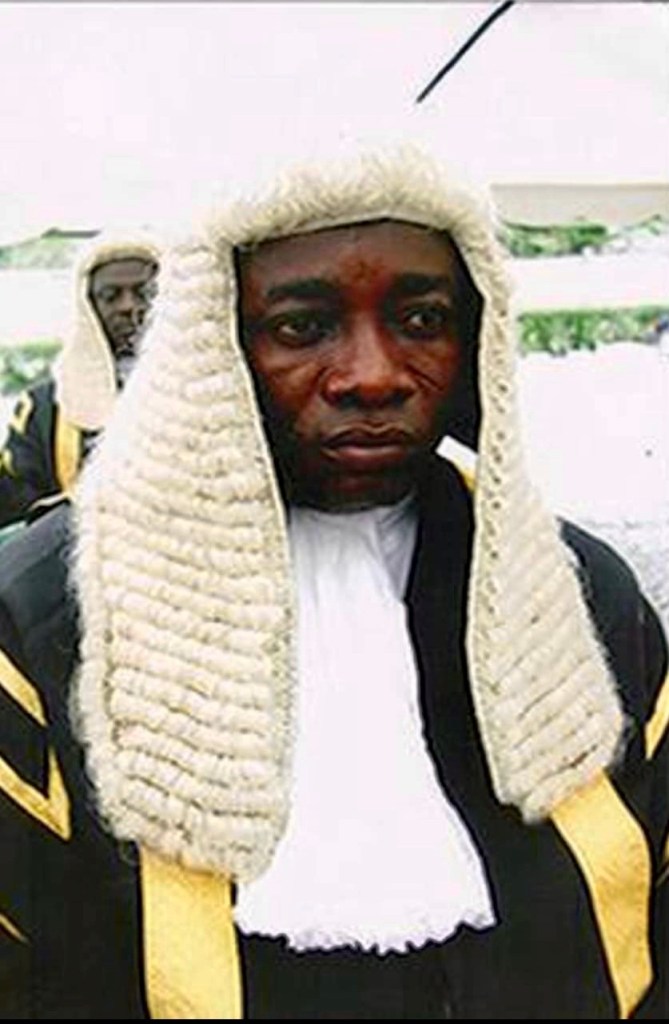
There is a particular species of institutional overreach that is not born of malice or corruption, but of something far more pedestrian: the sincere conviction that one’s remit is larger than it actually is. It is the error of the enthusiastic bureaucrat who, having been asked to referee the match, begins also scheduling training sessions, issuing dietary advice to the players and, for good measure redesigning the kit. INEC, Nigeria’s Independent National Electoral Commission, appears to have committed precisely this variety of excess. On 20 May 2026, in Suit No. FHC/ABJ/CS/517/2026, Justice M. G. Umar of the Federal High Court in Abuja delivered a judgment that politely, firmly and entirely correctly reminded the Commission of what it was hired to do.

The Youth Party, the plaintiff in the suit, had challenged INEC’s Revised Timetable and Schedule of Activities for the 2027 General Elections. That timetable did not merely fix the dates of the elections themselves, a matter that is properly INEC’s business. It also purported to prescribe when political parties must conduct their internal primary elections, when they must submit membership registers, when they must finalise and forward candidate lists, and when campaign activities must conclude. The court, granting all six reliefs sought by the plaintiff, declared the relevant portions of that timetable inconsistent with the Electoral Act 2026, and set them aside. It is difficult, on a careful reading of the statute, to see how the court could have decided otherwise.
Act I
What INEC Actually Did
To appreciate the magnitude of the Commission’s misstep, one must understand not only what it did but the zeal with which it did it. INEC’s revised timetable, issued earlier this year, imposed a deadline of 10 May 2026 for all political parties to submit their membership registers and databases as a precondition for participating in the 2027 elections. It further prescribed when parties must complete their primaries and simultaneously compressed the statutory timelines for the submission of candidates’ particulars and for the withdrawal and substitution of candidates.
In other words, INEC took the outer time limits that Parliament had generously granted to political parties under the Electoral Act 2026 and proceeded to shorten them by administrative fiat. The Commission appears to have reasoned that because it is responsible for the smooth conduct of elections, it was entitled to dictate the internal rhythms of every political party’s pre-election activity. This is a reasoning that sounds superficially plausible, rather like the reasoning of a person who, because they are responsible for collecting the mail, believes they are also authorised to decide when letters may be written.
INEC took the outer time limits that Parliament had generously granted to political parties under the Electoral Act 2026 and proceeded to shorten them by administrative fiat. The Commission confused the power to organise elections with the power to reorganise political parties.
The Commission also, reportedly, fixed campaign activities to end two days before the election, a provision Justice Umar found inconsistent with Section 98 of the Electoral Act. One imagines the framers of that section did not anticipate that it would be necessary to litigate the right to campaign. One imagines wrong.
Act II
The Constitution Draws the Line
INEC’s powers are not invented. They are statutory and constitutional, and the distinction matters enormously. The Commission derives its mandate from Section 15, Part I of the Third Schedule to the 1999 Constitution of the Federal Republic of Nigeria (as amended). That provision empowers INEC to organise, undertake and supervise elections to the offices of the President and Vice-President, Governors and Deputy Governors, and members of the National Assembly and State Houses of Assembly. It further mandates the Commission to monitor the organisation and operations of political parties, arrange for the registration of voters, and issue regulations for the conduct of elections.
Note what is present in that catalogue of powers: the word organise as applied to elections themselves. Note, equally, what is absent: any power to dictate the internal schedule by which political parties select the candidates they will present to INEC. The Constitution tasks INEC with organising the election, the event at which Nigerians cast their votes. It does not task INEC with managing the months of internal party democracy that precede that event. That is a matter reserved, constitutionally and structurally, for the parties and, at the margins, for the Electoral Act.
Key Constitutional & Statutory Provisions
Section 15, Part I, Third Schedule, 1999 Constitution (as amended): Grants INEC the power to organise, undertake and supervise elections, and to monitor the operations of political parties.
Section 29(1), Electoral Act 2026: Political parties are required to submit the names and personal particulars of their candidates to INEC not later than 120 days before the date of the election.
Sections 82 & 84(1), Electoral Act 2026: INEC’s role in relation to party primaries is limited to receiving notice of scheduled primaries, attending, observing and monitoring them, and receiving the personal particulars of candidates so nominated.
Section 31, Electoral Act 2026: Political parties may withdraw and substitute candidates not later than 90 days to the conduct of an election.
Section 98, Electoral Act 2026: Governs campaign activities — a provision with which INEC’s two-day pre-election shutdown was found to be inconsistent.
Act III
The Statutory Cage – Sections 29, 82 and 84(1)
The judgment of Justice Umar turns on a straightforward but decisive point of statutory interpretation. Sections 29, 82 and 84(1) of the Electoral Act 2026, read together, describe a role for INEC that is essentially receptive rather than directive. The Commission is to receive notice of party primaries. It is to attend, observe and monitor those primaries. It is to receive the personal particulars of candidates who emerge from those primaries. Nowhere in that trilogy of provisions does Parliament authorise INEC to prescribe the calendar within which those primaries must take place. The roles of witness, recorder and observer do not naturally expand into the role of scheduler, and where a statute enumerates the powers of a body, courts applying the principle expressio unius est exclusio alterius will be slow to imply additional powers that the legislature conspicuously omitted.
The 120-day provision under Section 29(1) further demolishes the Commission’s position. Parliament deliberately chose to grant parties a window of up to 120 days before the election to submit candidates’ particulars. That is not an aspirational guideline; it is a statutory entitlement. When INEC’s revised timetable effectively compressed that window by specifying an earlier submission deadline, the Commission was not clarifying the law, it was quietly amending it. Subsidiary administrative instruments cannot amend primary legislation, and an electoral timetable, however elaborate, is not an Act of the National Assembly.
Nowhere in Sections 29, 82 and 84(1) does Parliament authorise INEC to prescribe the calendar within which primaries must take place. The roles of witness, recorder and observer do not naturally expand into the role of scheduler.
The same logic applies with equal force to the 90-day substitution window under Section 31. When Parliament says a party may withdraw and substitute a candidate not later than ninety days before an election, it means that the party retains that right throughout the intervening period. INEC’s timetable sought to close that window earlier. The court found rightly, that this was beyond the Commission’s powers. You cannot take away by timetable what Parliament has given by statute.
Act IV
Ultra Vires and the Long Memory of the Courts
The doctrine of ultra vires, literally, beyond the powers, is among the oldest and most fundamental principles of administrative and public law. It holds that a statutory body, created by legislation and endowed with defined powers, cannot lawfully act outside those powers. INEC is not a self-constituting sovereign body; it is a creature of the 1999 Constitution and the Electoral Act. Its powers are co-extensive with what those instruments say they are, and not an inch more. When the Commission stepped outside that statutory envelope, the doctrine of ultra vires was the inevitable consequence, and the Federal High Court’s declaration was the inevitable remedy.
This is not a novel principle in Nigerian electoral jurisprudence. Nigerian courts have, over many years, consistently maintained a sceptical attitude towards INEC’s efforts to give its administrative instruments the force of primary law. The controversy over the Smart Card Reader and later the Bimodal Voter Accreditation System (BVAS) produced a body of case law in which the Supreme Court repeatedly held that electoral innovations introduced through INEC’s guidelines and manuals, rather than through the Electoral Act, could not enjoy the force of law. The reasoning was straightforward: when Parliament confers specific powers on an institution, the institution must act within those powers, and cannot arrogate to itself, through subsidiary instruments, a legislative authority it was never given.
There is a broader point of institutional design here that is worth pausing over. INEC’s constitutional independence, and it is genuinely constitutionally protected, is an independence from interference by the executive and the legislature in the conduct of elections. It is not, and was never designed to be, an independence from the law itself. The Commission’s independence exists to protect the electoral process from manipulation; it does not create a penumbra of extra-statutory power within which the Commission may operate free of Parliamentary constraint. An independent electoral commission that can legislate its own jurisdiction is not an umpire; it is a participant.
INEC’s constitutional independence is an independence from interference in the conduct of elections. It is not, and was never designed to be, an independence from the law itself.
Act V
How Did They Get Here?
The charitable interpretation of INEC’s conduct is administrative anxiety rather than institutional hubris. The Commission faces a genuinely difficult logistical challenge in preparing for the 2027 general elections: hundreds of millions of votes to administer, results management systems to deploy, logistics to coordinate across a geographically vast and deeply complex country. Against that backdrop, the impulse to impose order on the pre-election calendar, to ensure that parties do not deliver candidate lists three months before polling day, leaving INEC with insufficient time to process them, is entirely understandable.
But understandability is not legality, and the road to declared ultra vires is paved with comprehensible operational intentions. If INEC requires the submission of candidate information earlier than 120 days before an election in order to function effectively, the remedy is legislative amendment, not administrative edict. The Commission ought to have lobbied the National Assembly to shorten the statutory window, not unilaterally shortened it by inserting earlier deadlines into a revised timetable and hoping that no one with legal standing would notice. The Youth Party noticed.
There is also, beneath the operational anxiety, what one might gently characterise as a creeping institutional culture at INEC of conflating facilitation with direction. The Commission has historically occupied a position of considerable practical authority over the electoral process, and it is perhaps unsurprising that this authority, exercised across decades, has occasionally hardened into an assumption of legal power that the statute does not actually confer. The 2014 Electoral Guidelines issued under then-Chairman Attahiru Jega, for all their progressive ambitions, drew on a similar theory of INEC’s role, one that positioned the Commission not merely as supervisor but as the organising intelligence of the entire pre-election ecosystem. The courts have, gently but persistently, declined to ratify that theory.
Act VI
What the Ruling Means for 2027
The practical implications of Justice Umar’s judgment are significant. The nullification of the contested portions of INEC’s Revised Timetable does not mean that the 2027 elections are in jeopardy, the election dates themselves are unaffected but it does mean that the Commission must return to the drawing board on the pre-election schedule. Parties now know, authoritatively, that they retain the full 120-day window under Section 29(1) for submitting candidate particulars, and the full 90-day window under Section 31 for withdrawals and substitutions. INEC cannot contracte those entitlements through subsequent administrative instruments.
One predictable consequence is that the Commission will now appeal the judgment, and it would be unwise to treat the Federal High Court’s ruling as the last word on the matter. The Court of Appeal and, potentially, the Supreme Court may yet have views. But if INEC does appeal, it will have to confront a statutory text that is, on this point, reasonably clear, and a line of appellate jurisprudence that has not been particularly sympathetic to the Commission’s claims of implied administrative power.
The more constructive response would be for INEC, in consultation with the National Assembly, to seek targeted amendments to the Electoral Act 2026 that would give it the operational flexibility it genuinely needs. If the 120-day submission window is genuinely unworkable in practice, Parliament can shorten it. That is a legitimate legislative conversation. What is not legitimate as the court has now clearly held, is for an administrative body to have that conversation with itself and announce the outcome as law.
— ✦ —
In the end, the Youth Party’s lawsuit is a small but not insignificant contribution to a larger and continuing project: the domestication of INEC within a rule-of-law framework that requires it to derive its powers from text rather than tradition, from statute rather than supposition. The Commission is, constitutionally speaking, the steward of Nigeria’s elections. It is not, constitutionally speaking, their owner.
Justice Umar’s judgment is a reminder politely delivered, as all good judicial reminders are, that there is a difference between those two things. One hopes the Commission takes the reminder to heart, rather than to the Court of Appeal.
Case Reference: Youth Party v. Independent National Electoral Commission, Suit No. FHC/ABJ/CS/517/2026, Federal High Court, Abuja, judgment delivered 20 May 2026, per Justice M. G. Umar.
Principal Statutory Provisions: Sections 29, 31, 82, 84(1) and 98, Electoral Act 2026; Section 15, Part I, Third Schedule, Constitution of the Federal Republic of Nigeria 1999 (as amended).
Note: As of the time of publication, the Certified True Copy of the judgment was released on 21 May 2026. I have not independently verified the full text of the judgment and rely on published reporting from accredited Nigerian legal and news sources pending access to the CTC.
 Centre for Nigeria Progress