

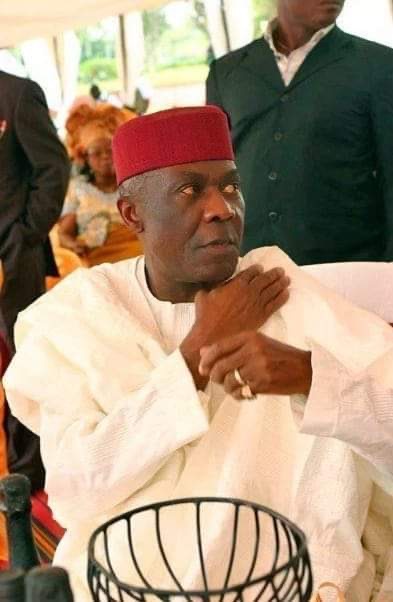
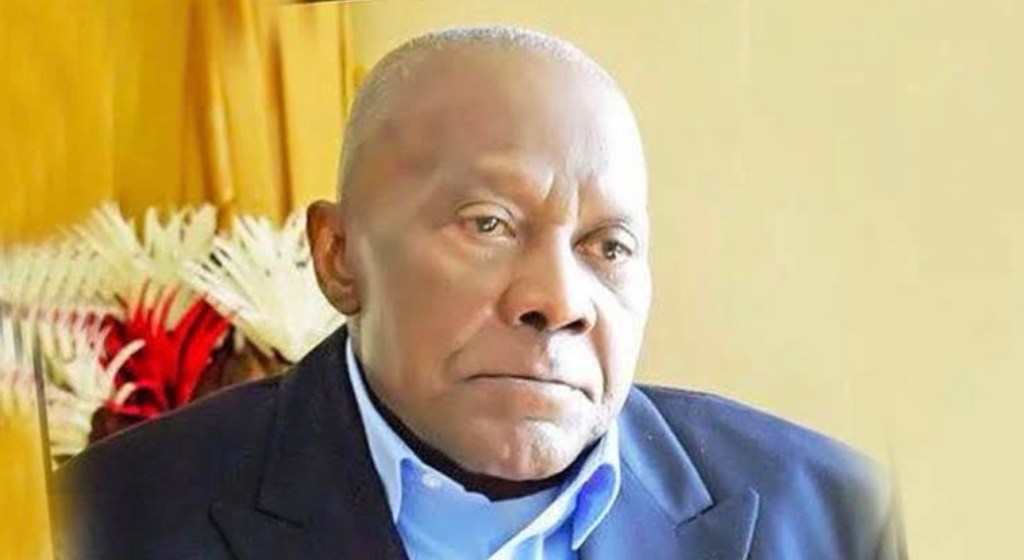
In Nigerian political history, few men embodied controversy, influence, wealth, and political manipulation quite like Arthur Nzeribe.
If the First Republic had its ideological nationalists and the Second Republic its flamboyant political merchants, then the aborted Third Republic belonged partly to the political fixers, men who understood that power in Nigeria was often negotiated in backrooms long before votes were counted in polling units.
And no political fixer was more notorious than Arthur Nzeribe.
To understand his impact on the Third Republic is to understand how Nigeria’s most promising democratic transition collapsed under the weight of ambition, military interference, judicial manipulation, and elite conspiracy.
The Antecedents: A Billionaire Enters Politics
Arthur Nzeribe did not emerge from the traditional mould of nationalist politicians. He was not shaped by anti-colonial struggle or ideological activism. He emerged instead from business, wealth accumulation, and elite networking.
Born in Oguta, present-day Imo State, Nzeribe built enormous wealth through insurance, oil-related ventures, and international business connections. By the late 1970s and early 1980s, he had become one of Nigeria’s most flamboyant political financiers.
In the Second Republic, he entered partisan politics through the Nigerian Peoples Party (NPP), eventually becoming a senator in 1983. But unlike politicians who relied on grassroots mobilisation, Nzeribe specialised in patronage politics, the use of money, influence, and elite relationships to shape political outcomes.
He represented a new class of Nigerian politician:
- wealthy enough to fund political structures personally,
- connected enough to influence military rulers,
- and pragmatic enough to switch alliances whenever necessary.
Where older politicians spoke of ideology, Nzeribe spoke the language of access.
The Babangida Transition and the Rise of Political Manipulation
The Third Republic was itself born inside contradiction.
After seizing power in 1985, Ibrahim Babangida promised a transition to civilian rule. Yet the transition programme became one of the longest and most manipulated in Nigerian history. Political parties were banned, unbanned, dissolved, recreated, and controlled by the military government itself.
Babangida famously described the two government-created parties, the SDP and NRC as:
“a little to the left” and “a little to the right.”
That sentence alone captured the artificiality of the entire process.
The military wanted democracy without surrendering control.
It was within this atmosphere that Arthur Nzeribe found his greatest relevance.
Unlike traditional politicians who were competing inside the system, Nzeribe became useful to those controlling the system.
Association for Better Nigeria: Democracy’s Trojan Horse
Nzeribe’s most consequential political creation was the infamous Association for Better Nigeria (ABN).
Officially, the group claimed to defend Nigeria’s stability and democratic transition. In reality, many Nigerians saw it as a political weapon designed to prolong military rule and protect Babangida’s interests.
The ABN became notorious for:
- aggressive media campaigns,
- legal manoeuvres,
- political propaganda,
- and attempts to stop democratic transition.
Its central argument was simple:
Nigeria was “not ready” for civilian rule.
That phrase has since become one of the most recycled excuses in African political history.
Whenever elites fear losing power, suddenly the people are “not ready.”
June 12 and the Annulment Crisis
The defining moment of Arthur Nzeribe’s political life came during the June 12, 1993 presidential election.
The election, contested between Moshood Abiola and Bashir Tofa, is still widely regarded as Nigeria’s freest and fairest election. Nigerians voted across ethnic and religious lines in a manner never before seen.
But before the final announcement of results, the Association for Better Nigeria secured a controversial court injunction stopping the election. The order came through a late-night ruling by Justice Bassey Ikpeme.
The legal confusion created by the injunction became one of the foundations upon which the military annulled the election.
And at the centre of the storm stood Arthur Nzeribe.
To many Nigerians, he became the civilian face of the annulment.
Not necessarily because he alone caused it that would oversimplify history, but because he became the visible operator executing what many believed were military objectives.
He became the perfect intermediary:
- civilian enough to provide democratic camouflage,
- connected enough to access state machinery,
- and controversial enough to absorb public anger.
The Political Meaning of Nzeribe
Arthur Nzeribe’s historical importance goes beyond June 12.
He represented a structural shift in Nigerian politics:
the rise of the political contractor.
Before men like Nzeribe, politicians largely built legitimacy through:
- ideology,
- ethnic mobilisation,
- nationalism,
- or party organisation.
But Nzeribe pioneered something different:
politics as transactional brokerage.
He understood that in Nigeria:
- institutions were weak,
- military rulers needed civilian collaborators,
- courts could be politically weaponised,
- and money could manufacture influence.
He transformed political intrigue into an art form.
In many ways, modern Nigerian “godfatherism” owes part of its operational DNA to figures like him.
Ethnicity and the June 12 Fallout
The June 12 crisis also produced ethnic tensions, particularly between sections of the Yoruba and Igbo elite political establishments. Some scholars argue that the role played by Nzeribe and the ABN deepened existing suspicions between both groups.
This remains one of the tragic ironies of the Third Republic.
The June 12 election itself had temporarily defeated ethnic politics:
- Abiola won nationally,
- Muslim-Muslim tickets were accepted,
- Nigerians voted beyond regional identities.
But the annulment resurrected ethnic mistrust almost immediately.
Thus, the collapse of the Third Republic was not merely the death of an election.
It was the collapse of perhaps Nigeria’s best opportunity at national political unity.
And Arthur Nzeribe became permanently linked to that collapse.
Was Nzeribe a Villain or a Symptom?
History remains divided.
To critics, Arthur Nzeribe was:
- an opportunist,
- an anti-democratic actor,
- and one of the civilian collaborators who helped sabotage Nigeria’s democratic future.
To admirers, however, he was:
- politically brilliant,
- fearless,
- strategic,
- and simply playing the ruthless game Nigerian politics had always been.
The uncomfortable truth may be somewhere in between.
Nzeribe did not invent political manipulation in Nigeria.
He merely perfected its theatrical performance.
He exposed how vulnerable Nigeria’s democratic institutions were to:
- elite conspiracy,
- judicial engineering,
- military interference,
- and political patronage.
In that sense, he was less the disease and more the symptom.
The Historical Verdict
Today, decades after the collapse of the Third Republic, Arthur Nzeribe’s legacy remains inseparable from June 12.
Even after serving later in the Senate during the Fourth Republic, history largely remembers him for one thing:
the role he played in the political drama that aborted Nigeria’s democratic transition.
Ironically, the annulled June 12 election later became Nigeria’s official Democracy Day.
That means every Democracy Day celebration indirectly resurrects the memory of Arthur Nzeribe, the man who tried to stop the democracy now being celebrated.
History can be deeply sarcastic.
And Nigerian history, especially, has an unusual sense of humour.

