

For 250 years, the United States cultivated an image of itself as a republic different from the monarchies, oligarchies and patronage systems that dominated much of human history. Its institutions were designed around a simple principle: public office should not be a route to personal enrichment or the receipt of favours from foreign powers.
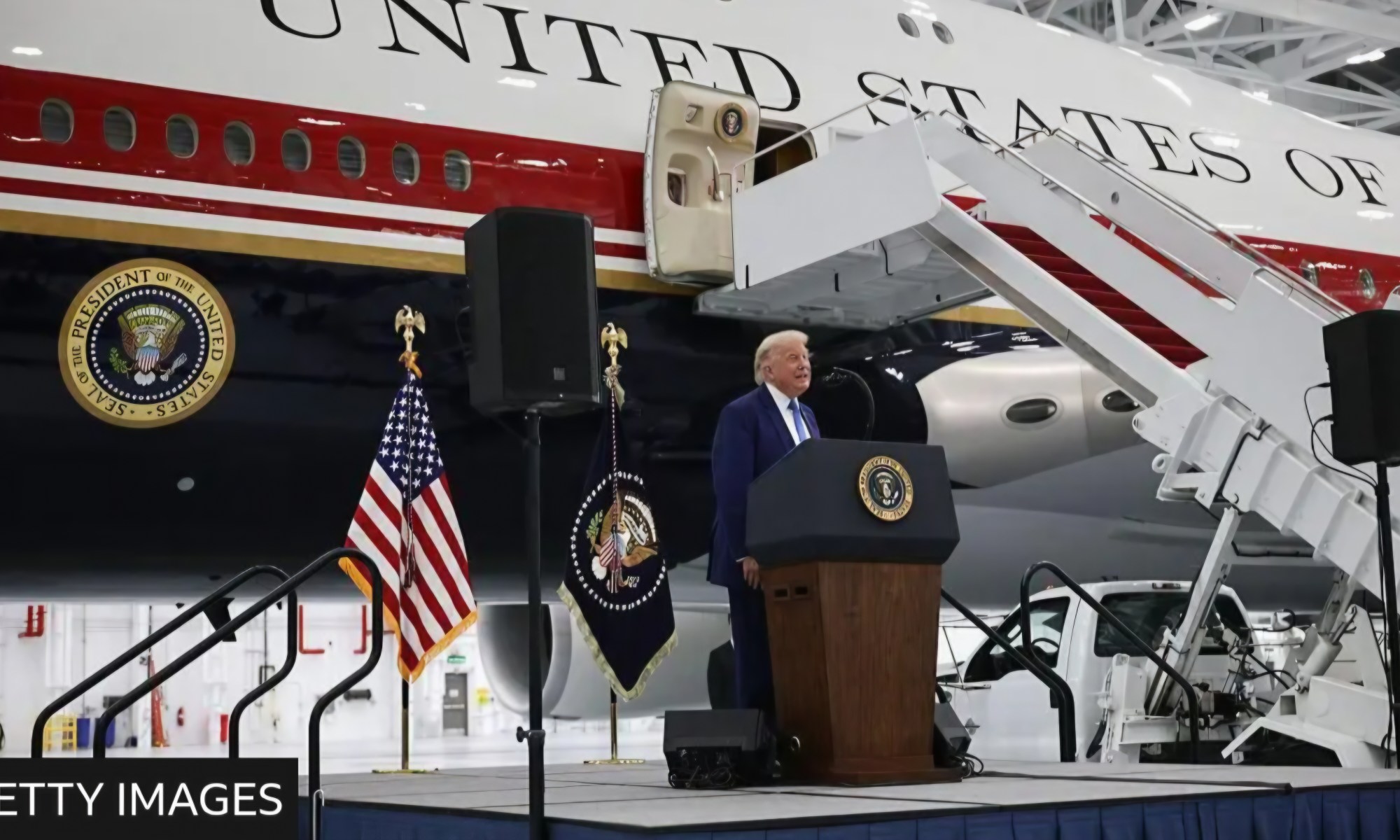
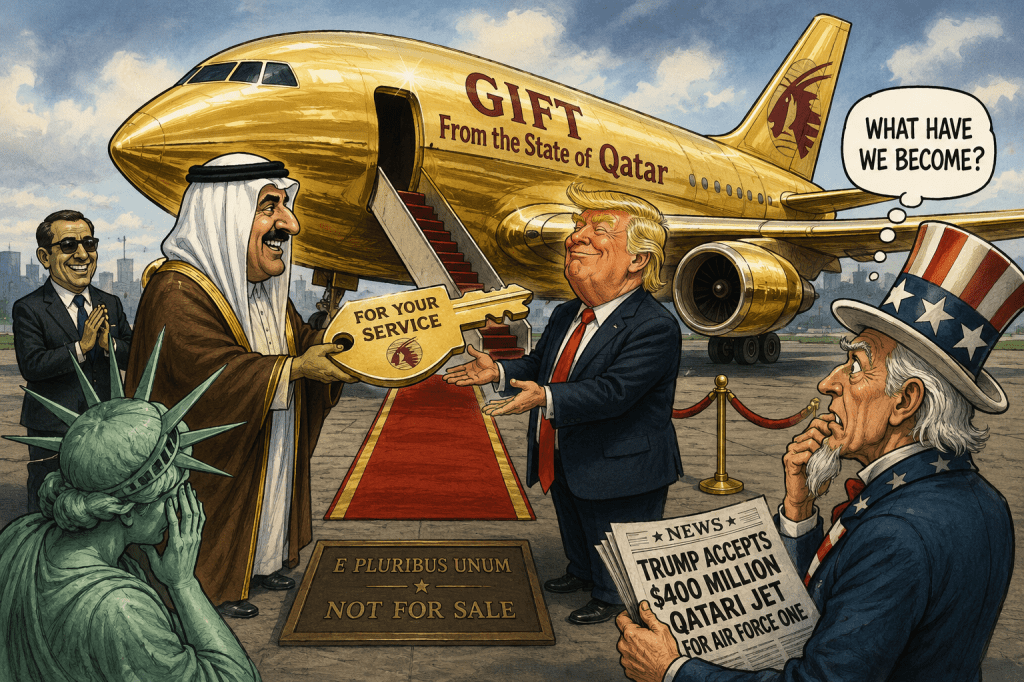
That is why Donald Trump’s unveiling of a luxury jet gifted by Qatar for use in the Air Force One fleet is not merely another political controversy. It is a profound stain on the ideals America has spent centuries promoting to the rest of the world.
The issue is not the aircraft itself. The issue is what it represents.
The richest and most powerful country on earth accepting an extravagant gift from a small developing nation is a spectacle of astonishing impropriety. It is reverse Robin Hood politics. Rather than wealth flowing from the rich to the poor, it is influence flowing from the poor to the rich.
One of the enduring criticisms made by the United States against developing countries has been the culture of patronage, gift-giving and the blurring of lines between public office and private benefit. American diplomats, academics and politicians have spent decades lecturing governments around the world about transparency, accountability and conflicts of interest.
Yet here is a President of the United States proudly embracing a gift that would trigger corruption alarms in virtually every governance handbook Washington has exported across the globe.
Doubtful if every legal technicality can be satisfied, the ethical stench remains overwhelming.
The Founding Fathers were deeply suspicious of foreign influence. The constitutional prohibition against officials accepting gifts, titles or emoluments from foreign states without congressional approval was not inserted by accident. It was born from a fear that foreign governments could purchase influence through generosity disguised as diplomacy.
The principle was simple: public servants should owe allegiance only to the nation they serve.
Trump’s defenders argue that the aircraft serves a governmental purpose and therefore no problem exists. Such arguments miss the point entirely. The scandal is not merely about ownership. It is about symbolism, propriety and the gradual erosion of standards.
Republics do not survive because every action is technically legal. They survive because public officials exercise restraint and recognise that some actions are beneath the dignity of the office they hold.
What is most remarkable is the helplessness of the institutions supposedly designed to prevent such conduct. Congress appears paralysed. Ethics watchdogs are marginalised. Political supporters cheer behaviour they would have denounced had it been committed by an opponent.
The result is a dangerous lesson: if enough political power is accumulated, every norm becomes negotiable.
History offers many examples of democratic decline beginning not with tanks in the streets but with the steady normalisation of conduct that would once have been considered unacceptable. Citizens become accustomed to each new breach until the extraordinary becomes ordinary.
Britain experienced its own version during the Boris Johnson years, where rules increasingly appeared applicable only to ordinary citizens while those in power enjoyed exemptions. What was once viewed as exceptional misconduct became political background noise.
America now faces its own version of this phenomenon. Future historians may well identify this episode as part of a broader transformation of presidential conduct from constitutional leadership towards a style of governance that resembles the personalised politics more commonly associated with oligarchies and strongman regimes.
The tragedy is not simply that Donald Trump accepted such a gift.
The greater tragedy is that Trump’s supporters and political associates apperently see nothing wrong with it.
A healthy republic depends on citizens who are capable of being embarrassed by the conduct of their leaders. When that capacity disappears, institutional safeguards become increasingly fragile.
At some point a future American administration should revisit this affair. The aircraft should be seized into public ownership permanently if it remains in government service, stripped of any personal association and treated as a reminder of a period when ethical boundaries became dangerously blurred.
More importantly, stronger legal safeguards should be enacted to ensure that no future president can place the nation in a similar position. Ethics laws should not depend upon the goodwill of officeholders. They should be robust enough to withstand those who possess neither restraint nor shame.
The United States has survived civil war, economic collapse and foreign threats because its institutions were stronger than the ambitions of individual politicians.
The real question raised by the Qatari jet affair is whether those institutions remain strong enough today.
For a nation that once presented itself as the world’s foremost guardian of republican virtue, accepting a luxury aircraft from a foreign government is not a symbol of strength.
It is a symbol of decline.

