

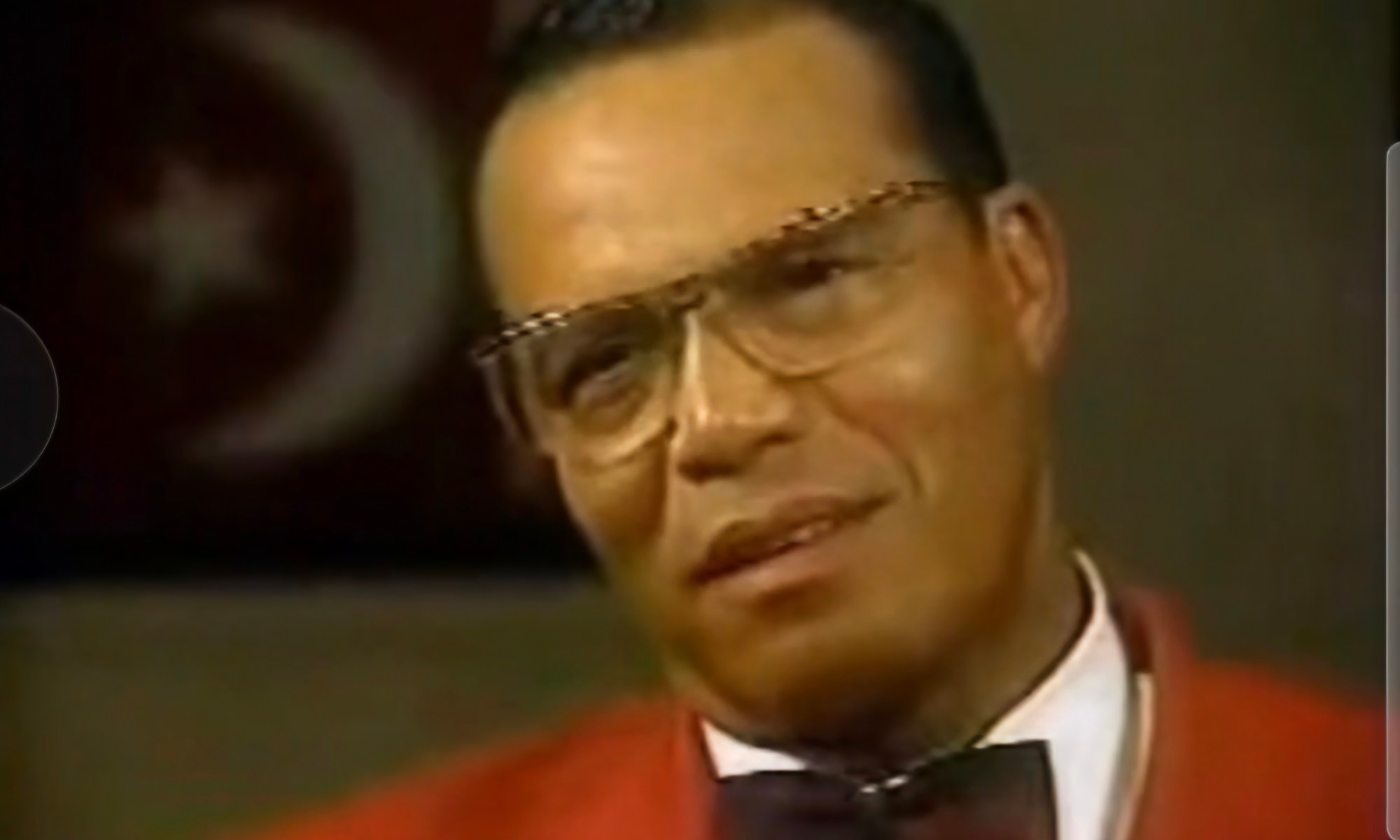
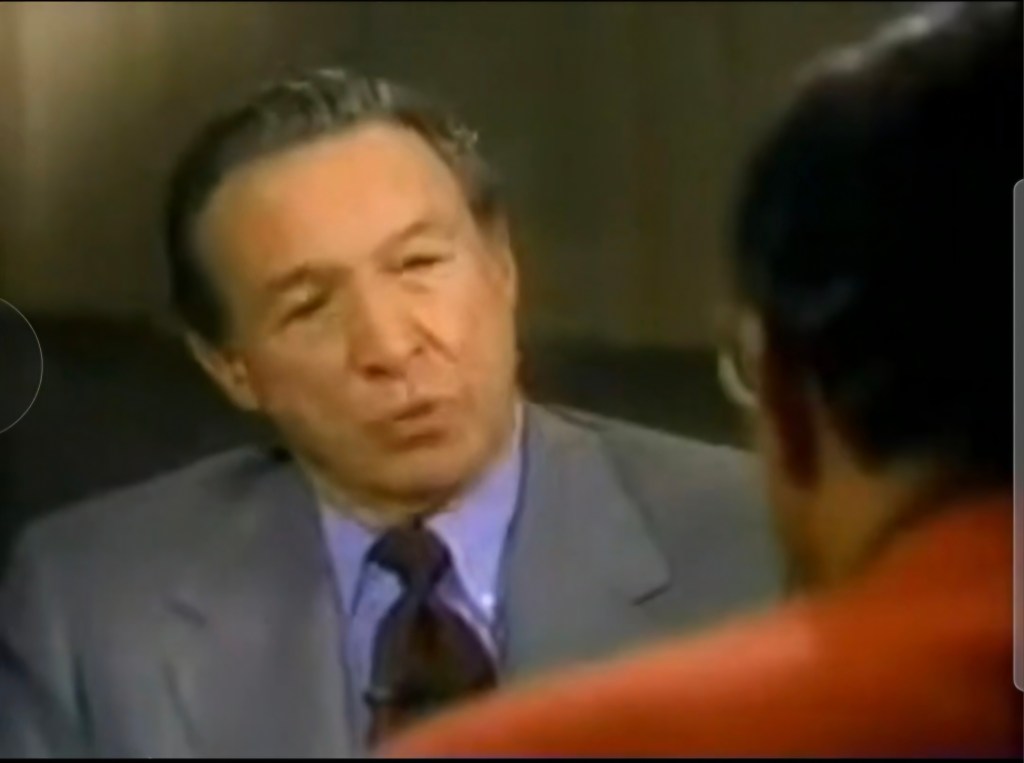
Mike Wallace: …Farrakhan, you go to Nigeria, which is, if not the most corrupt nation in Africa—and it is—it could be the most corrupt nation in the world, Minister Farrakhan.
Louis Farrakhan: Oh, now, Mr. Wallace…
Mike Wallace: It is the most corrupt nation that I have ever covered. I’ve been there 25 years ago, and I’ve been there as recently as last year.
Louis Farrakhan: Fine. So what? 35 years old—that’s what that nation is. Now, here’s America, 226 years old. You love democracy, but there in Africa, you’re trying to force these people into a system of government that you just have accepted. 30 years ago, Black folk got the right to vote. You’re not in any moral position to tell anybody how corrupt they are. You should be quiet, and let those of us who know our people go there and help them get out of that condition.
But America should keep her mouth shut wherever there is a corrupt regime, as much hell as America has raised on the earth. No, I will not allow America or you, Mr. Wallace, to condemn them as the most corrupt nation on earth when you have spilled the blood of human beings. Has—has Nigeria dropped an atomic bomb and killed people in—in Hiroshima and Nagasaki? Have they killed off millions of Native Americans?
How dare you put yourself in that position as a moral judge? I think you should keep quiet. Because with that much blood on America’s hands, you have no right to speak. I will speak, because I don’t have that blood on my hands.
Yes, there’s corruption there. Yes, there’s mismanagement of resources. Yes, there is abuse. There’s abuse in every nation on earth, including this one! So let’s not play holy to moralize on them. Let’s help them.
Mike Wallace: I’m not moralizing. I’m asking a question, and I got an answer.
Louis Farrakhan: Why would you put it as the most corrupt regime in the world? That doesn’t make sense.
Mike Wallace: Can you think of one more corrupt?
Louis Farrakhan: Yeah, I’m living in one. I’m living in one. Yes! You’ve done a hell of a thing on this earth, so you should not be the one to talk. You should be quiet when it comes to moral condemnation. In my judgment.
(pauses and smiles)
I didn’t mean to be so fiery.
Mike Wallace: (chuckles) No, no, it’s good. It’s good.
Louis Farrakhan: That’s my passion.
Now my take
There is a specific genre of vintage television that hits differently in the era of viral video. It’s the high-stakes, unedited, intellectual heavyweight bout. And if you’ve spent any time examining historical media lately, you’ve likely run across a masterclass in rhetorical judo courtesy of a resurfaced 1996 clip from 60 Minutes.
In the archival footage, legendary journalist Mike Wallace sits across from Minister Louis Farrakhan. What starts as a standard, aggressive American news interrogation quickly transforms into one of the most blistering counters ever broadcast on network television.
The Setup: The “Most Corrupt” Label
The exchange begins with Mike Wallace doing what Mike Wallace did best: throwing a heavy-handed punch. Armed with the confidence of a veteran Western journalist, Wallace confronts Farrakhan about his recent travels:
Mike Wallace:”…Farrakhan, you go to Nigeria, which is, if not the most corrupt nation in Africa and it is it could be the most corrupt nation in the world, Minister Farrakhan.”
When Farrakhan tries to interject, Wallace doubles down, citing his own journalistic resume: “It is the most corrupt nation that I have ever covered. I’ve been there 25 years ago, and I’ve been there as recently as last year.”
For a lot of interviewees, this is where the defensive backpedaling begins. But Farrakhan didn’t backpedal. He pivoted.
The Counter: “So What?”
Farrakhan’s response is a masterclass in reframing the narrative. Instead of defending the institutional flaws of the young Nigerian nation, he shifts the lens back onto the moral authority of the accuser:
Louis Farrakhan:”Fine. So what? 35 years old—that’s what that nation is. Now, here’s America, 226 years old… You’re trying to force these people into a system of government that you just have accepted. 30 years ago, Black folk got the right to vote. You’re not in any moral position to tell anybody how corrupt they are.”
From there, the fire only intensifies. Farrakhan brings up Hiroshima, Nagasaki, and the mass killing of Native Americans, systematically dismantling the idea that the West holds a monopoly on global virtue.
The climax of the clip hits a beautifully tense crescendo when Wallace asks if Farrakhan can think of a single nation more corrupt than Nigeria.
Farrakhan’s answer? “Yeah, I’m living in one.”
Then, just as quickly as the temperature hits a boiling point, Farrakhan breaks into a wide smile, smoothly dropping the tension: “I didn’t mean to be so fiery.” A chuckling Wallace concedes: *”No, no, it’s good. It’s good.”
Why It Hits Differently Today
Watching this clip today isn’t just a trip down memory lane; it feels remarkably prescient. The core of their argument, the tension between Western institutional criticism and the historical realities of Western foreign policy, is still the defining debate of international relations.
Decades after this interview was recorded, the conversation around global governance has drastically shifted. The era of the West handing down unilateral moral report cards is facing unprecedented pushback. Whether we are talking about the shifting dynamics of global alliances, economic partnerships across Africa and Asia, or the internal political fractures within the US itself, Farrakhan’s central thesis that nations in glass houses shouldn’t throw stones is a sentiment that has gone completely mainstream on the world stage.
Corruption, mismanagement, and abuse of power are real issues that every nation faces as Trump and the GOP have proven in the USA. But as this classic clip reminds us, the identity of the judge matters just as much as the verdict.
When they point with one finger, remind them of the four pointing right back at them.

