


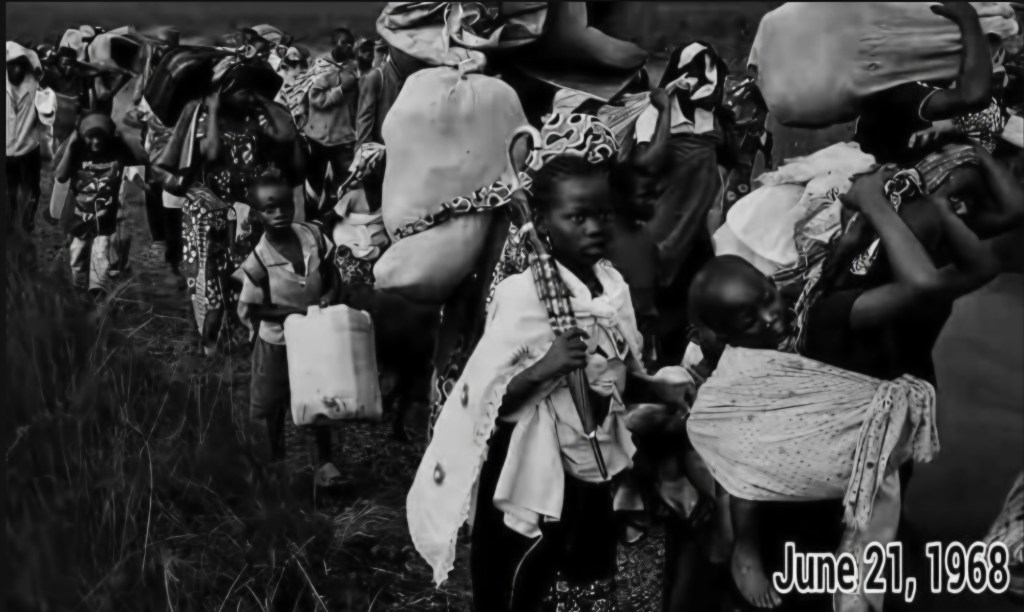
History is often told through generals, politicians and battle maps. Yet the true story of war is usually found in the memories of ordinary people who lived through it. For the people of Abonnema in present-day Rivers State, the Nigerian Civil War was not merely a conflict between the Federal Government and Biafra. It was a period of fear, displacement, suspicion and immense human suffering.
One of the enduring expressions from that era is “Ga’a-Niger,” a phrase that has become embedded in the collective memory of the people of Abonnema. The term originated during the Biafran occupation of the town in 1968. According to local accounts, evacuees were directed to proceed to the premises of the former Royal Niger Company, a colonial trading post located along the Sombrero River. In the Igbo language, “Ga’a” means “go to,” and thus “Ga’a-Niger” emerged as a reference to the evacuation point from which many residents began an uncertain journey away from their homeland.
A Town Under Siege
For more than six months, Abonnema endured the harsh realities of war. Families found themselves trapped in a conflict they neither initiated nor controlled. Daily life became dominated by fear as military occupation transformed the town’s social fabric.
The tragedy was compounded by local political rivalries that predated the war. Old divisions from the turbulent years following Nigeria’s First Republic reportedly resurfaced under wartime conditions. Some individuals were accused of collaborating with occupying forces, while others were branded saboteurs or enemies. In such an atmosphere, personal grievances and political disagreements often carried deadly consequences.
Residents recalled arrests, public punishments, confiscation of property and the destruction of homes. Suspicion became a way of life. Neighbours feared speaking openly, and ordinary gatherings could attract unwanted attention. The town’s economy suffered severely as movement was restricted and commercial activity ground to a halt.
The Human Cost
War rarely distinguishes between combatants and civilians. In Abonnema, the suffering was borne largely by ordinary men, women and children.
Many families lost loved ones. Homes were looted or destroyed. Hunger became widespread. Children were separated from parents, and communities that had once lived in relative harmony became fractured by fear and mistrust.
Accounts from survivors describe scenes of grief repeated across numerous households. The psychological scars proved almost as enduring as the physical destruction. Relationships deteriorated as accusations and reprisals poisoned community life.
Particularly haunting are memories of an air raid on the town’s market area that reportedly claimed many civilian lives. The attack remains one of the most painful chapters in local memory. For many residents, the marks left on buildings and public spaces became silent reminders of lives abruptly cut short.
The Exodus from Abonnema
As conditions worsened, many indigenous residents were evacuated through the Niger Trading Company area and onward through Agada Waterside. Carrying whatever possessions they could salvage, families left behind ancestral homes and familiar surroundings.
For those forced into exile, the journey represented more than physical displacement. It was the temporary loss of identity, community and security. The phrase “Ga’a-Niger” became synonymous with this painful chapter, symbolizing both departure and survival.
Liberation and Retribution
On June 21, 1968, Federal troops entered Abonnema through the creeks and swamp routes surrounding the town. Their arrival marked the end of Biafran control and was greeted with jubilation by many residents who viewed it as liberation from months of hardship.
Yet the end of occupation did not immediately bring peace. The bitterness accumulated during the siege produced acts of revenge and retribution. Individuals accused of collaborating with occupying forces faced retaliation, further deepening the wounds left by the conflict.
This cycle of violence demonstrated one of war’s cruelest realities: even after the guns fall silent, hatred often continues to claim victims.
Lessons for Today
Nearly six decades later, the story of Abonnema remains a powerful reminder of the devastating consequences of civil conflict. Beyond the political arguments, military strategies and ideological battles were ordinary people who paid an extraordinary price.
The memories associated with Ga’a-Niger are not simply historical anecdotes. They are warnings from the past. They remind us how quickly political disagreements can descend into violence, how communities can turn against themselves, and how civilians invariably bear the heaviest burdens of war.
History does not ask us to forget. It asks us to learn.
The story of Abonnema teaches that national unity cannot be sustained by force alone, nor can grievances be resolved through violence. Every generation inherits a responsibility to preserve peace, strengthen dialogue and resist the temptations of division.
For those who witnessed the events of 1968, the memories remain vivid. For those who came after, the responsibility is clear: ensure that such suffering never returns to the banks of the Sombrero River, nor to any part of Nigeria again.
 Centre for Nigeria Progress