

There is a peculiar genius to Nigerian politics that deserves its own chapter in the handbook of advanced statecraft. It is the art of shrinking the political space not by banning dissent, not by jailing the loud ones, but by simply offering them a seat at the table and watching the principles evaporate faster than free food at a campaign rally.
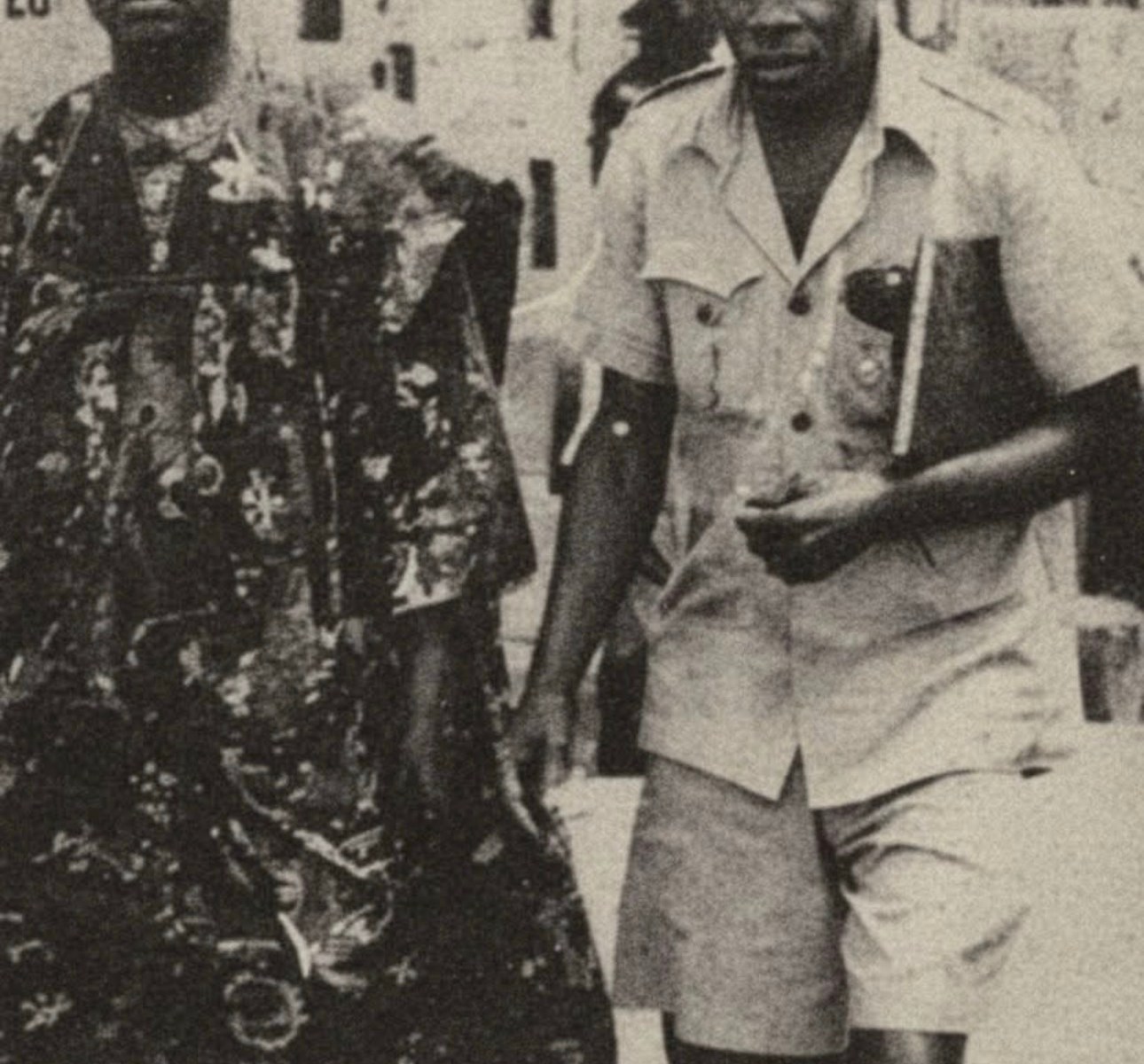
General Ibrahim Badamasi Babangida IBB understood this early. In a move that still smells of pure administrative mischief, he invited the likes of Professor Wole Soyinka, Professor Olikoye Ransome-Kuti and Dr. Tai Solarin into the orbit of his government. The effect was immediate and instructive. The usual choir of moral indignation, the people who had made careers out of pointing accusing fingers at power, suddenly found themselves with official letterheaded paper and the soft comfort of proximity. What followed was not the birth of principled engagement. It was the public unveiling of the Nigerian opposition’s most reliable ideology: stomach first, principles later, if at all.
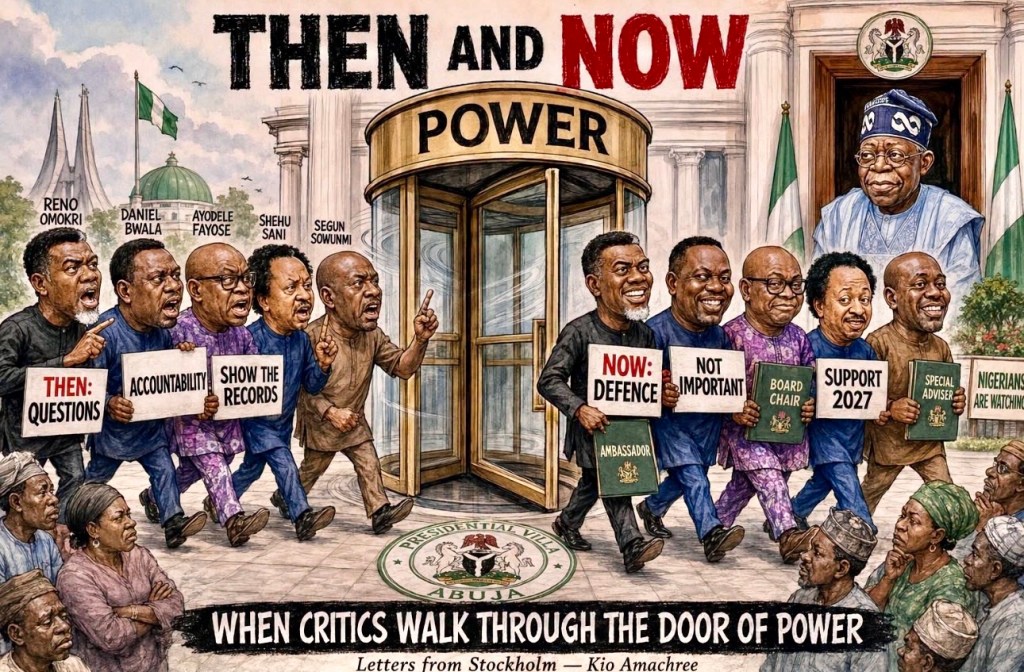
The lesson was never forgotten. Decades later, President Bola Ahmed Tinubu has picked up the same playbook and expanded it with the enthusiasm of a man who has studied every footnote. Into the fold have come Daniel Bwala, Reno Omokri, Femi Fani-Kayode and an assortment of other former firebrands. The pattern is now so familiar it borders on ritual. Yesterday’s unrelenting critic of “drug dealers and the corrupt” wakes up as today’s elastic defender of the same. Reno, in particular, has perfected the contortion. He bends with such athletic consistency that one suspects he keeps a personal physiotherapist on retainer just to manage the moral spine.
Bala Daniel’s moment of exposure was almost poetic. Mehdi Hasan merely quoted the man back to himself and the double standard stood there, naked and blinking in the daylight, like a politician caught without a prepared statement. No elaborate investigation was required. The hypocrisy was self-documenting.
One must concede the short-term brilliance. When the loudest voices are absorbed, the remaining noise becomes manageable. The political space contracts. The atmosphere grows quieter. Power sleeps better. Both IBB and Tinubu have demonstrated that this method works with almost clinical efficiency.
Yet the long-term cost is paid by the rest of us. A country that no longer knows which critic is sincere and which is simply waiting for the next appointment loses the ability to trust any public voice. When every former moralist can be converted by the promise of relevance or comfort, the very idea of principled opposition begins to look like a romantic fiction told to children. Power, already predisposed to excess, becomes further insulated. Absolute power does not merely corrupt; it learns that the critics can be rented by the season.
We are left with a political culture in which the most reliable signal of impending silence is the announcement of a new appointment. The unprincipled underbelly of the opposition has been thoroughly exposed. The tragedy is that the exposure has not produced reform. It has only produced a more sophisticated market for consciences.
In the end, the presidents who master this game may win their seasons. The country, however, is left wondering who, if anyone, can still be believed when the next round of indignation begins.
 Centre for Nigeria Progress