


And it appears the less financially viable these states are, the less practical their ideas become.
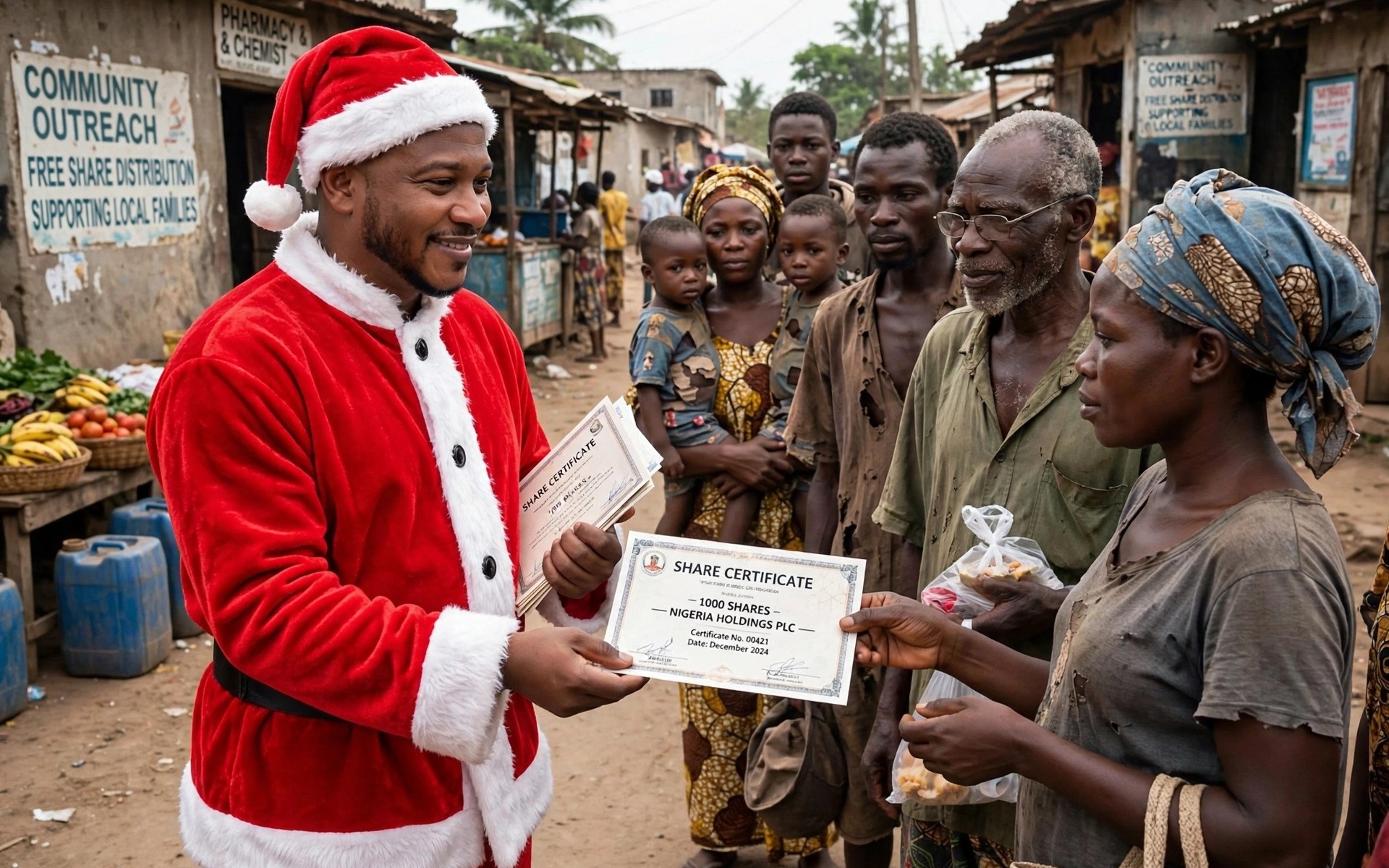
Two of them, Zamfara and Gombe, have now proposed (and in Gombe’s case, actually begun) buying Dangote IPO shares for their poor people without any serious legal or financial framework. One is sprinkling roughly 20 shares each on 36,176 residents; the other is pairing ₦149 million of state cash with Dangote Foundation matching funds so that 28,284 vulnerable women each get 20 shares in the refinery.
Yobe has since joined the party, approving ₦230.62 million for 43,928 women under the same arrangement. At ₦525 a share, that is about ₦10,500 of “empowerment” per person.
In the pantheon of Nigerian fiscal creativity, this ranks somewhere between “free goats that somehow die before distribution” and “we will build a monorail with future FAAC allocations.” It is poverty alleviation by press release: the photo-ops will be excellent, the long-term wealth creation less so.
How the 36 states can be viable
A fresh look at the fiscal health of Nigeria’s 36 states, courtesy of BudgIT’s latest State of States report and the National Bureau of Statistics’ 2025 Internally Generated Revenue figures, confirms what every serious observer already suspects: most governors still treat the treasury like a family ATM with unlimited overdraft facilities. The pattern of high consumption, rising debts and chronic mismatch between revenue and expenditure has not been cured; it has merely been rebranded with higher numbers and occasional bursts of reform theatre. Shock therapy remains urgently needed. The alternative is another decade of states that cannot pay salaries without Abuja’s monthly drip, let alone fund development.
Past experience offers little comfort. Oil-price crashes, currency devaluations and subsidy removals have come and gone since the late 1970s. Each time, federal and state governments swore to diversify. Each time, the oath was broken faster than a campaign promise. If the reality of lean resources, wage bills that cannot be met, and serial borrowing has not yet produced fiscal maturity, one begins to wonder what will. Perhaps only the eventual refusal of lenders to keep underwriting the carnival.
The numbers remain depressingly familiar. Lagos continues to dominate IGR, hauling in ₦1.77 trillion in 2025—more than many of its peers combined—and still accounts for a grossly disproportionate share of subnational debt. Rivers and a newly assertive Enugu follow at a distance (₦428 billion and ₦407 billion respectively). At the other end of the scale, Yobe managed a princely ₦16 billion.
Several northern states still struggle to generate enough to keep the lights on in Government House, never mind run functional schools or hospitals. Only a handful—Lagos, Enugu and a few others—can currently cover operating expenses from their own resources without leaning heavily on FAAC. The rest remain fiscal basket cases dressed in new suits.
Public financial management in most states is still closer to medieval tribute collection than modern economic stewardship. BudgIT’s observation that administrators need “rigour and foresight” to exploit advantages in agriculture, manufacturing, trade and tourism remains as true as it is routinely ignored.
Cross River still talks tourism while its potential gathers dust: Obudu Mountain Resort, once a genuine national attraction, spent years in neglect; Tinapa became a cautionary tale of ambition without follow-through; and waterfalls and monoliths that could draw serious visitors continue to suffer from poor access roads and inconsistent maintenance.
Kogi, sitting on iron ore, limestone, coal and more than 30 other minerals, plus communities along the Niger, has historically underperformed on IGR relative to its natural wealth—though recent revenue reforms have pushed collections higher, the state remains heavily dependent on federal transfers.
Then there are the airports. Ebonyi poured more than ₦53 billion (some accounts put the total closer to ₦63 billion after runway repairs) into an international airport that has recorded fewer than 55 commercial and private flights since opening—an empty, echoing monument that mainly serves the political class. Bayelsa spent around ₦60 billion; Zamfara reportedly ₦62.8 billion; Nasarawa’s Lafia cargo airport and others in Jigawa, Bauchi, Kebbi and beyond have similarly struggled with passenger numbers that make the investment look more like a campaign trophy than an economic asset. Only a handful of Nigeria’s airports are commercially viable; the rest are expensive symbols of gubernatorial prestige.
Religious spending offers another reliable outlet for surplus enthusiasm. Multiple states continue to underwrite pilgrimages to Mecca and Jerusalem even as debts mount and basic services lag. Sokoto has handed out hundreds of thousands of naira per pilgrim; Jigawa has remitted billions directly; Ebonyi once spent hundreds of millions on a few dozen beneficiaries—sums that could have equipped classrooms or clinics instead. The optics of piety are excellent; the opportunity cost is rarely discussed.
The temptation to announce grand gestures—airports that never take off, religious festivals funded from the public purse, or, most recently, share-buying sprees for the poor—proves irresistible precisely because it requires neither institutional reform nor uncomfortable choices about the size of the political class.
Until state governments behave like self-sustaining economic units rather than dependants of the federal purse, Nigeria will remain the world’s poverty capital with impressive GDP figures and even more impressive unemployment queues. Like proper federations elsewhere, states must compete for investment and markets. They can no longer wait for Abuja to create the enabling environment. India’s poorer states have shown that focused investment in agriculture and services can produce rapid growth; American states specialise ruthlessly according to comparative advantage. Nigerian states, by contrast, specialise in sharing whatever arrives from the Federation Account and borrowing to cover the shortfall.
The Federal Government should tighten the screws further. Guaranteeing foreign loans for states that cannot generate the revenues to repay them is fiscal malpractice. Bailouts and refunds should come with genuine performance conditions, not the usual theatrical commitments. And voters, whenever they next get the chance, should start asking candidates for concrete metrics: number of companies attracted, jobs created, literacy rates achieved, and the size of the political payroll relative to capital spending. Lean cabinets, fewer aides, fewer ministries, and a tax system that actually collects what is owed would be a useful start.
In the meantime, we are treated to the spectacle of states that cannot fund basic services cheerfully distributing tiny parcels of Dangote shares, building empty airports, and subsidising pilgrimages as if these were serious poverty-reduction strategies. They are not. They are the fiscal equivalent of rearranging deckchairs on a ship that is still taking on water—while the band plays “empowerment” and the photographers capture the moment for social media. The poorer the state, the more inventive the distraction. One can only hope that one day the music stops and someone is left holding the actual bill.

