

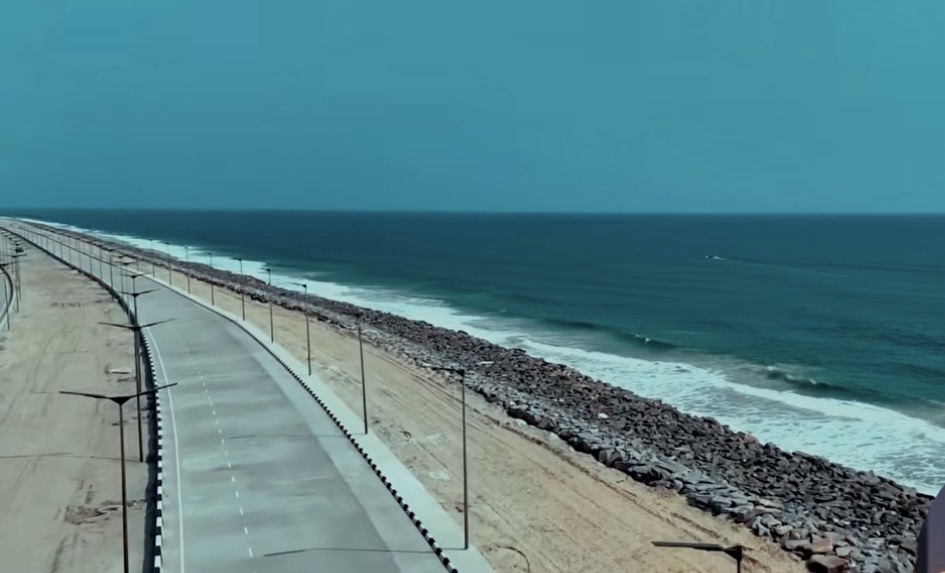
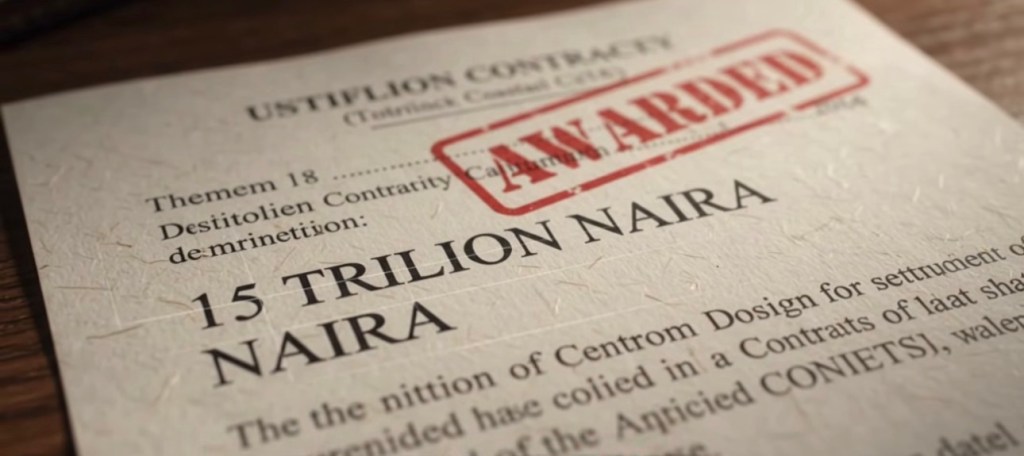
Picture the scene. Quiet afternoon in Abuja. No cameras. No public auction. No awkward questions from the gallery. Just a pen, a closed door, and the casual bestowal of a 15 trillion naira contract. Welcome to the Lagos-Calabar Coastal Highway, Nigeria’s gleaming 700-kilometre Atlantic hug that promises to connect the coast while quietly threatening to disconnect the rest of us from our remaining sense of fiscal sanity.
The government sold it as national progress in 3D glory. Look past the glossy renders, however, and the paperwork starts to smell less like asphalt and more like something left too long in the sun.
The Secret Society of Procurement
Nigeria still has a Public Procurement Act of 2007. In theory it demands open, competitive bidding so the public can see the numbers and the lowest qualified bidder wins. Charming concept. Almost quaint.
Instead, Works Minister Dave Umahi reached for the legal loophole labelled “restrictive bidding” and handed the entire multi-trillion naira project to High-Tech Construction Company without the inconvenience of a proper contest. The first 47.4 km stretch in Lagos alone came in at a cool 1.06 trillion naira, more than 22 billion naira per kilometre. Only months earlier the same minister had floated a figure of around 4 billion naira per kilometre. Somewhere between those two numbers a calculator appears to have suffered a nervous breakdown. Without competitive bids or published bills of quantities, civil society is left to wonder whether the price is for the coastal swamp or for a rather exclusive political savings scheme.
A Cozy Boardroom
Who, then, is High-Tech Construction Company, and why the golden ticket?
High-Tech is a subsidiary of the Chagoury Group, founded by the Chagoury brothers. Gilbert Chagoury has long been a personal associate of President Bola Ahmed Tinubu, a relationship stretching back to the Lagos governorship years. It gets warmer still: the president’s son, Seyi Tinubu, sits on the board of CDK Integrated Industries, a sister company under the same parent conglomerate. The presidency insists Seyi is an independent adult who joined long before Aso Rock, and that the Chagourys are merely minority shareholders alongside General T.Y. Danjuma. The optics, alas, remain deliciously awkward: a non-competitive mega-contract lands in a private circle that includes the president’s kin. To round things off, in January 2026 Gilbert Chagoury received the GCFR, the nation’s second-highest honour. First the contract, then the medal. Efficiency, if nothing else.
Following the Foreign Dollar Trail
How does one fund a 15 trillion naira road? Enter the “EPC plus F” model: Engineering, Procurement, Construction plus Financing. The Nigerian government contributes 30 percent from the national treasury; High-Tech is expected to raise the remaining 70 percent from global lenders.
In July 2025 a sparkling $747 million syndicated loan for the Lagos section was coordinated by Deutsche Bank, with First Abu Dhabi Bank, Afreximbank and Nigeria’s own Zenith Bank joining the party. High-Tech will operate the highway and collect tolls for 15 years or more. Official projections imagine 50,000 vehicles a day cheerfully paying an average of 3,000 naira each.
The Mathematical Delusion
Two small difficulties present themselves.
First, traffic reality. What happens when ordinary Nigerians, already wrestling with petrol prices that feel personal, simply cannot afford a 3,000 naira toll? Roads, it turns out, are less useful when people cannot afford to drive on them.
Second, the foreign exchange trap. The loan is in dollars. The tolls will be collected in naira. Borrowing hard currency while your customers pay in a currency that treats stability as a rumour is a classic recipe for financial self-harm. As the naira slides, the debt balloons while the concrete remains stubbornly still. And if the tollgates fail to generate enough convertible dollars? Sovereign guarantees ensure the shortfall lands politely on the national budget. Deutsche Bank and High-Tech get paid. The Nigerian taxpayer gets the invoice.
You’re Paying Three Times Over
Even if you never set foot on the coastal highway, you will still pay for it, repeatedly.
At the gate: a small vehicle’s round-trip toll could easily reach 4,000 naira, a sizeable bite out of the 70,000 naira minimum wage.
Through the budget: a growing slice of government revenue disappears into debt service, leaving less for hospitals, schools and unpaid teachers.
At the market: when the government scrambles for dollars to satisfy foreign lenders, the naira weakens further, pushing up the cost of imported medicine, wheat and the rest of daily life.
Other Countries Build Differently
Why must we always invite Frankfurt or Abu Dhabi to pour concrete on our own coastline? Burkina Faso’s citizens once contributed cash, cement and labour to build expressways on a state budget. Ethiopia raised funds for its grand dam through bonds from workers and the diaspora. Nigeria itself has raised more than 1.09 trillion naira domestically via Sukuk bonds to repair thousands of kilometres of road without falling into a foreign-currency trap.
The Lagos-Calabar Coastal Highway remains a grand vision. When the dust settles, however, the road will sit in Lagos and the bill will sit squarely in your kitchen.

