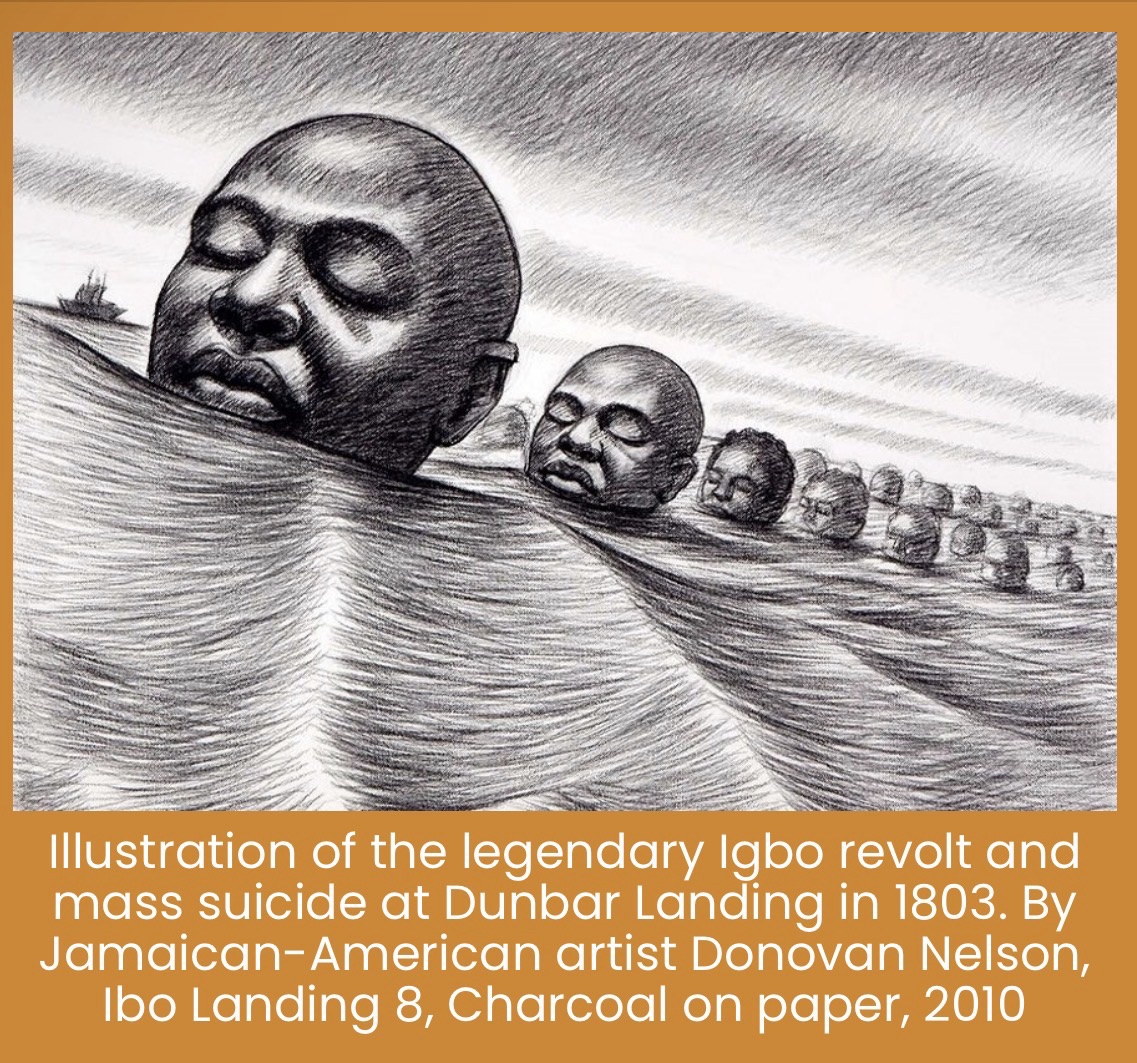
My parents’ compound in Umujieze sits on a hill that has been in the family longer than most of us have had the decency to feel embarrassed about it. We bury our dead right under the living-room carpet, the study, and occasionally near the front gate because nothing says “welcome” like an umbilical cord and a few ancestral tibiae. Somewhere down the slope, half-swallowed by bush, lies the prize exhibit: Great-Grandfather Nwaubani Ogogo Oriaku, the man who turned human beings into a respectable export business and still managed to get a leopard sacrificed at his funeral. “He was a renowned trader,” my father still announces with the same pride other families reserve for inventing penicillin. “He dealt in palm produce and human beings.” Note the elegant pairing. One product softens the hands; the other paid for the canvas shoes that made him the best-dressed man in a land where most people went barefoot. Long before the Europeans showed up with their ships and their appetites, the Igbo were already practicing a more intimate form of slavery debtors, criminals, prisoners of war the sort of arrangement that allowed a man to own property and still risk being buried alive with his master. Then the Atlantic market opened and the whole enterprise scaled up beautifully. Kidnapping distant villages became a growth industry. Disgraced relatives were quietly exported, rather like the British shipping their convicts to Australia, only with better weather and worse outcomes. Nwaubani Ogogo held a proper slave-trading licence from the Royal Niger Company, which is roughly the colonial equivalent of a Google Partner badge. His agents did the dirty work inland; middlemen ferried the merchandise to Bonny and Calabar; white merchants handled the final leg to Cuba and Brazil (the United States and Britain having inconveniently abolished the trade by then how very gauche of them). Local chiefs, eager for influence, offered him their daughters. By the time he died he had collected enough wives to staff a small parliament. Colonial officials, impressed by the efficiency, made him chief of several towns. He built a guesthouse, entertained British dignitaries, and received locks of Caucasian hair in advance so he could confirm the visitors were genuine. One imagines the envelope arriving with a polite note: “Please find enclosed proof I am white and important.” When the old man finally expired, the funeral was suitably lavish: a leopard, six live slaves, and the heavy iron chains that my father, as a boy, could barely lift. We still have the chains. We still have the stories. And every so often a distant church turns up to thank us for the armed escort our ancestor once provided to the first missionaries. Progress, it seems, has a long memory and a short conscience. My father remains unapologetic. “His business was legitimate at the time,” he says, as though legitimacy were a seasonal fruit. “Not everyone could summon the courage to be a slave trader.” Courage. Yes. That is one word for it. The rest of us the ones who now live in cities, watch films about the Middle Passage, and occasionally wonder whether someone might someday invoice the family for reparations — are less certain. We inherited the name, the land, the stories, and a lingering suspicion that some debts refuse to stay buried under the living-room floor.
My Great-Grandfather, the Nigerian Slave-Trader by Adaobi Tricia Nwaubani