To outlast a prime minister always counts as some kind of achievement for an opposition leader, although Kemi Badenoch cannot claim credit for Sir Keir Starmer’s downfall. Sir Keir’s wounds were mostly self-inflicted. To the extent that opposition pressure was involved, it was electoral threats from Reform UK and the Green party that stoked Labour party frustration to a regicidal pitch. The Tory leader’s role was largely as a spectator.
The British Right and the Great Social Sorting Experiment by Lawson Akhigbe
It wants to celebrate Britain as the greatest country in the world while simultaneously proposing policies that would make large parts of Britain less British.
When Unsolicited Advice Meets Unsolicited Shade by Lawson Akhigbe
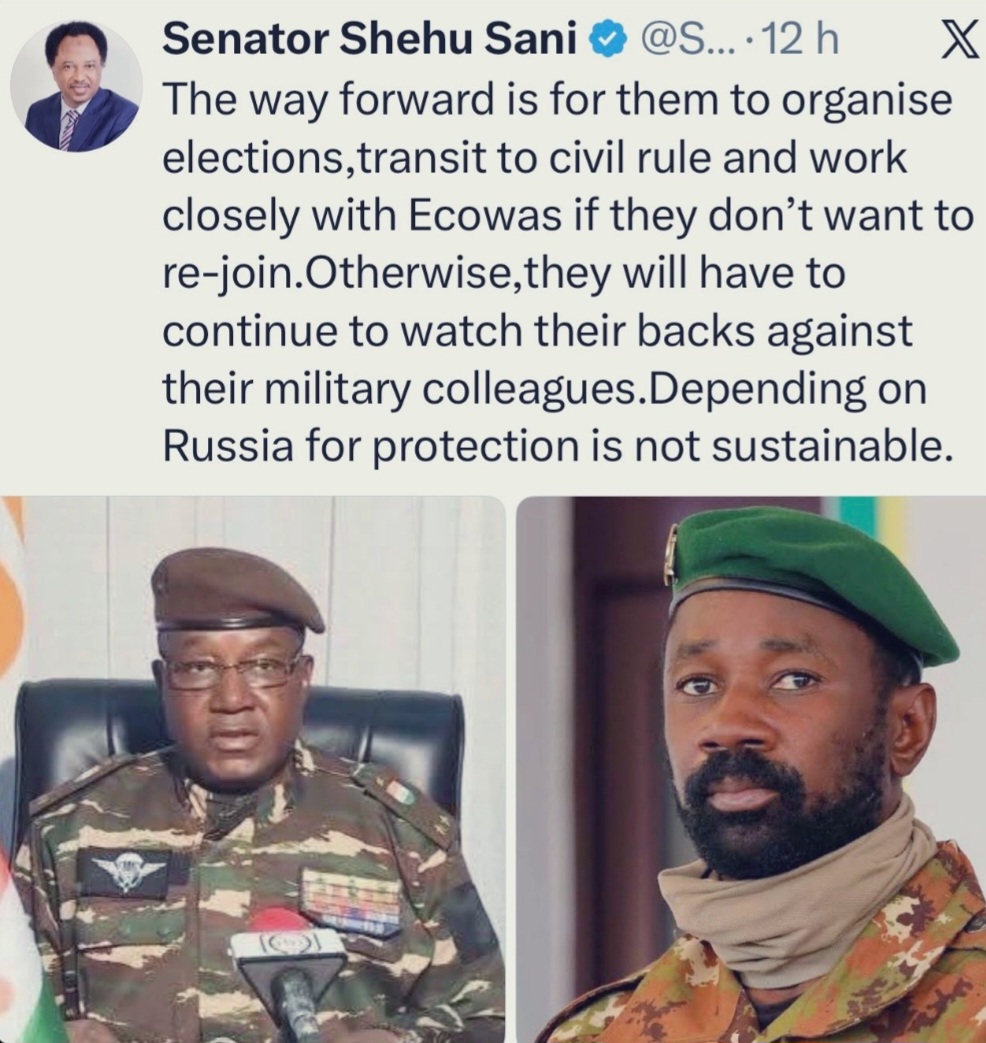
A simple split-screen or virtual debate table. One side has a Nigerian flag and a slightly dusty ECOWAS logo. The other has a bold “Sovereignty First” banner and a small Alliance of Sahel States pin. Both characters face the camera like they’re on a late-night panel that got too real.
The NGO Trap: How a $1 Trillion Industry Learned to Love African Poverty by Lawson Akhigbe
Somewhere in a glass-and-steel conference centre in Geneva, a distinguished panel is convening to discuss Africa's poverty crisis. The room costs £18,000 a day to hire. The keynote speaker flew business class from Washington. The catered lunch is exceptional. The conference proceedings will produce, in due course, a forty-seven page report recommending as the 1994 report did, as the 2003 report did, as the 2011 report did, more aid. Africa, meanwhile, remains poor.
Back to Basics, Rebranded: Burnham’s High Streets and the Politics of Looking Busy by Lawson Akhigbe
John Major's government never intended "Back to Basics" to become a punchline. Launched in 1993 as a pitch for moral and civic renewal, family values, personal responsibility, respect for the old certainties, it was retail politics in the purest sense: cheap to announce, easy to photograph, and entirely disconnected from the actual machinery of governing a mid-sized post-imperial economy adjusting to the ERM's wreckage. Section 28 sat quietly in the background as inherited scaffolding for this mood music, and the Education Act 1993's sex-education clauses supplied a fresh, deniable coat of paint. None of it required legislative heavy lifting. All of it signalled seriousness to an audience that wanted reassurance more than reform. The scheme collapsed, memorably, when half the cabinet turned out to be failing the basics they were instructed to return to.