Nigerian Lawyers in Political Careers: A Historical, Structural, and Contemporary Analysis
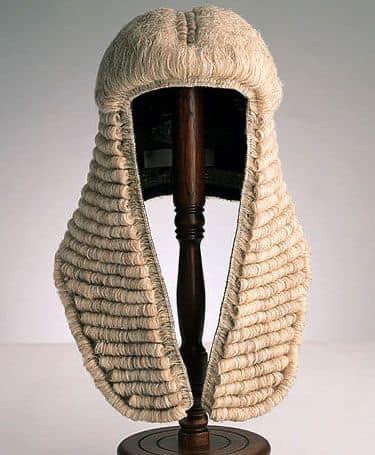
The intersection of law and politics in Nigeria is profound and longstanding. Lawyers have disproportionately shaped the country’s political landscape, from pre-independence nationalism to post-1999 democratic governance. Legal training emphasizing advocacy, constitutional interpretation, negotiation, evidence-based reasoning, and oratory equips practitioners exceptionally well for political roles. This pattern reflects both the profession’s prestige and Nigeria’s constitutional emphasis on legal expertise in governance.

When the Living Governor’s Pen Meets the Dead Monarch’s Signature: Nigeria’s Land Use Act Versus Britain’s 1925 Registration Revolution by Lawson Akhigbe

In 1925, while Britain was still recovering from one war and quietly preparing for the next, its legislators decided that land law had become an expensive medieval farce. The result was a cluster of statutes, most notably the Land Registration Act 1925, working in tandem with the Law of Property Act 1925, that performed a quiet but decisive act of administrative hygiene. They did not nationalise the soil. They did not turn every landowner into a tenant of the state. They simply made the register the master of the title, and the process of dealing with land a matter of bureaucracy rather than political favour or ancestral archaeology.

The Ghost Who Keeps Signing by Lawson Akhigbe

The Land Use Act of 1978 vested radical title to land in the state governor. Customary authorities were meant to operate within that framework, not around it. Yet when the formal system becomes a source of frustration rather than facilitation, human ingenuity finds other routes. Enter the late Oba. His name carries historical weight. The palace, however, maintains no functional modern archive capable of systematic verification. Oral history is the dominant method, and most of the original participants are no longer available for cross-examination. The result is a paper trail that is difficult to audit and easy to exploit.

The Steve Oronsaye Report

The Steve Oronsaye Report formally titled the Report on the Restructuring and Rationalization of Federal Government Parastatals, Commissions, and Agencies is a landmark 800-page public service reform blueprint submitted to the Nigerian government in 2012.

Navigating the Void: Why Nigeria Needs a Corporate Deferred Prosecution Agreement (DPA) Framework

In a standard DPA regime, a company that self-reports and cooperates can avoid the "corporate death penalty" of a criminal conviction. In Nigeria, we are currently forced to rely on the Administration of Criminal Justice Act (ACJA) 2015.
While the ACJA provides for Plea Bargaining, it is a fundamentally different animal from a DPA: