

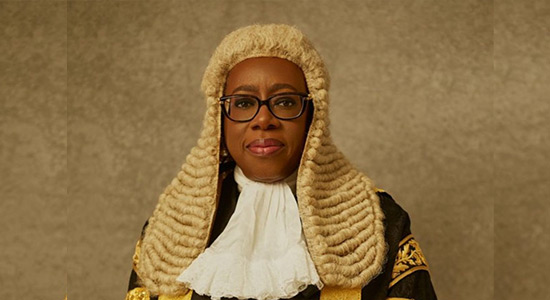

If you want to understand why Nigeria’s law practice struggles to find solid ground, you don’t need a commission of inquiry — just attend a random court session. There, you’ll see the Nigerian lawyer in full regalia: a powdered wig, a trembling robe, and an irresistible urge to speak Latin in a country where half the population struggles with English.
Our legal profession doesn’t merely mirror society — it mimics it, exaggerates it, and sometimes, outperforms it in confusion. The courtroom is Nigeria in miniature: chaotic, overburdened, self-important, and perpetually on generator power.
The Fragile Foundation of Law
Nigeria’s rule of law stands on the same foundation as most of its roads — cracked, uneven, and frequently under reconstruction. The Constitution promises justice, but the reality depends on who’s interpreting it and who’s paying for the “transport fare.”
Court orders are treated like traffic lights: optional when no one is watching. The police arrest first and investigate later (if at all). The executive obeys court rulings the same way drivers obey “No Parking” signs in Lagos — with selective vision.
And yet, the legal profession insists on maintaining its rituals: archaic wigs in tropical heat, flowery phrases in a dusty courtroom, and the timeless weapon of intimidation — Latin.

Latin in the Land of Lagos
No other profession in Nigeria clings to a dead language as passionately as the lawyer. While the rest of the world embraces AI, the Nigerian barrister clings to res ipsa loquitur as if it were a talisman against modernity.
Ask a lawyer if you’ll win your case, and he’ll reply, “My client’s locus standi is unimpeachable, and ex turpi causa non oritur actio applies in toto.” You’ll nod respectfully, pretending to understand, while mentally googling “what did my lawyer just say?”
Latin, for many lawyers, has become the new agbada — a symbol of status, not substance. The more incomprehensible it sounds, the higher the legal fees. Simplicity is mistaken for ignorance; clarity, for weakness.
The Disconnect Between Law and Life
This linguistic snobbery mirrors Nigeria’s wider societal ailment — the obsession with form over function. Our lawyers, like our leaders, prefer to impress rather than communicate. Justice, which should speak plainly, is now a performance art.
The courtroom is a theatre where lawyers play scholars, judges play gods, and clients play confused spectators. Even the judges, weary from hours of verbal somersaults, occasionally throw in a Latin phrase just to remind everyone they, too, studied in law school when textbooks were scarce but pride was plentiful.
Meanwhile, the average Nigerian — the market woman, the taxi driver, the teacher — hears of “rule of law” and assumes it’s one of those expensive imports like Swiss chocolate or clean governance.
Justice in Translation
How can the law serve a people it cannot even speak to? When justice speaks Latin and the people speak Pidgin, misunderstanding is inevitable. And in that gap between language and meaning, corruption thrives.
The law is supposed to bring order, but in Nigeria, it often brings only awe — the kind that keeps ordinary citizens too intimidated to seek justice. The same lawyer who should explain rights becomes a translator of mysteries.
And the clients? They come out of court lighter in pocket but heavier in confusion — clutching a judgment they don’t understand and a receipt they can’t challenge.
Fixing the Law by Fixing Ourselves
The Nigerian legal system is not an alien organism; it’s a reflection of us. Our shortcuts, our worship of titles, our allergy to accountability — all show up in our courts.
When a judge delays a case for years, when a lawyer charges a client for confusion per hour, when justice is postponed till further notice — it’s society acting through its most educated actors.
The rule of law cannot stand where truth kneels. And justice cannot see clearly while she’s busy peeking under her blindfold for “transport money.”
We need a legal culture that speaks in plain language, walks in integrity, and serves real people — not just legal dictionaries. Until then, the Nigerian lawyer will remain fluent in Latin but tongue-tied in honesty.
Epilogue: The Law That Speaks But Isn’t Heard
In the end, Nigeria’s law practice is less about Latin and more about logic — or the lack of it. If our lawyers could replace nemo dat quod non habet with “don’t give what’s not yours,” and our leaders could follow it, perhaps we’d finally see a rule of law that stands, not stumbles.
Until then, the scales of justice in Nigeria will continue to tilt — not by the weight of evidence, but by the size of the envelope.
Tags: Nigeria, Rule of Law, Legal Satire, Judiciary, Corruption, Justice System, Latin, Lawyers, Society
Author: Lawson Akhigbe
Website: LawAkhigbe.com
 Centre for Nigeria Progress