


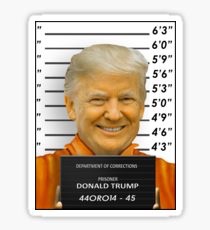
Historically, major constitutional strains resulted from a complex mix of leadership character, policy failure, and external crisis, with institutions often containing the damage.
Presidents Whose Character Flaws Led to Constitutional Crisis:
· Richard Nixon (Resigned 1974): His defining character flaw was paranoia and secrecy, leading to the abuse of government power to spy on political enemies and orchestrate a cover-up (Watergate). The system ultimately held: a bipartisan Congress pursued impeachment, and Nixon resigned.
· Warren G. Harding (1921-1923): His flaw was personal corruption and cronyism, epitomized by the Teapot Dome scandal. The breach was contained as a scandal of personal enrichment, not an assault on democratic processes. Congress investigated, and courts convicted officials.
· Andrew Johnson (1865-1869): His flaw was obstinate racism and contempt for Congress. He systematically sabotaged Reconstruction and was impeached for violating the Tenure of Office Act. While he escaped conviction, his power was neutered.
Presidents Whose Failures Were Primarily of Policy or Judgment:
Other presidents are criticized for catastrophic decisions rooted in flawed ideology,poor judgment, or moral blindness, but these were not typically driven by the same pattern of personal character deficits as seen with Trump.
· James Buchanan (1857-1861): Passivity and legalistic indecision in the face of secession.
· Franklin D. Roosevelt (1933-1945): Issued an executive order for the Japanese American internment, a major civil rights violation driven by wartime fear and racism.
⚖️ The Trump Distinction: Character as a Systemic Weapon
Trump’s character profile, analyzed by psychologists and historians, presented a novel threat because it turned personal traits into tools to disable the system’s safeguards.
1. The “Episodic” Relationship with Truth and Reality
A core finding from a psychological biography is that Trump uniquely lacks anarrative identity—a coherent life story that provides temporal continuity and meaning. He lives as the “episodic man,” fighting to win each moment, with no need for a consistent, fact-based story. This is not ordinary dishonesty but a fundamental detachment from shared reality, making constitutional dialogue—which relies on agreed-upon facts—impossible.
2. Low Agreeableness as a Political Strategy
Psychological analysis places Trump extremely low onagreeableness—encompassing traits like empathy, modesty, and compassion. Historically disagreeable presidents like Nixon often concealed their contempt. Trump operationalized his, using public ridicule (e.g., “Crooked Hillary,” “Sleepy Joe”) and norm-breaking insults to dominate the political space and dehumanize opponents, eroding the mutual respect required for checks and balances to function.
3. The Corruption of Public Trust for Personal Benefit
Historians note that Trump consistently blurred the line between his personal interests and the national interest,viewing the presidency instrumentally. Unlike Harding’s covert corruption, Trump’s was overt and defiant (e.g., promoting his properties, seeking foreign investigations of rivals). This acted as a direct challenge to the constitutional principle that public office is a public trust.
4. Weaponizing Institutional Vulnerabilities
Trump did not create systemic weaknesses but exploited them more aggressively than his predecessors.
· Emergency Powers: He declared a national emergency to build a border wall after Congress refused funding, explicitly using the power to circumvent the legislature—a move the Brennan Center for Justice labeled a clear abuse.
· Norm Destruction: His refusal to concede the 2020 election and the subsequent incitement of the January 6 Capitol attack represented the ultimate breach: using the “episodic” disregard for truth and institutional respect to directly undermine the constitutional transfer of power.
Key Comparison: Mechanism of Breach
To summarize the fundamental difference:
· Historical Precedent: Character flaw → Leads to an action (corruption, abuse) → Institutions react to contain the breach.
· The Trump Case: Character as operating system → Drives a continuous campaign to discredit institutions themselves (media as “enemy,” courts as “biased,” elections as “rigged”) → The function of the guardrails is preemptively neutralized.
In essence, previous problematic presidents crashed into the constitutional guardrails. Trump’s distinctive character led him to attempt to dismantle them by eroding their legitimacy, exploiting their weaknesses, and testing their limits in pursuit of personal and political victory.
 Centre for Nigeria Progress
Please read the post ‘ Goodbye ? ‘🙏🌹
LikeLiked by 1 person