

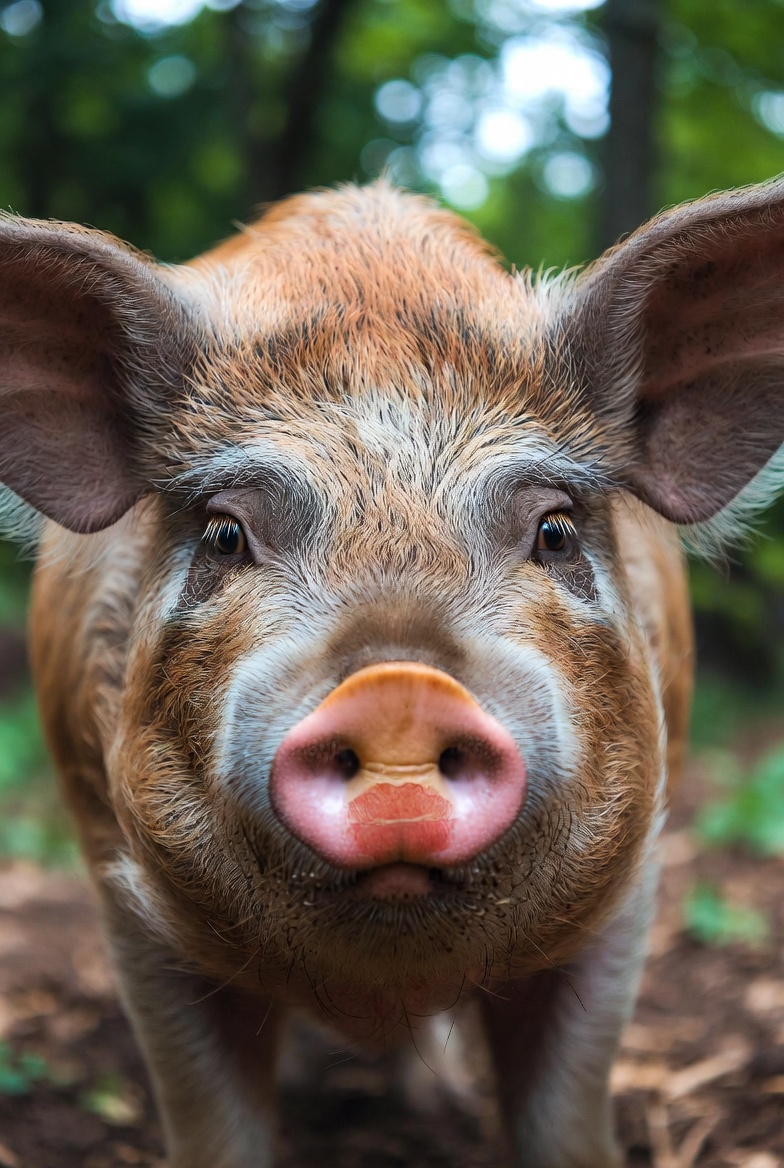
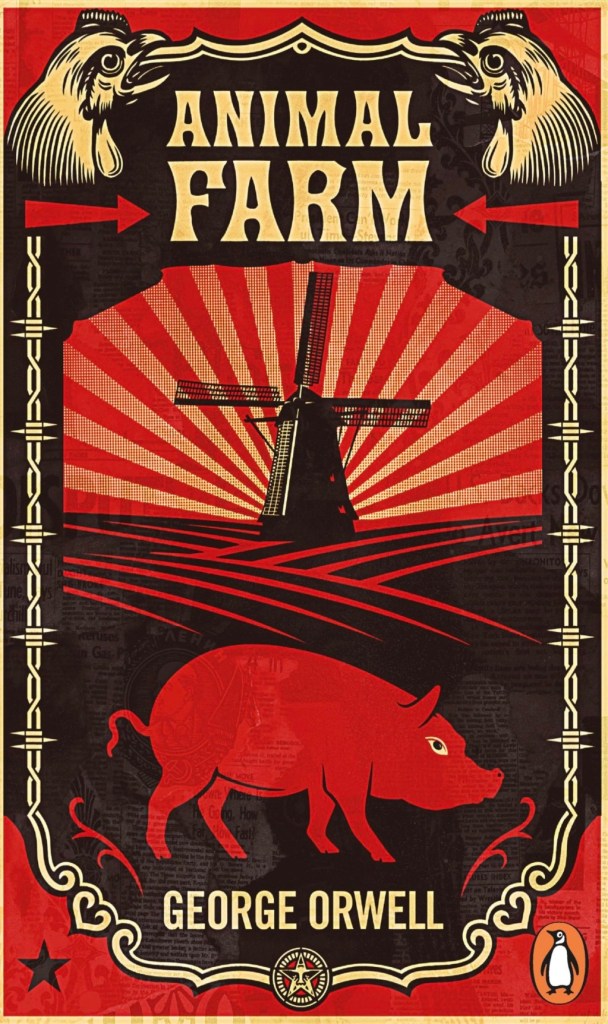
In 1945, George Orwell published Animal Farm as a warning about the Soviet Union. It was meant to be a neat little allegory about authoritarian creep, revolutionary betrayal, and how pigs with good PR can convince you that up is down and hay is steak.
Fast forward to 2026 and we’re not reading Animal Farm as history. We’re reading it like a user manual.
Only this time the farm has Wi-Fi, the pigs have podcasts, and the sheep have verified accounts.
From Manor Farm to MAGA Farm
On Orwell’s Manor Farm, the animals overthrow Mr. Jones because he’s incompetent and drunk. In 2026 America, half the country believes they overthrew their Mr. Jones in 2016, and the other half believes Mr. Jones never left, he just changed suits and got a TV contract.
Enter Donald Trump — a man who has mastered the Orwellian art of making the microphone do the heavy lifting. If Napoleon the pig had Truth Social, the novel would have been much shorter.
“Four legs good, two legs bad” has evolved into “Fake news bad, my news good.”
On Animal Farm, the pigs gradually alter the commandments painted on the barn wall. In modern America, the commandments are updated hourly on social media. Screenshots are the new chisels. Delete buttons are the new paintbrushes.
The original commandment — All animals are equal — sounded revolutionary. By the end, it read: All animals are equal, but some animals are more equal than others.
Today, it reads:
“All voters are equal, but some voters are in key swing states.”
The Pigs Were Smart. Today They’re Also Billionaires.
In Orwell’s tale, the pigs take control because they’re the “smartest.” In 2026, intelligence is measured in net worth and satellite launches.
If Napoleon ran Animal Farm today, he’d be hosting a summit with Elon Musk, Jeff Bezos, and a sprinkling of hedge fund managers who describe hay shortages as “supply-side opportunities.”
The modern farmhouse is not a rustic building with straw mattresses. It’s a private island, a launchpad, or a media empire.
The billionaire class has achieved what Orwell only hinted at: they don’t just run the farm; they own the platform where the animals argue about who runs the farm.
That’s an upgrade.
On Animal Farm, the pigs had to physically repaint the commandments. Today, you just adjust the algorithm. Same result. Less paint.
The Media: Squealer with a Broadcast License
Every good regime needs a Squealer — the pig who explains why yesterday’s lie is today’s policy.
In 2026, Squealer has a studio, a panel, and a sponsorship deal.
He explains that the pigs aren’t sleeping in beds; they’re “optimizing rest.”
They’re not drinking whiskey; they’re “stimulating rural morale.”
They’re not walking on two legs; they’re “expanding vertical mobility.”
Whether it’s MAGA media defending every plot twist or liberal media hyperventilating at each barnyard tweet, the result is the same: the animals are too busy arguing to notice that the windmill still doesn’t work.
And if you question it? You’re either a traitor to the revolution or an enemy of democracy. Pick your barn.
The Sheep Have Upgraded
Orwell’s sheep bleated on cue: “Four legs good, two legs bad.”
Modern sheep have evolved. They bleat in hashtags.
They don’t just repeat slogans; they weaponize them. They trend them. They monetise them. They wear them on red hats or blue hoodies. They defend billionaires as if the billionaires are personally paying their feed bills.
The genius of modern farm management is this: convince the animals that defending the pigs is an act of rebellion.
Nothing says “stick it to the elite” like passionately protecting a man with three yachts.
The Vanishing Memory Trick
One of the most chilling moments in Animal Farm is when the non-pig animals can’t quite remember what the original commandments said.
Was it always “no animal shall sleep in a bed” — or was it “no animal shall sleep in a bed with sheets”?
That’s not just satire; it’s political muscle memory.
In 2026 America, policies shift, statements disappear, alliances flip, and yesterday’s scandal is buried under today’s outrage. The memory hole is no longer a hole; it’s a news cycle.
And the ordinary animals — sorry, citizens — are left squinting at the barn wall of history, wondering if they imagined the first draft of the revolution.
From Red Flags to Red Hats
Orwell wrote about Soviet flags. Today we have different flags, different merchandise, different branding.
But the mechanics are comfortingly familiar:
Convince the masses they’ve been wronged. Offer a simple villain. Centralize power “temporarily.” Adjust the commandments. Insist nothing has changed.
The revolution doesn’t collapse overnight. It erodes. It rebrands. It smiles for the camera.
By the end of Animal Farm, the other animals look from pig to man, and from man to pig, and cannot tell the difference.
In 2026, we look from politician to billionaire, from billionaire to media mogul, and from media mogul to politician — and we struggle to spot the species lines.
The Punchline (Which Isn’t Funny)
Orwell wasn’t warning us about pigs. He was warning us about power.
Power that begins with grievance.
Power that justifies excess as necessity.
Power that insists the rules are flexible — but only for the clever.
The uncomfortable truth is that revolutions don’t fail because the original cause was foolish. They fail because humans — and pigs — are spectacularly consistent.
We like strong leaders.
We like simple answers.
We like believing our side would never repaint the wall.
So here we are in 2026, rereading a 1945 novella and laughing nervously.
The farm has changed flags.
The pigs have better branding.
The sheep have better Wi-Fi.
But the commandment still gets that subtle edit:
All animals are equal.
Especially the ones with private jets.
 Centre for Nigeria Progress