

There are many ways to read history. Some people study archives. Others consult elders. And then there is the increasingly popular method: start the story from the year that best suits your argument and proceed with confidence.
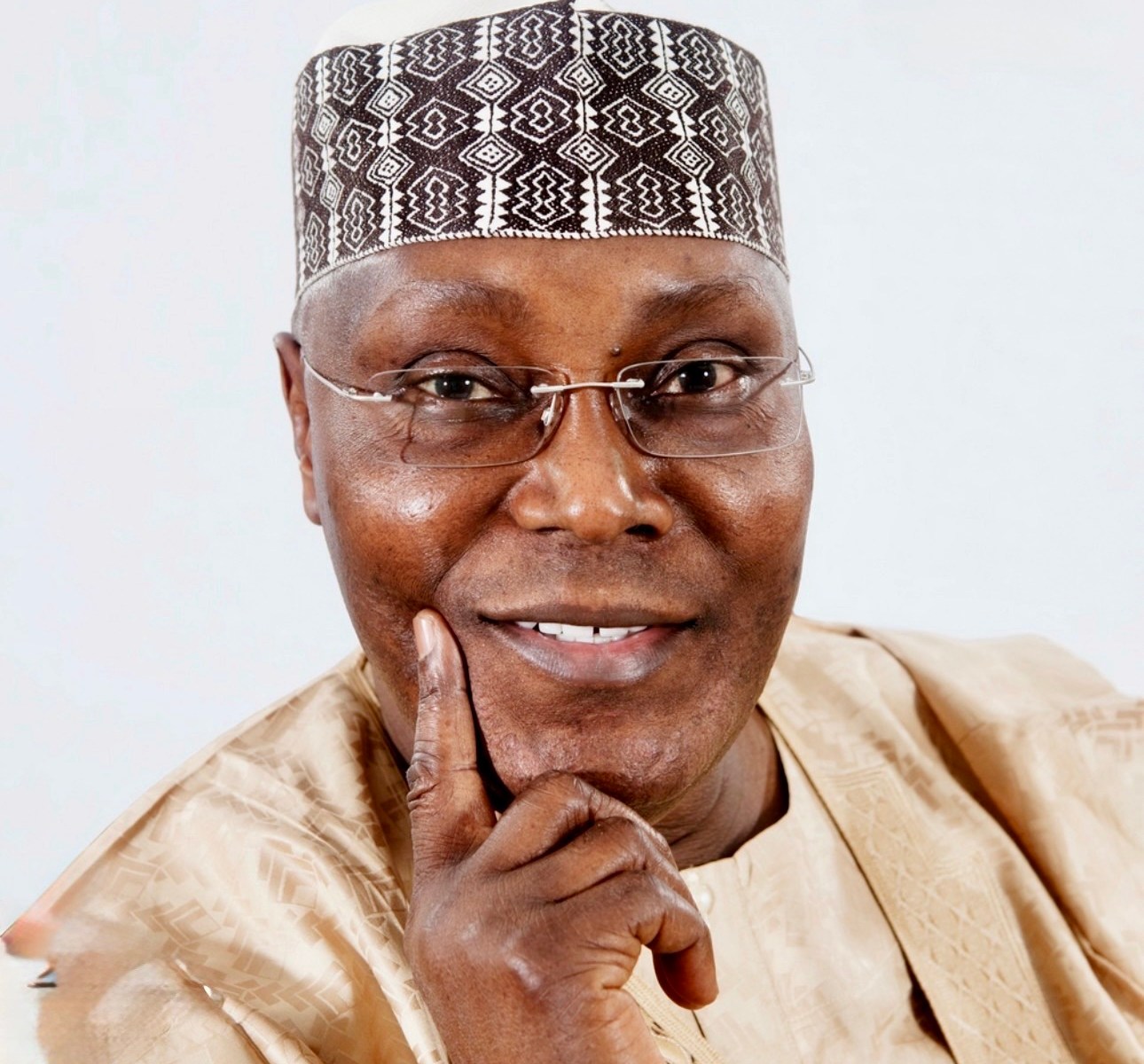
Enter Atiku Abubakar—a man who has recently taken up historical editing as a hobby.
According to Atiku’s latest thesis, Nigeria apparently began in 1999. Everything before that? A soft launch. Beta version. Possibly still buffering.
Let us examine this curated timeline.
From 1999, the South produced Olusegun Obasanjo for eight years. Then the North got Umaru Musa Yar’Adua, who unfortunately passed away mid-term. His vice president, Goodluck Jonathan, constitutionally stepped in and completed the term—plus a full one of his own. Then came Muhammadu Buhari for eight years, followed by Bola Ahmed Tinubu.
From this carefully selected dataset, Atiku concludes that the South has somehow had “more time” in power. The North, in his telling, is the aggrieved party—robbed not by politics, but by divine interruption. A celestial coup, if you will.
And now, at 79, Atiku proposes a remedy: himself.
It is a fascinating argument. Not because it is persuasive, but because of what it leaves out.
For instance, the small matter of everything before 1999.
Nigeria did not, in fact, spring into existence the day Obasanjo took the oath of office. The country gained independence in 1960, and for a significant portion of its post-independence history—especially during the long parade of military regimes—power resided predominantly in the North.
Names like Yakubu Gowon, Murtala Mohammed, Ibrahim Babangida, Sani Abacha, and Abdulsalami Abubakar are not minor footnotes. They governed the country for years—sometimes abruptly, sometimes indefinitely, but always decisively.
Yet in Atiku’s version of Nigeria, these decades appear to have been politely excused from attendance.
One begins to wonder: if history were a courtroom, would this argument survive cross-examination? Or would it be gently reminded that evidence is not meant to be selectively admitted like VIP guests at a Lagos party?
Even within the post-1999 framework, the claim itself is a stretch. The constitutional succession of Goodluck Jonathan was not a regional conspiracy; it was the direct application of the law. The same Constitution that Atiku now invokes as granting him a “right” to run does not contain a clause on “compensating the North for acts of God.”
There is no Section 419B: Divine Interruptions and Rotational Adjustments.
At its core, this is less about constitutional law and more about political arithmetic—of the creative variety. It is an attempt to turn a complex national history into a simple balancing equation: North minus tragedy equals Atiku.
But nations are not spreadsheets, and leadership is not a loyalty bonus system.
There is also a deeper irony here. The same argument that leans heavily on constitutional entitlement quietly sidesteps the Constitution’s silence on zoning. Rotation, while politically convenient, is not legally enforceable. It is a gentleman’s agreement in a country where politics is anything but gentlemanly.
So where does that leave us?
With a 79-year-old statesman, long experienced in the mechanics of Nigerian power, presenting himself not just as a candidate, but as a historical correction. A man who has, over decades, navigated the corridors of influence—and, by his own account, now seeks to restore balance to a timeline he has selectively edited.
It is a bold pitch.
But if Nigeria is to move forward, it may require something more rigorous than selective chronology and metaphysical grievances. It may require a politics that treats history as it is—messy, inconvenient, and stubbornly resistant to revision.
Until then, we remain in Atiku’s Nigeria: a country founded in 1999, where time is flexible, memory is optional, and the past is always available for negotiation.

