

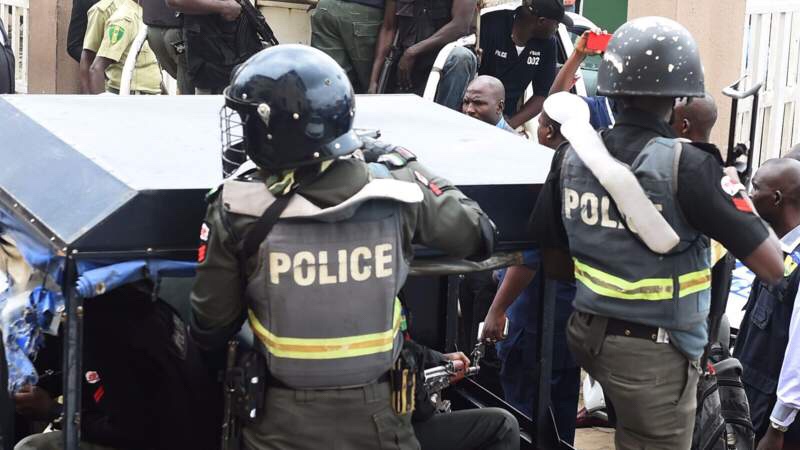
You have been wronged. Someone has cheated you, threatened you, or done something that makes your blood boil. You want justice, swift, visible, and humiliating for the other party. So you do what feels natural. You go to the police station.
This is where the education begins.
The Welcome
The officer at the counter greets you with a broad smile. He is warm, attentive, almost eager. He asks how he can help. You feel reassured. You begin to narrate your grievance, the full story, all the betrayal and injustice of it, and he listens patiently, nodding in all the right places.
Then he tells you that a formal statement needs to be taken. Standard procedure. The cost is ₦20,000. You will receive a stamped copy as your receipt. You pay. You move forward.
You have just bought a piece of paper.
The Investigating Officer
Now you are introduced to the Investigating Police Officer assigned to your matter. He is serious-faced, professional in demeanour. He listens to the details, furrows his brow appropriately, and draws up what he calls an action plan. He is going to pursue this matter with full force.
But first, he needs mobilisation fees. ₦100,000. For petrol. For lunch. For pens and papers, all materials required for police work, he explains with a straight face. He even recommends a Point of Sales Terminal (POS) agent conveniently stationed just outside his office door, should you not have cash on hand. No receipt is issued for this transaction. None will ever be issued.
You pay because you want action. You pay because you are angry and you want the weight of the state dropped on the person who wronged you. You pay because you cannot afford to wait for a court date that may arrive sometime in the next three to five years, if ever.
The Defendant’s Turn
The officer now moves to the other side of the equation. The alleged offender is located, confronted, and arrested with appropriate drama. Then the terms of bail are presented. Another ₦100,000. The same process. The same absence of receipts. The same POS machine, or one very much like it.
In a single matter, the officer has now collected ₦200,000. ₦100,000 from the complainant and ₦100,000 from the defendant, with nothing but a stamped statement and the performance of authority to show for it. Both parties have paid. Neither party has received justice.
The Dirty Secret Nobody Wants to Say Out Loud
Nine times out of ten, the matter that brought you to that station was never a criminal case to begin with.
It was a land dispute. A business disagreement. A broken promise between former friends. A family inheritance turned ugly. Civil matters, every one of them, matters that belong in a court of law, before a judge, argued by lawyers. But the courts have been so thoroughly discredited by delay, expense, and unpredictability that Nigerians have quietly stopped believing in them as a first resort.
So instead, we outsource our grievances to the police. We use the power of arrest, the handcuffs, the cell, the humiliation of being brought in, as a negotiating tool. When a Nigerian says “I will deal with you,” he is rarely speaking of physical violence. He means something far more specific: I will use the coercive machinery of the state against you. I will have you arrested. I will make you spend a night in a cell, away from your family and your dignity, even though no law you have broken could justify it.
The police, for their part, are delighted to oblige, at the right price, from both sides.
What the Station Actually Is
Strip away the uniform, the counter, the stamp, the action plan, and what you have is a market. Grievances are the commodity. Both the complainant and the defendant are customers. The officer is the trader, and the price of his services is negotiable but never free.
The police station in this model is not an institution of justice. It is a tollgate. It sits at the intersection of conflict and desperation, and it collects from everyone who passes through.
The officer is not corrupt in the way we sometimes imagine corruption, some dramatic, singular act of moral failure. He is corrupt in the way a leaking pipe is wet. It is simply the condition of the system. The structure demands it. The salaries justify it. The culture permits it. And the silence of the public, partly from fear, partly from complicity, sustains it.
The Uncomfortable Conclusion
We go to the police because we want power. We want someone with a gun and a badge to stand on our side of an argument and make the other person feel small. We want the theatre of authority. And the police gives us exactly that theatre, for a fee, charged to both the audience and the actor.
Until Nigeria builds courts that function, processes that move, and institutions that command genuine respect, the police station will remain what it currently is: not a place of recourse, but a place of extraction. Not a friend in uniform, but a pickpocket with a badge.
Go there if you must. But go with your eyes open, and hold your wallet tight.
What has been your experience with seeking justice in Nigeria? Share your thoughts in the comments below.

