

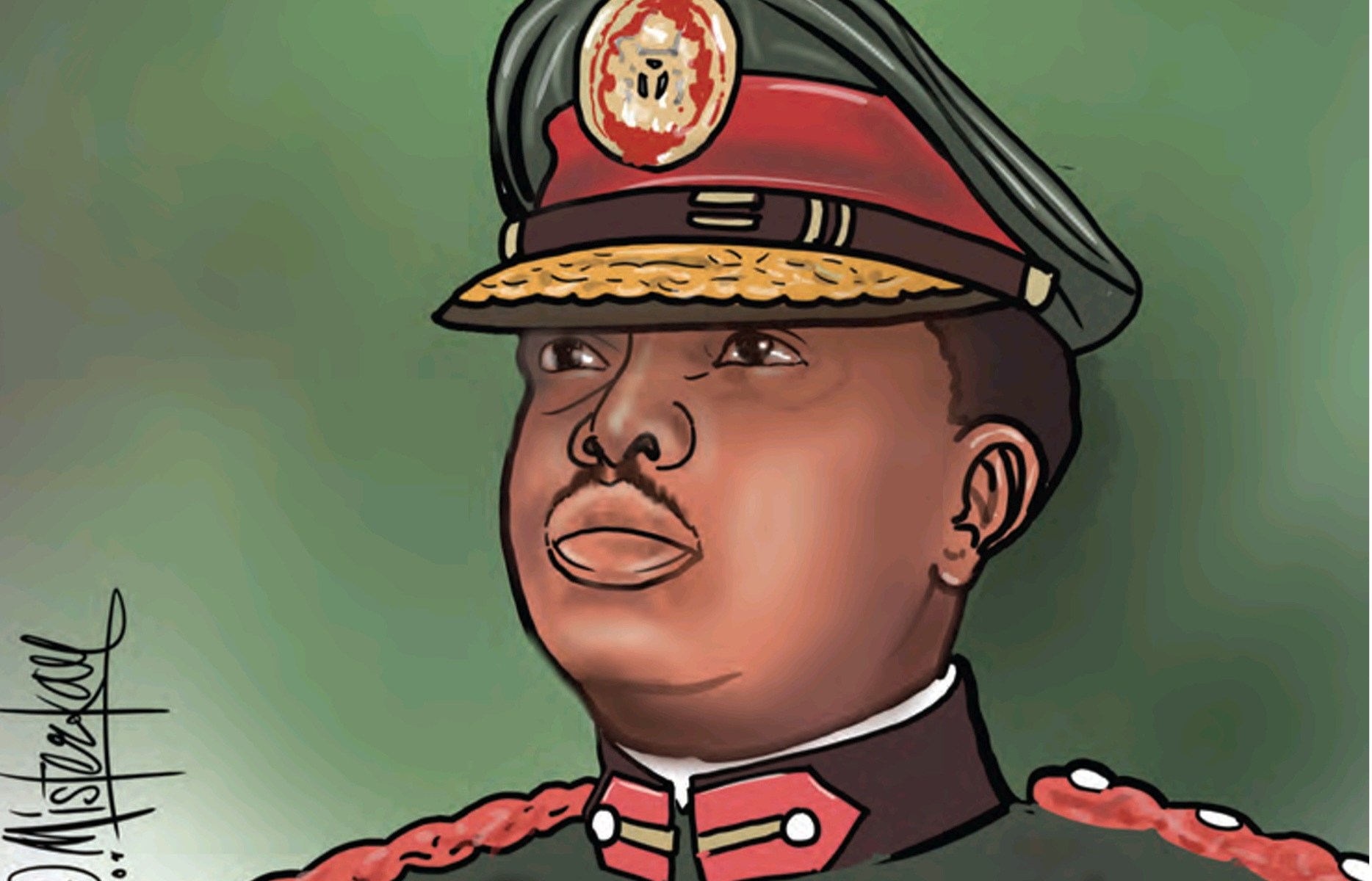
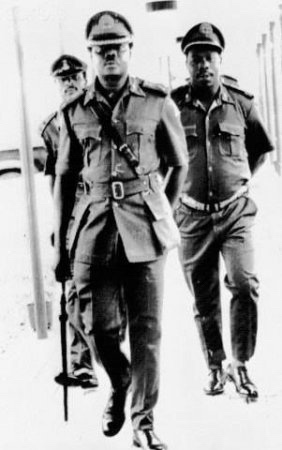
Murtala Ramat Muhammed played a prominent and controversial role in the Nigerian Civil War (1967–1970), also known as the Biafran War. As a young lieutenant colonel, he was appointed General Officer Commanding (GOC) of the newly formed 2nd Infantry Division shortly after the conflict began. His aggressive leadership helped turn the tide in the Mid-Western Region but came at a significant human cost, including one of the war’s most notorious civilian atrocities.
Appointment and Building the 2nd Division
When Biafran forces launched Operation Torch (the Midwest Invasion) on August 9, 1967, crossing the Niger River and rapidly seizing Benin City and advancing toward Ore (threatening the road to Lagos), the federal government needed a swift response. General Yakubu Gowon tasked Murtala with creating the 2nd Division almost from scratch, drawing on trained soldiers, veterans, and volunteers.
Murtala proved highly effective at mobilization and rapid organization. His division launched a blistering counter-offensive, often described as efficient and decisive. This earned him the nickname “Monty of the Midwest” a reference to British Field Marshal Bernard Montgomery’s bold WWII style. By late September 1967, Nigerian forces under his command, supported by elements of the 3rd Marine Commando Division (under Benjamin Adekunle), recaptured Benin City and pushed Biafran troops back across the Niger River.
He even installed Major Samuel Ogbemudia as the new military governor of the Mid-West without first consulting Gowon, an early sign of his independent streak.
Key Military Actions
- Recapture of the Mid-West (August–September 1967): Murtala’s forces executed pincer movements and aggressive advances that forced Biafran troops (under Colonel Victor Banjo) into retreat. The Biafrans destroyed bridges during their withdrawal and looted resources, but the federal side reclaimed the region, eliminating a major threat to Lagos and the Western Region.
- Advance to the Niger River and Onitsha: After securing the Mid-West, the 2nd Division moved eastward toward Onitsha. Biafran forces had blown up parts of the Niger Bridge, so Murtala attempted direct river crossings. He reportedly defied orders from Lagos and launched multiple assaults, suffering heavy casualties — many from drowning or enemy fire rather than combat. The River Niger itself proved deadlier than Biafran defenses in some attempts. These operations aimed to link up with the 1st Division advancing from Nsukka and Enugu.
Murtala was promoted to colonel in April 1968. However, due to the high losses and his sometimes insubordinate style, he was eventually relieved of frontline command in mid-1968 and posted back to Lagos as Inspector of Signals (his pre-war role). He relinquished division command around June 1968.
The Asaba Massacre (October 5–7, 1967)
One of the darkest episodes under Murtala’s command was the Asaba massacre. After federal troops entered Asaba (a town on the western bank of the Niger, predominantly Igbo), soldiers of the 2nd Division began ransacking homes and killing civilians suspected of Biafran sympathies.
On October 7, community leaders organized hundreds of men, women, and children, many dressed in white as a sign of peace and loyalty to “One Nigeria” to welcome the federal forces with songs and dances. At Ogbe-Osowa, men and boys were separated and gathered in an open area. Troops then opened fire with machine guns. Estimates of the death toll vary widely:
- Around 500–800 (historians S. Elizabeth Bird and Fraser Ottanelli)
- Up to 700–1,000 according to other eyewitnesses and contemporary reports
The massacre targeted unarmed Igbo civilians, including prominent community members. Bodies were buried in mass graves, and the town suffered months of occupation involving looting, rape, and further violence. Many families lost dozens of male relatives.
Murtala commanded the division at the time, though direct orders for the shooting have been attributed in accounts to officers like Major Ibrahim Taiwo (his second-in-command). Lieutenant Ishola Williams, who served under him, later alleged that Murtala ordered summary executions of Biafran prisoners of war more broadly. The 2nd Division was also linked to related civilian killings in nearby areas like Onitsha and Isheagu.
In one noted exception amid the violence, Murtala reportedly ensured the safety of the mother of Major Chukwuma Kaduna Nzeogwu (a key figure in the 1966 coup).
The massacre occurred in the context of retaliation and suspicion following Biafran incursions, but it remains a profound trauma for Asaba and the Igbo community, documented in books, memorials, and survivor testimonies.
Overall Impact and Legacy of His War Role
Murtala’s aggressive tactics contributed significantly to federal successes in the western theater, helping to contain Biafra early and preventing a deeper incursion toward Lagos. His division’s actions supported Nigeria’s eventual victory in 1970. In Northern and some Western narratives, he is remembered as a bold, fearless commander who defended national unity.
However, his tenure is heavily criticized for command style (flouting orders, high casualties in river crossings) and for atrocities committed by troops under his watch. The Asaba massacre stands as one of the war’s documented low points, with lasting questions about accountability. Some accounts suggest his performance led to his recall from the front due to civilian massacres.
Post-war, Murtala transitioned to political and administrative roles under Gowon before his own rise to power in 1975. His civil war record, a mix of military brilliance and moral controversy, continues to polarize views in Nigeria: celebrated as decisive leadership in some quarters, condemned as ruthless in others.
The war itself ended with “no victor, no vanquished,” but events like Asaba underscore the deep scars left on Nigerian society. Murtala’s brief but intense involvement highlights the double-edged nature of rapid, uncompromising military action in a civil conflict.

