

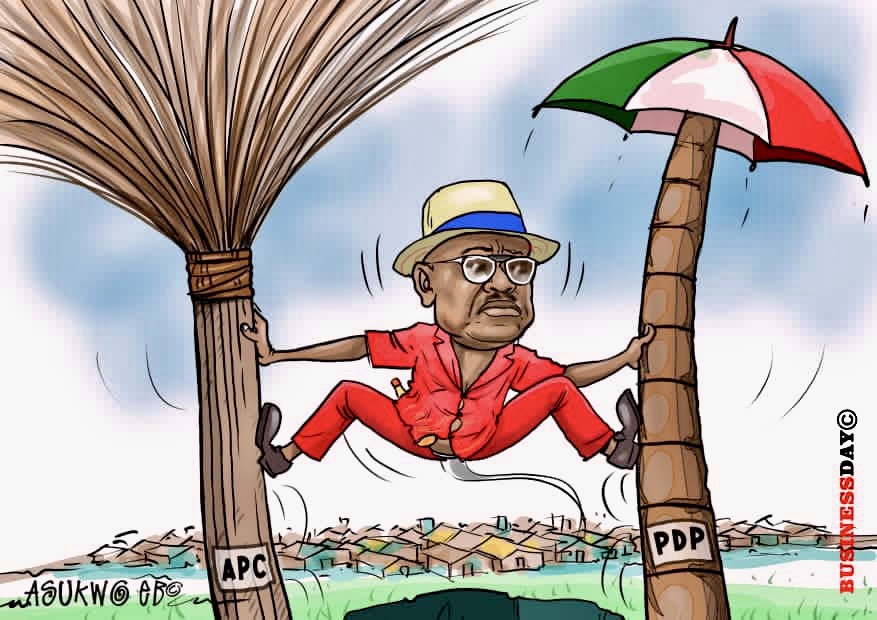
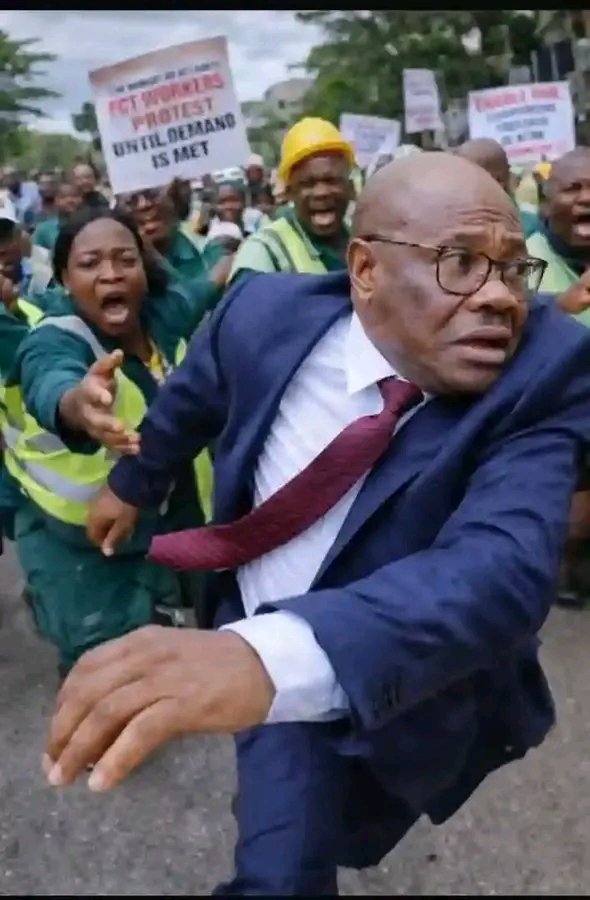
If Nigerian politics were a contact sport (and let’s be honest, it often is), Nyesom Wike would not just be playing—he’d be refereeing, commentating, and occasionally threatening to send the spectators off the pitch.
Born on December 13, 1967, in Rumuepirikom, Rivers State, Wike has risen from local government chairman to Minister of the Federal Capital Territory (FCT) under Bola Ahmed Tinubu—a journey powered by ambition, calculation, and the subtlety of a foghorn.
1999–2007: The Local Government Emperor
Wike’s political story kicks off in 1999, Nigeria’s return to democracy. Backed by the formidable Rivers political machine of Peter Odili, he became Chairman of Obio-Akpor LGA.
Two terms later (ending 2007), he had mastered three essential Nigerian political arts:
Patronage Loyalty cultivation Delivering projects loudly enough for satellites to hear
Even then, whispers (which Wike does not do) suggested he ran the LGA like a well-organized kingdom—efficient, loyal, and not particularly interested in dissent.
2007–2015: The Amaechi Bromance… and Breakup
In 2007, Wike became Chief of Staff to Governor Rotimi Amaechi. At first, they were inseparable—political twins, finishing each other’s strategies.
Then came the plot twist.
By April 2014, Wike resigned as Minister of State for Education (appointed July 2011 by Goodluck Jonathan) to run for governor. The alliance with Amaechi collapsed faster than a poorly built campaign promise.
What followed was less “disagreement” and more “political civil war.” Rivers State politics became a two-man theatre production titled:
“Who Really Owns Rivers?”
2015–2023: Governor, Builder, Demolisher-in-Chief
Wike won the governorship in April 2015, defeating Dakuku Peterside. The courts promptly entered the chat.
October 2015: Election tribunal says, “Try again.” January 2016: Supreme Court says, “Actually, he’s fine.”
And just like that, Wike became not just governor—but a man with judicial stamina.
The Good (According to Supporters)
Flyovers everywhere—Garrison, Rumoukoro, Artillery (Port Harcourt started looking like a SimCity demo) Free education declared in 2019 Women’s inheritance rights law signed in 2022
The Not-So-Good (According to Critics)
Elections resembling action movies Hotels demolished during COVID lockdown (public health meets bulldozer diplomacy) Governance occasionally mistaken for personal property
Through it all, Wike governed with a simple philosophy:
“If it stands against me, it may not stand for long.”
2022–2023: The Great PDP Meltdown
In May 2022, Wike ran for president under the PDP.
Result:
Atiku Abubakar: 371 votes Wike: 237 votes
Wike did not take this like a man who enjoys losing.
By 2023, he led the famous “G-5 Governors” rebellion—effectively telling his own party:
“If I can’t be captain, I can certainly rock the boat.”
Enter plot twist number two:
He backed Bola Tinubu of the APC.
Yes—PDP card in pocket, APC handshake on stage. Nigerian politics, ladies and gentlemen.
August 2023–Present: Wike Takes Abuja
Appointed FCT Minister in August 2023, Wike arrived in Abuja like a man who had been waiting his whole life to enforce ground rent.
What He’s Done
Revived abandoned infrastructure projects Enforced land regulations with evangelical zeal Demolished structures with the enthusiasm of a man settling old scores
Supporters say:
“Best FCT Minister ever.”
Critics say:
“Consultation is not a crime, you know.”
Wike says:
“Pay your ground rent.”
2023–2026: The Fubara Saga — Son vs Political Father
If Nigerian politics had a soap opera award, this would win.
Wike installed Siminalayi Fubara as governor in March 2023.
By late 2023, they were no longer speaking in friendly tones.
Timeline of Chaos:
2024: Parallel assemblies, court cases, political chess March 2025: State of emergency declared September 2025: Democracy takes a nap January 2026: Impeachment threats resurface February 2026: Tinubu plays reluctant marriage counsellor
At some point, federal allocations were allegedly withheld, and public insults were exchanged like Christmas gifts nobody asked for.
Moral of the story:
In Nigerian politics, today’s godson is tomorrow’s opposition leader.
The Wike Doctrine: Loud, Effective, Unapologetic
Wike’s style is not subtle. It is not quiet. It does not believe in indoor voices.
What defines him:
Cross-party flexibility (or ideological acrobatics) Legal combativeness (courts are basically a second office) Infrastructure-first governance A belief that disagreement is best handled… energetically
He is, depending on who you ask:
A transformational builder A political enforcer Or a one-man institution
Looking Ahead to 2027: Kingmaker or Main Character?
As Nigeria inches toward 2027, Wike has positioned himself brilliantly:
Inside Tinubu’s government Still holding influence in the PDP Still central to Rivers politics
In other words, no matter who wins, Wike intends to be in the victory photo.
Final Thought
Nyesom Wike is not a politician you ignore.
He is a politician who ensures you cannot ignore him.
Whether history remembers him as a builder, a disruptor, or a bit of both, one thing is certain:
In a country full of loud politics,
Wike somehow still manages to be the loudest voice in the room.

