There is a certain genius, criminal, yes, but genius nonetheless, in the Nigerian political playbook that deserves, if not our admiration, then at least our reluctant acknowledgment. When the Economic and Financial Crimes Commission comes knocking at your door with a charge sheet the length of a Shoprite receipt, the average person might consider lawyers, prayers, or perhaps a one-way ticket to Dubai. The Nigerian political class, however, has discovered a more elegant solution: run for Senate.
It is, when you think about it, a masterstroke of branding. You are no longer a defendant. You are a Distinguished Senator. The courtroom dock and the red chamber seat are, aesthetically speaking, very different furniture, and in Nigerian public life, aesthetics are everything.
The Bello Gambit
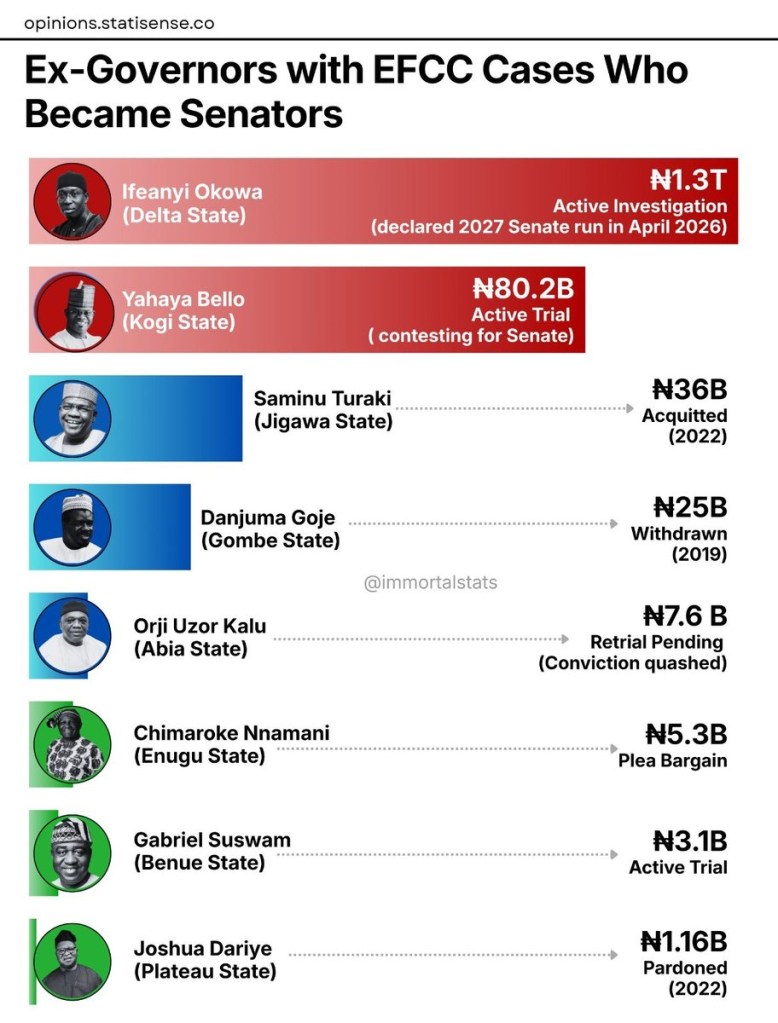
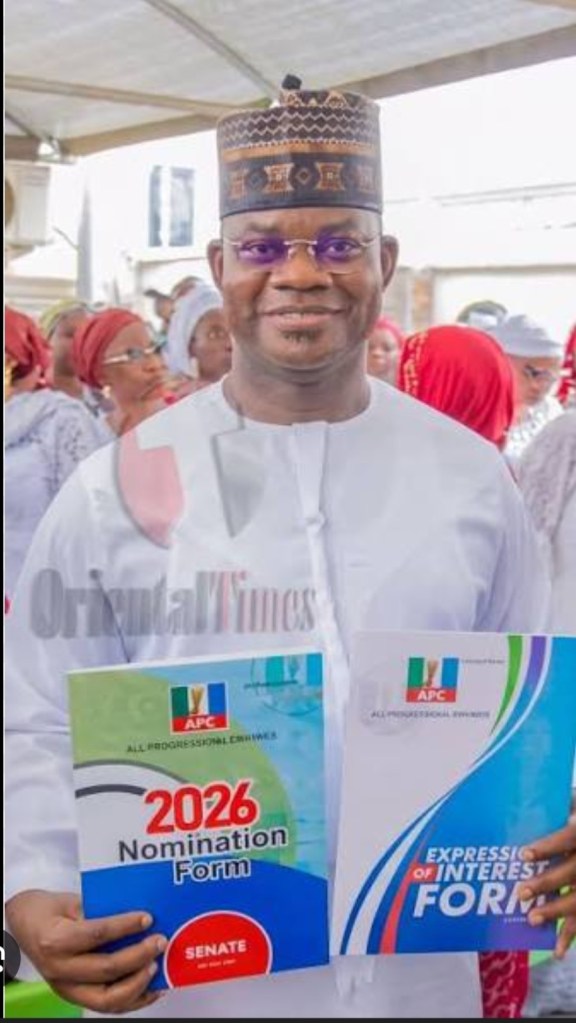
Consider the remarkable case of Yahaya Bello, former Governor of Kogi State, currently facing prosecution in the Abuja High Court for the alleged theft of N80 billion, that is eighty billion naira, a figure so large it briefly confused this writer into thinking it was a GDP estimate for a small island nation. Mr. Bello has, with the confidence of a man who has never once doubted himself, picked up the nomination form to contest the Kogi Central senatorial seat in 2027.
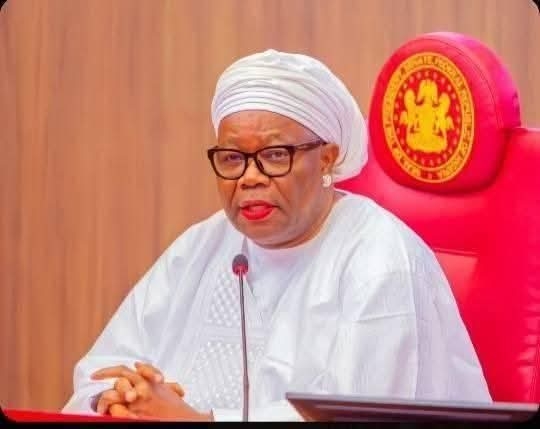
He intends, one presumes, to unseat Senator Natasha Akpoti-Uduaghan, who currently holds the seat and who, it must be noted,has had her own turbulent relationship with the Senate’s disciplinary machinery. The irony of one embattled figure challenging another in what is shaping up to be the most legally eventful constituency contest in recent memory is not lost on observers who still retain their sense of the absurd.
One is tempted to ask: Mr. Bello, the court has not finished with you. Surely the Senate can wait? But this is precisely the point, it cannot wait. Senatorial immunity, the warm embrace of legislative privilege, and the general Nigerian tendency to confuse political elevation with legal absolution make the Senate not merely an attractive destination but, for some, an urgent one.
James Ibori and the Mystery of Laziness
Which brings us to the curious inactivity of James Ibori, former Governor of Delta State, convicted fraudster, and alumnus of Her Majesty’s Prison Service in the United Kingdom, a country, incidentally, that does not share Nigeria’s philosophical flexibility about the relationship between criminal conviction and public office.
Mr. Ibori served time in a British prison. He returned home. He was received, in some quarters, as though he had been on sabbatical. He has since re-embedded himself in Delta State politics with the quiet authority of a man who knows where all the bodies are buried, metaphorically, one hopes.
And yet he has not, as of this writing, picked up a senatorial nomination form. This is, frankly, baffling. The man is leaving points on the board. If Yahaya Bello, mid-prosecution, N80 billion deep in legal trouble, can stroll toward the Senate, what precisely is Mr. Ibori’s excuse? He has already done the hard part. He has been convicted, imprisoned, and rehabilitated in the court of Nigerian public opinion, which operates on a timeline entirely its own. The red chamber awaits, Sir. Laziness is unbecoming of a man of your curriculum vitae.
Delta’s Other Contender
Meanwhile, the immediate past Governor of Delta State, Dr. Ifeanyi Okowa, wait, apologies, the individual in question is his predecessor, under active investigation by the EFCC, who is nonetheless seeking the ruling party’s nomination for a Delta senatorial seat. The EFCC’s investigative apparatus is, it seems, no longer a deterrent but merely a scheduling inconvenience. One imagines the calculus: Can I fit the party primaries between my EFCC invitations? Yes? Good. Book the venue.
The Delta senatorial theatre is shaping up to be a competition of legal jeopardy so dense it could double as a bar examination question: In a constituency where Candidate A is convicted, Candidate B is being investigated, and Candidate C served time abroad, who has the most legitimate claim to represent the people? Discuss, with reference to the 1999 Constitution as amended.
The Honourable Roll Call
But Bello and the Delta gentlemen are not anomalies. They are, in fact, part of an emerging institutional tradition. As of early 2026, credible estimates suggest that between fifteen and twenty current members of the 10th Senate carry active cases or prior arraignments courtesy of the EFCC. Most of these legal entanglements trace back to their time as state governors or federal ministers, roles in which, one gathers, the distinction between state funds and personal funds was treated as largely philosophical.
The roll call of the legally distinguished is instructive:
Orji Uzor Kalu of Abia North, whose N7.1 billion fraud case has achieved the longevity of a Netflix series, cancelled, renewed, retried, appealed, following the Supreme Court’s 2020 ruling that nullified his initial conviction on what lawyers delicately call “technical grounds” and what the rest of us call “a procedural miracle.” The retrial has been planned. It continues to be planned.
Danjuma Goje of Gombe Central, whose legal history has more chapters than a nineteenth-century novel, with various counts withdrawn over the years in circumstances that invited speculation, while other financial shadows from his gubernatorial years have, per the tradition of Nigerian legal proceedings, lingered atmospherically.
Aliyu Wamakko of Sokoto North, who has been under EFCC investigation for alleged mismanagement of N15 billion in state funds for several years now, an investigation that has proceeded at the pace of a particularly unhurried glacier.
Seriake Dickson of Bayelsa West, invited and questioned multiple times regarding alleged assets non-declaration and fund mismanagement during his governorship. He has been questioned. He has remained a Senator. These two facts coexist peacefully in the Nigerian constitutional order.
Gbenga Daniel of Ogun East, whose alleged N211 million fraud trial has been subject to “prolonged stays of proceedings”, a legal term that, in practice, means the case exists in a state of suspended animation, neither alive enough to conclude nor dead enough to bury.
The Constitutional Curiosity
Here is where the satirist must briefly yield to the constitutional analyst, because the underlying legal question is genuinely interesting: under Nigeria’s 1999 Constitution, the barrier to legislative office for individuals with criminal records is, to put it charitably, porous. Section 66 disqualifies persons convicted and sentenced to imprisonment for offences involving dishonesty. But this requires a conviction, not an investigation, not an arraignment, not even a mid-trial drama of the kind several sitting senators are currently starring in.
The EFCC can charge. The courts can try. The proceedings can drag on for years, even decades. And throughout this process, the accused may freely contest elections, take legislative oaths, sit on appropriations committees, and vote on the very anti-corruption legislation that is, technically, supposed to govern their conduct.
It is, as a structural matter, a system that has accidentally, or perhaps not so accidentally, engineered its own impunity. The Senate is not merely a refuge for the accused; it is, in some meaningful sense, a ratification of them. The electorate is invited to judge, and the electorate has its own complex reasons, patron-client networks, ethnic solidarity, the reliable calculus of “he stole but he delivered”, for the judgments it renders.
Lawmakers and the Laws They Make
Which brings us to the most delicious irony of the entire enterprise. These are the men who make Nigeria’s laws. They sit in committee to debate the EFCC Act. They allocate the budgets of the very agencies investigating them. They confirm the appointments of judges before whom some of them may eventually answer. They craft anti-corruption frameworks for a republic whose anti-corruption architecture they are, simultaneously, a living argument against.
There is a word for this. Several words, actually. But the most precise is chutzpah, that Yiddish term for audacity so complete it wraps around the back of itself and becomes, somehow, almost admirable.
The Nigerian Senate, as currently constituted, is not merely a legislative chamber. It is an argument, loud, expensive, and impeccably dressed in agbada, that the law is an instrument of governance for the governed, not the governors. That accountability is a principle for application downward, never upward. That the red chamber is not merely the upper house of the National Assembly but the uppermost rung of a ladder that the truly enterprising criminal-politician can climb, charge sheet in hand, toward respectability, immunity, and a distinguished pension.
One awaits, with genuine curiosity, the 2027 elections. The nomination forms are in. The charge sheets are filed. The proceedings are adjourned.
The Senate, as always, is open for business.