


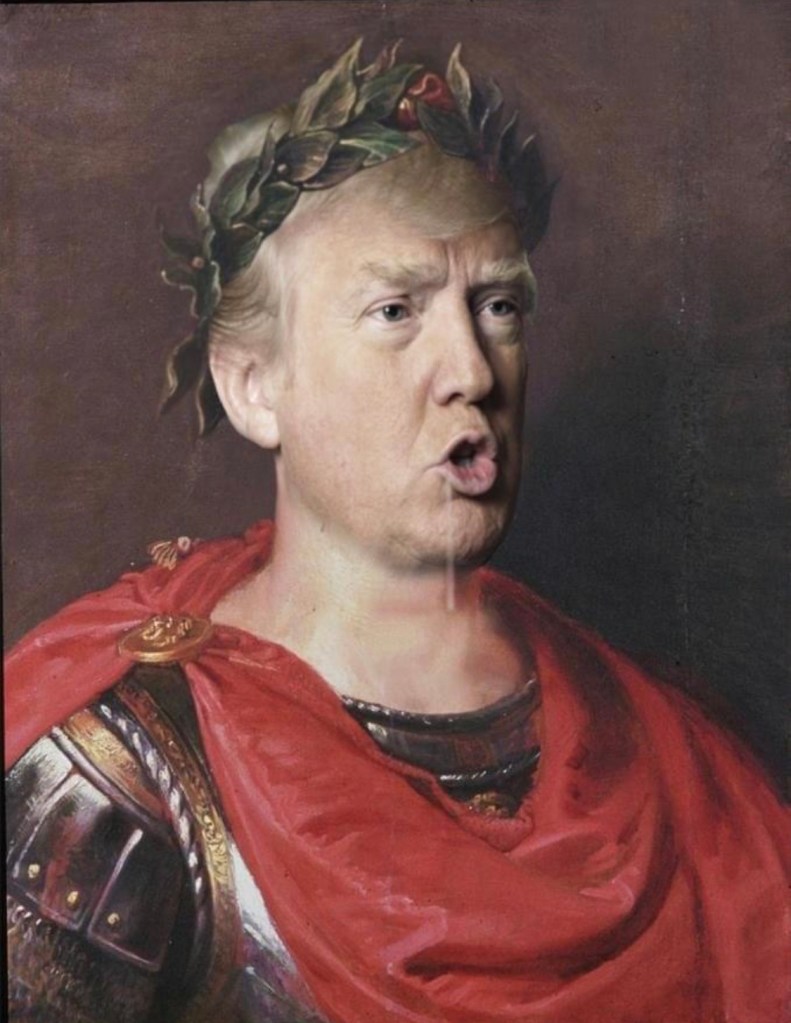
There are moments in a nation’s life when the problem is not a single policy failure or an errant leader, but a systemic lapse—a kind of institutional drowsiness where each arm of governance assumes the other will do the heavy lifting. Contemporary America, for all its procedural sophistication, increasingly looks like such a moment.
At the centre of this unfolding tableau is Donald Trump, once again testing the elasticity of constitutional boundaries. The immediate flashpoint is the War Powers framework—specifically the 60-day clock embedded in the War Powers Resolution. The statute was designed as Congress’s reluctant compromise after Vietnam: a mechanism to restrain unilateral executive military action while conceding the practical realities of modern warfare. Yet in the context of ongoing military operations involving Iran, that clock appears to be treated less as a binding constraint and more as a polite suggestion.
Ignoring the deadline is not merely a procedural quirk; it is a constitutional stress test. The War Powers Resolution was never a perfect instrument—presidents of both parties have historically sidestepped or reinterpreted it—but its quiet erosion speaks to a deeper issue: Congress’s diminishing appetite for institutional self-respect. A legislature that will not assert its war-making authority effectively cedes one of its most consequential powers, not through debate or repeal, but through inertia.
That inertia is compounded by optics that would be comedic if they were not consequential. The President’s recent insistence on his own “genius” performance in a cognitive assessment has become a curious sideshow. It invites comparison not just with prior off-the-cuff remarks about basic arithmetic, but with a broader political culture that rewards performance over precision. In another era, such claims might have been aggressively interrogated. Today, they are often absorbed into the churn of the news cycle—fact-checked, perhaps, but rarely allowed to disrupt the larger narrative arc.
And that brings us to the institutions meant to impose friction on executive overreach.
Congress, in theory the first line of defence, appears intermittently absent—sometimes literally. Key debates unfold with half-filled chambers, as if quorum were an optional aesthetic rather than a democratic necessity. Oversight hearings, when they occur, often generate more soundbites than substance. The result is a legislature that performs scrutiny without consistently exercising it.
The judiciary, for its part, has not fully clarified the guardrails either. Questions that ought to be doctrinally settled—such as the outer limits of executive tenure or the enforceability of certain constitutional norms—remain clouded by cautious adjudication. The courts’ instinct for incrementalism, ordinarily a virtue, becomes a liability when the political branches test boundaries in real time. Silence, in such contexts, is not neutrality; it is permissive ambiguity.
Then there is the fourth estate—the press, historically cast as democracy’s unofficial enforcement arm. Its current performance is uneven. In high-profile briefings, reporters sometimes allow evasions to pass unchallenged, particularly on matters as grave as weapons stockpiles or military strategy. The choreography is familiar: a probing question is posed, a partial answer is given, and the moment slips away as the room pivots to the next inquiry. Accountability, in this setting, is not defeated; it is diluted.
Perhaps the most striking symbol of this moment, however, is the visit of King Charles III to the U.S. Congress. The optics are almost too neat: a hereditary monarch addressing the elected representatives of a republic born in rebellion against monarchy, urging them—implicitly or otherwise—to uphold constitutional principles. It is the kind of historical irony that would be dismissed as heavy-handed if it appeared in fiction.
Yet the symbolism lands because it exposes a paradox. The American constitutional system was designed not merely to allocate power, but to contest it—to ensure that ambition counteracts ambition. When that contest weakens, the system does not collapse dramatically; it drifts. Deadlines become advisory. Oversight becomes episodic. Norms become negotiable.
What we are witnessing is not the death of American democracy, but something subtler and, in many ways, more dangerous: its gradual accommodation to lowered expectations. A presidency that pushes, a Congress that shrugs, a judiciary that hesitates, and a press that occasionally blinks.
The question is not whether the system can still correct itself—it can—but whether the political will exists to do so before temporary deviations calcify into permanent practice. In constitutional democracies, decay rarely announces itself with a bang. More often, it arrives as a series of shrugged shoulders.

