

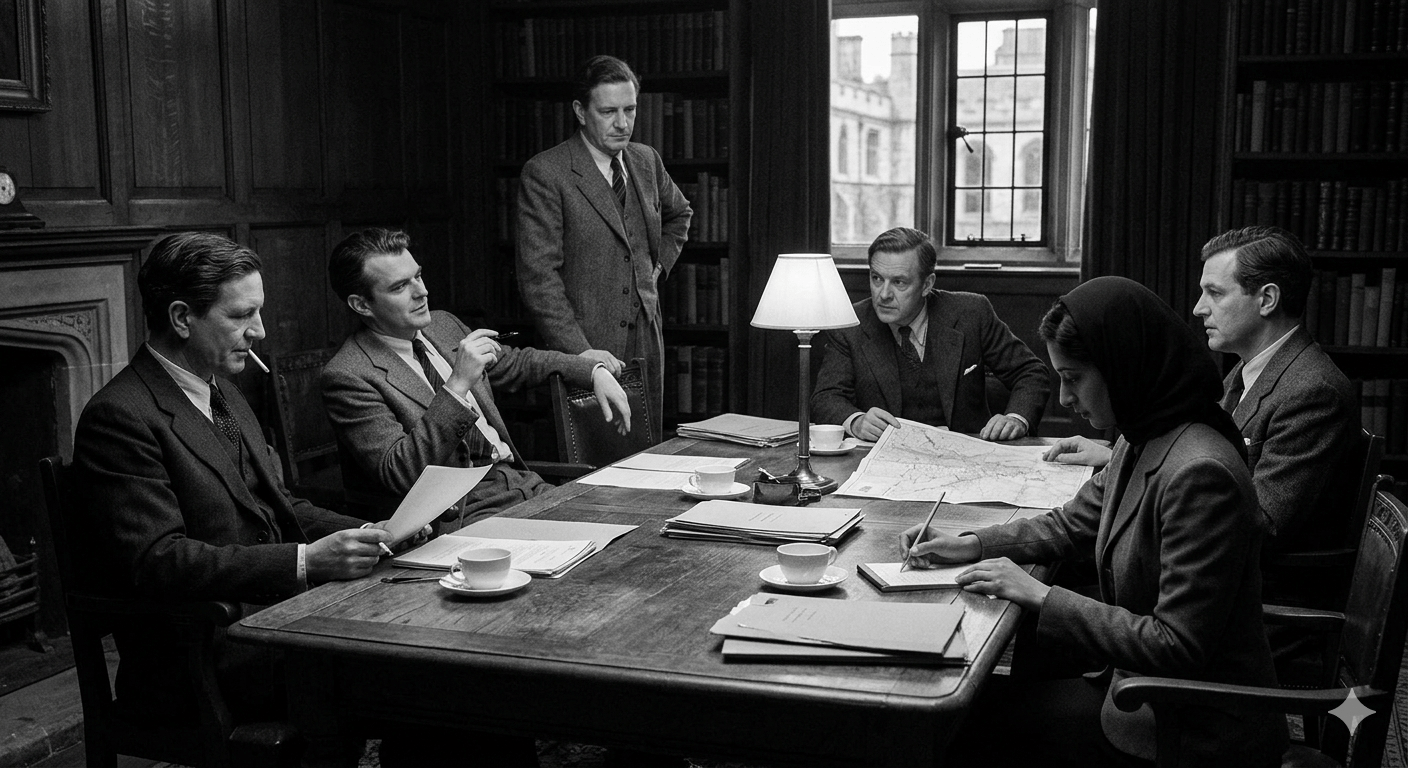

Britain, a country that prides itself on fair play, queue etiquette, and the quiet conviction that rules apply to everyone—except, occasionally, the right sort of people—has once again found itself staring into a moral mirror. On one side stands Shamima Begum; on the other, the impeccably tailored ghosts of the Cambridge Five.
The names of the five core members of the Cambridge Five spy ring, who were recruited by Soviet intelligence while at Cambridge University in the 1930s, are:
• Kim Philby (Harold Adrian Russell Philby)
• Guy Burgess (Guy Francis de Moncy Burgess)
• Donald Maclean (Donald Duart Maclean)
• Anthony Blunt
• John Cairncross
The contrast is not just striking—it’s almost theatrical.
Begum: The Unwanted Citizen
Shamima Begum, who left the UK in 2015 at the age of 15 to join ISIS, has now definitively lost her appeal against the Home Secretary’s decision to strip her of British citizenship. The ruling—upholding the original 2019 decision by then Home Secretary Sajid Javid—focuses narrowly on legality, not morality, fairness, or even common sense.
In plain English: the court was not interested in whether the decision was right, only whether it was lawful.
Her lawyers argued that the government had a duty to investigate whether she had been trafficked—a not unreasonable position given that she was a minor, groomed online, and transported into a war zone. The court, however, was unmoved. National security, it seems, trumps childhood vulnerability.
Begum remains in a detention camp in northern Syria, a place that makes British winter look like a spa retreat. Her three children have died there. She has publicly insisted she is “not a bad person,” which, in today’s media climate, is roughly equivalent to pleading guilty.
Organisations like Amnesty International have criticised the decision, arguing that exile-by-bureaucracy should not be a feature of modern democracies. But the government’s position is firm: if you are deemed a threat, you can be unmade as a citizen—especially if you have somewhere else you could theoretically belong.
Conveniently.
Enter the Cambridge Five: Treason, but Make It Upper Class
Now, let’s rewind to a time when betrayal came with better tailoring and a Cambridge accent.
The Cambridge Five—including Kim Philby, Guy Burgess, Donald Maclean, and Anthony Blunt—were not misguided teenagers. They were highly educated, ideologically driven adults who infiltrated the very core of British intelligence and diplomacy.
These men didn’t just flirt with extremism—they operationalised it.
- Kim Philby ran anti-Soviet operations… while working for the Soviets.
- Guy Burgess and Donald Maclean defected dramatically to Moscow in 1951, likely tipping off the Kremlin to British and American secrets along the way.
- Anthony Blunt was not only a spy but also Surveyor of the Queen’s Pictures—proof that one could betray the state and still curate its artwork.
Their actions arguably endangered far more lives, compromised global intelligence networks, and directly strengthened a hostile superpower during the Cold War.
And yet—brace yourself—not one of them had their British citizenship revoked.
Not one.
The Double Standard Nobody Wants to Name
So here lies the uncomfortable question: what exactly determines who gets to remain British?
Is it the scale of the threat? If so, the Cambridge spies should have been stateless several times over.
Is it the clarity of guilt? Again, the spies confessed, defected, and in some cases lived out their days under Soviet protection—hardly ambiguous.
Or is it something less legal and more… cultural?
Because the pattern is hard to ignore. One case involves a teenage girl of Bangladeshi heritage radicalised online and discarded by the state. The other involves well-connected, well-spoken men who betrayed their country but somehow retained their membership card.
One is exiled. The others, even in disgrace, remained British to the core.
Lawful, Yes. Consistent? Not Quite.
To be clear, the court’s decision in Begum’s case may well be legally sound. The powers to revoke citizenship on national security grounds exist, and they have been upheld.
But legality is a low bar for justice.
The real issue is consistency. If citizenship can be removed for posing a threat, then history suggests the bar has moved—not according to danger, but according to who you are and how you fit into the national narrative.
In short: treason, it appears, is forgivable—provided it is done with the right accent.
Final Thought
Britain may insist that the Begum case is about security, not symbolism. But symbolism has a way of creeping in through the back door, making itself comfortable, and putting the kettle on.
Because when a state treats comparable threats differently, people start to wonder whether the law is a shield—or simply a mirror reflecting its own biases.
And that, unlike espionage or teenage misjudgment, is a problem that doesn’t stay buried in history.

