

There is something almost poetic about a government statement (see below) that begins by “debunking misinformation” and proceeds, with admirable stamina, to confirm every underlying concern—just in longer sentences and better punctuation.
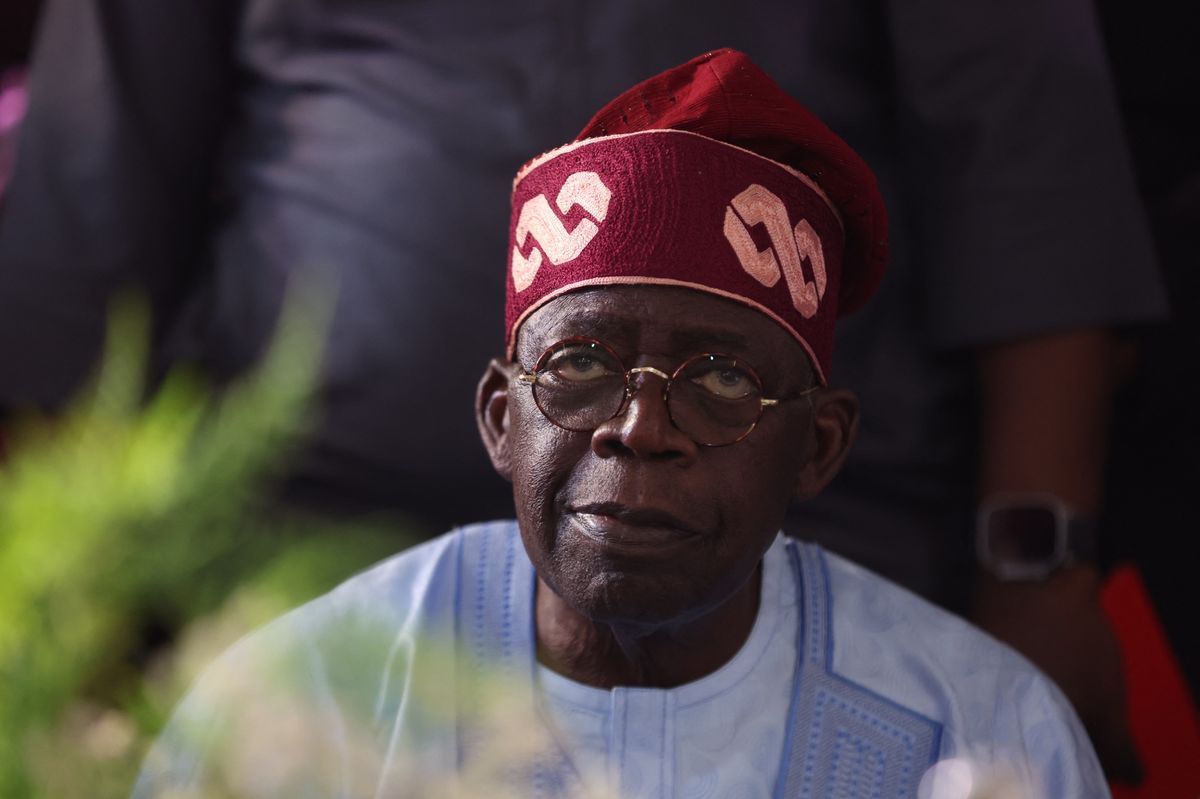
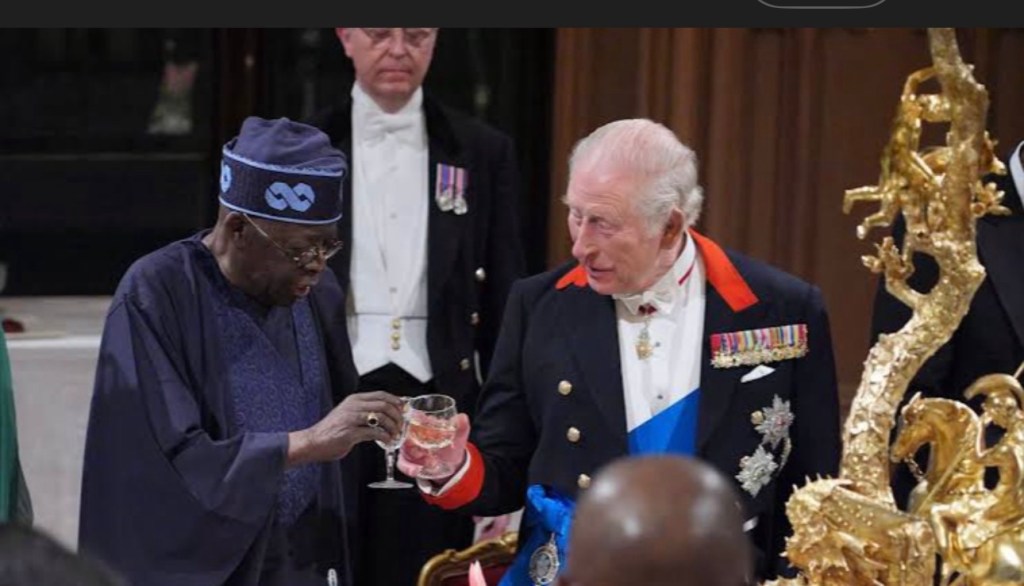
Let us begin with the ceremonial backdrop: the “historic” visit of Bola Ahmed Tinubu to the United Kingdom. In Nigerian political grammar, “historic” usually means “please don’t ask what we signed.” It is less a description of substance and more a polite request for amnesia.
The Great Non-Denial Denial
We are told, with reassuring firmness, that “nowhere in the memorandum is Nigeria required to accept foreign nationals other than Nigerians.”
Excellent. A comforting line—until one remembers that the entire controversy is not about accepting Canadians who took a wrong turn at Heathrow. It is about how “Nigerian” is defined, determined, and—crucially—who controls that determination process.
Enter the bureaucratic magic trick: the UK Letter (UKL).
If a person can be “biometrically matched” to a visa application, or even linked through “strong evidence,” they may be fast-tracked for return. In plain English:
If it looks Nigerian, sounds Nigerian, or once filled a form that smelled Nigerian—onto the next flight.
Yes, there is a five-day objection window. Five days. Because nothing says due process like a ticking stopwatch in a transcontinental deportation pipeline.
Dignity, Now With Packaging
The statement leans heavily—almost tenderly—on the phrase “dignified return.” One half expects a ribbon and a welcome hamper.
We are informed that returnees may carry their belongings, arrange their property, and even receive “reintegration assistance.” This is presented as a breakthrough, as though previous deportations involved parachuting individuals into Lagos lagoon with a handwritten apology.
Let’s be clear: allowing someone to take their property is not a diplomatic achievement—it is baseline decency. Dressing it up as a concession is like celebrating a landlord for returning your deposit without a court order.
Reintegration or Repackaging?
Then comes the pièce de résistance: the Returnee Education and Entrepreneurship Fund.
Ah yes—the classic development theatre. First, a country exports its labour. Then another country deports that labour. Then the original country offers a small grant so the deported citizen can become an “entrepreneur.” Full circle, minus dignity.
One might ask: if reintegration packages are so robust, why are people so desperate not to be “reintegrated”?
Reciprocity: The Missing Guest
Perhaps the most elegant omission in this “clarification” is reciprocity.
The agreement is framed as mutual—Nigeria and the United Kingdom working “together.” Yet nowhere in this exhaustive explanation do we hear of:
Easier visa access for Nigerians Expanded legal migration pathways Labour mobility concessions Or even the faintest administrative courtesy at visa centres
In diplomatic terms, this is what is known as a unilateral efficiency upgrade—for the United Kingdom.
The UK gets a streamlined deportation mechanism. Nigeria gets a well-written memo explaining why that is a good thing.
Sovereignty, Carefully Managed
We are reassured that the Nigeria Immigration Service retains sole authority over documentation. This is presented as evidence of sovereignty.
But sovereignty is not just about who stamps the passport. It is about who sets the tempo, defines the categories, and benefits from the arrangement.
If one party initiates, processes, evidences, schedules flights, and triggers expedited procedures, then the other party is not exercising sovereignty—it is administering compliance.
The Legal Cushion
To its credit, the MoU includes references to human rights, appeals, and protections. These are important—and standard.
But let us not confuse legal cushioning with structural fairness. The existence of appeal rights does not eliminate imbalance; it merely provides a softer landing for it.
The Real Issue
The government’s statement is technically detailed, procedurally dense, and diplomatically polished. What it is not is politically honest.
The real concern is simple:
This agreement optimises deportation logistics for the UK While offering Nigeria administrative responsibility and reputational risk Wrapped in the language of partnership, dignity, and cooperation
It is not a scandal. It is something more familiar—and perhaps more troubling: a well-negotiated asymmetry.
Final Thought
The statement concludes by advising media organisations to “seek clarification.”
Fair enough.
But Nigerians are not confused because they lack clarification. They are concerned because they understand it perfectly.
And no amount of careful drafting can hide the oldest clause in international relations:
When one side explains this much, it is usually because the other side is benefiting that much more.
————————————————————
STATEHOUSE PRESS STATEMENT
CLARIFYING THE NIGERIA-UK MIGRATION PARTNERSHIP
It has become necessary to debunk the raft of misinformation assailing the migration partnership between Nigeria and the United Kingdom, as contained in the Memorandum of Understanding signed by the two nations on the sidelines of President Bola Ahmed Tinubu’s historic state visit to the UK.
The memorandum on immigration cooperation, like other memoranda signed, aimed to strengthen the partnership between Nigeria and the United Kingdom.
Nigeria’s Minister of Interior and the Secretary of State for the Home Department of the Government of the United Kingdom and Northern Ireland signed the Migration MoU.
The MoU establishes a framework to facilitate a regulated and safe migration flow between the two countries and to encourage further bilateral cooperation in the fight against irregular migration and associated acts by citizens of each country, in accordance with their respective immigration and citizenship laws and extant international treaties, conventions, protocols, agreements, and charters.
Nowhere in the 12-page memorandum is Nigeria required to accept foreign nationals other than Nigerians. Nationals to be repatriated must have undergone multiple levels of identification and verification, and, where errors occur, they are returned to the requesting country at the requesting country’s cost.
Under the agreement, Nigeria and the United Kingdom will work together to secure the dignified return of their nationals who do not, or no longer, have the right to enter or remain in the territory of the other country.
A clear condition in the MoU is that the returnees concerned are bona fide nationals of the country and are treated with dignity and respect, with due regard to their human rights and fundamental freedoms.
Law enforcement officers in each country will take the necessary action to protect the interests and well-being of citizens of either party and to mitigate conflict triggers related to migration matters.
A key provision in the MoU is that the migrant to be returned must carry his legally acquired personal belongings to the country of destination, unlike in the past when migrants left with nothing.
Article 12 further reinforces this good deal: “Every returnee will be given ample opportunity to make adequate arrangements for the transfer or disposal of his property in the territory of the requesting party, under the supervision of the mission of the requested party.”
Another provision is that where a return is being considered, and the person has made a claim under relevant domestic or international human rights legislation, that claim will be considered in line with the provisions under the party’s respective domestic legislation. The appeal may relate to circumstances in which the foreign nationals have been lawfully resident in the territory of the requesting party for most of their lives and socially and culturally integrated in the territory of the requesting party. Another ground of appeal may be where the nationals would face significant obstacles to their integration into the country to which they are to be deported.
Article 9 of the MoU sets out the conditions for the migrant’s return.
“Before departure, identification checks will be carried out by the officers of the requested party in the territory of the requesting party and on arrival by the competent authorities of the requested party. The requesting party will coordinate all returns with the officers of the requested party.
“A return may be conducted by means of a scheduled aircraft or an aircraft chartered specifically for this purpose by the authorities of the parties; the requesting party will provide the flight details and particulars of each returnee five (5) working days before the date of return.
“A return will be conducted using an original, valid passport, or, if the requesting party can biometrically match a returnee to a visa application made in the territory of the requested party, then an expedited process will be permissible, via which the requesting party will facilitate the return or repatriation using a UK Letter (UKL).
“If a returnee cannot be biometrically matched to a visa application by the requesting party, but there is otherwise strong evidence to confirm nationality, including a copy of a passport, a passport number or a national identity card, then an expedited process will again be permissible via which the requesting party will facilitate return or repatriation using a UK Letter (UKL).
“Should the requested party not be satisfied with a returnee’s identity within five (5) working days of submission of the UK Letter (UKL) to Nigerian authorities, detailed reasons should be presented to the requesting party why the identity cannot be satisfied. In these circumstances, removal will be deferred.
“If subsequent evidence shows that a returnee who has been returned is not a national of the requested party, the requesting party will take the person back to its territory at the requesting party’s cost and by the most efficient means possible. The request for the return of the person referred to in Article X will be made within ten (10) working days following the return exercise and carried out within fourteen (14) working days after acceptance of the request.”
Article 9, subsection 3, shows that Nigeria has not ceded to the UK the right to document the repatriated person.
The section says: It shall be the sole responsibility of the Nigeria Immigration Service (NIS) to issue and handle, as is necessary under Nigerian domestic legislation, any Nigerian documentation (including the
digital acknowledgement of receipt of a UK Letter) ahead of the notified date of return as stated in the UK Letter. This shall be distinct from the UK Letter process and remains the sole right and responsibility of Nigerian authorities, including the handling of the
travel document and any onward transmission required from the issuing office to enable entry.
Article 11 deals with returnee reintegration assistance. It states that every returnee will be able to access basic on-arrival and reintegration assistance in the territory of the requested party.
“Short-term assistance may include airport reception, accommodation, onward transportation, care and provision packs and small cash assistance. Medium-term assistance can include support to find and reunite with family; support in obtaining the in-country documentation required, signposting to local services, and the potential provision of mental well-being and counselling services (if required).
“Longer-term assistance may allow access to a Returnee Education and Entrepreneurship Fund to enable sustainable reintegration. Support may include accessing the local job market, setting up a business, accessing vocational training or further education, and assistance with legal migration opportunities.
“Should the parties’ domestic legislation regarding the provision of reintegration support to all or certain categories of returnees change, or should the overarching non-legally mandated package of reintegration support change, the parties will inform each other as soon as is practicable.”
The MoU, similar to those signed in 2012, 2017, and 2022, is for an initial period of five years, renewable for a further five-year period, as may be agreed by the parties.
We reiterate that media organisations should seek clarification when uncertain about any issue to avoid misinforming the public.
Bayo Onanuga
Special Adviser to the President
(Information & Strategy)
March 21, 2026

