

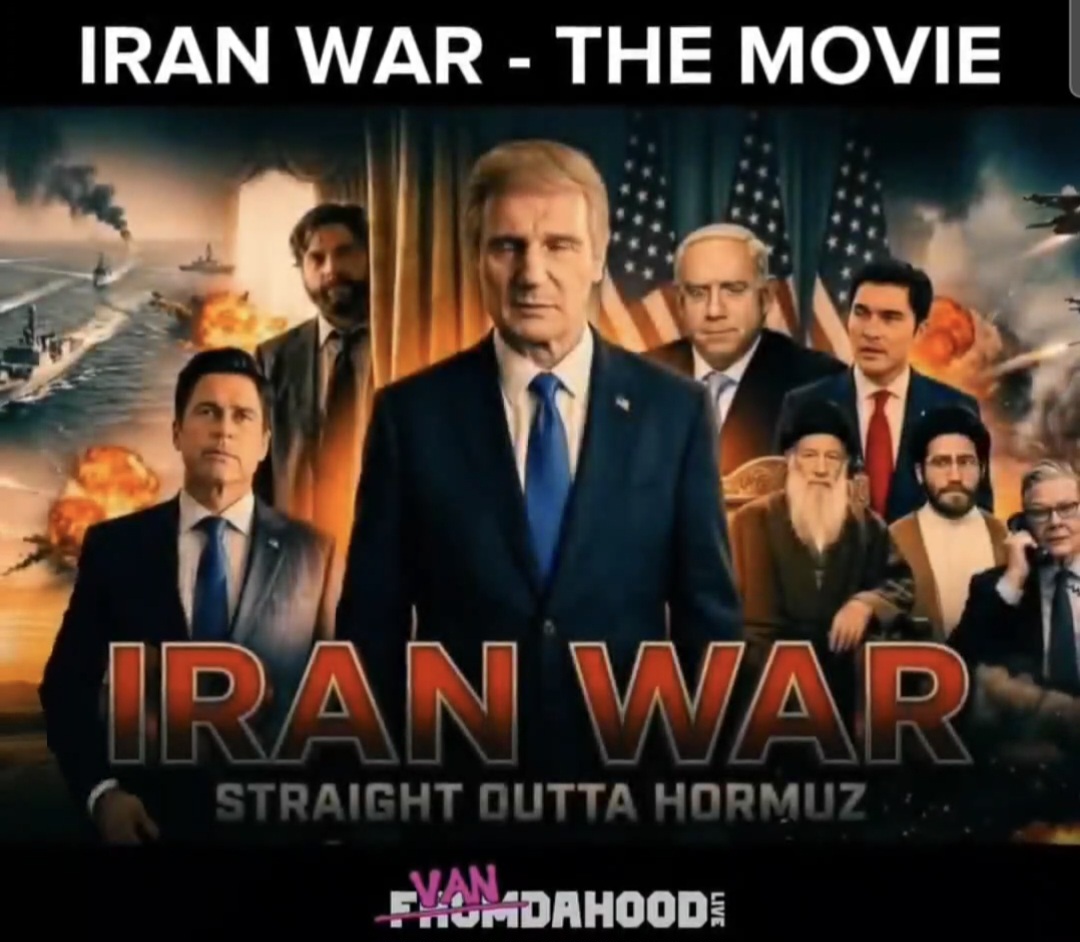
There is something almost theatrical about the War Powers Resolution. Passed in the long shadow of Vietnam, it was meant to do something radical: put a leash on presidential war-making. Congress, having watched successive administrations drift from “advisers” to full-scale պատերազմ without so much as a by-your-leave, decided it wanted its constitutional keys back.
Half a century later, the leash is still there. It just isn’t attached to anything.
Take the recurring question of military action against Iran. No clear congressional declaration. No neat, bespoke Authorisation for Use of Military Force. Yet the machinery of war—strikes, deployments, escalation ladders—can and does move. When asked to explain this constitutional magic trick, Washington produces what can only be described as a rotating cast of legal fig leaves.
“Not war, merely hostilities.”
“Not hostilities, merely support.”
“Not support, merely self-defence.”
At some point, the dictionary files for asylum.
The Legal Architecture—On Paper
The War Powers Resolution is, in theory, straightforward:
The President may introduce U.S. forces into hostilities only with congressional authorisation, or under narrow emergency conditions. If acting unilaterally, the President must notify Congress. Absent approval, the engagement must end within a limited timeframe.
It reads like a compliance checklist. It operates like a suggestion box.
Because here is the structural flaw: the law depends on the very actors it is meant to restrain. The President must admit he is in “hostilities.” Congress must be willing to pull funding or initiate a constitutional confrontation. Both must agree on what words mean. That is a lot of “must” in a city built on “won’t.”
The Executive’s Favourite Game: Redefinition
Successive administrations have discovered that the cleanest way around the Act is not to defy it—but to linguistically dissolve it.
If “war” triggers Congress, call it something else.
If “hostilities” start the clock, redefine the term until the clock never starts.
During the 2011 Libya intervention, the argument was made—successfully, in practice if not in logic—that sustained airstrikes did not amount to “hostilities” because U.S. personnel faced limited risk. One imagines the receiving end of those strikes might have had a different semantic view.
Transplant that reasoning to Iran and you get a familiar script: precision strikes, defensive actions, force protection. Everything short of war—except, of course, the war.
Congress: The Reluctant Sovereign
If the executive branch is creative, Congress is evasive.
Members will denounce unauthorised military action with great vigour—preferably on television, and preferably after the fact. Resolutions are introduced, debated, occasionally passed, and just as often ignored or vetoed. Funding, however, continues to flow with remarkable reliability.
This is the quiet truth: Congress possesses the most potent war power of all—the power of the purse—and uses it like a ceremonial prop.
Why? Because war votes are politically radioactive. To authorise is to own. To refuse is to risk being labelled weak. The safest course is a kind of strategic अस्पष्टता: complain loudly, act softly, and let the President carry the burden.
The Fig Leaf Theory
So, is the War Powers Resolution a legal fig leaf?
There is a compelling case that it is.
A fig leaf does not conceal reality; it merely provides the appearance of modesty. The Act performs a similar function. It allows all parties to maintain the fiction that:
Congress controls war-making The President respects statutory limits The Constitution’s separation of powers is alive and well
Meanwhile, operational reality tells a different story: wars—or “not wars”—are initiated, sustained, and expanded through political calculation, not legal constraint.
The law remains on the books, invoked when convenient, sidestepped when inconvenient, and rarely decisive.
Law vs. Politics: Who Actually Decides?
This leads to the harder proposition: are wars ultimately political rather than legal?
In practice, yes—with an important caveat.
Law still matters, but not as a gatekeeper. It functions instead as:
Justification: providing post hoc rationales for actions already taken Constraint at the margins: shaping how force is used (rules of engagement, law of armed conflict) Narrative control: framing actions for domestic and international audiences
What law does not reliably do is stop a determined executive from initiating military action, particularly where Congress is unwilling to escalate the conflict institutionally.
In that sense, the system has evolved into an equilibrium:
Presidents act first, justify later Congress objects, but funds Courts abstain, citing political questions
The result is not lawlessness, but something subtler: law as choreography.
The Soldier’s Dilemma (and Its Limits)
Importantly, this political reality does not trickle down cleanly to the battlefield.
A soldier cannot refuse orders on the basis that Congress was bypassed. The legality of the war at the strategic level is not the same as the legality of orders at the tactical level. The duty to disobey remains confined to manifestly unlawful acts—war crimes, not war authorisations.
So even if the War Powers framework is treated as optional in Washington, it does not grant licence on the ground. The تقسیم of responsibility holds, however untidy it looks from a distance.
Conclusion: A System That Prefers Ambiguity
The enduring genius—or flaw—of the American war powers system is that it avoids resolution.
The War Powers Resolution was supposed to settle the question of who decides war. Instead, it institutionalised a negotiation in which:
no branch fully wins no branch fully loses and accountability is perpetually deferred
Calling it a fig leaf may be unkind. Calling it irrelevant would be inaccurate. It is something more peculiar: a law that survives precisely because it is never allowed to work as written.
And so the cycle continues. The President advances. Congress protests. The law nods politely from the corner.
War, meanwhile, proceeds on sched.
 Centre for Nigeria Progress