

Fifteen years after NATO’s intervention in Libya, the consequences of that war continue to haunt Africa. What was sold to the world as a humanitarian mission to protect civilians has become one of the most consequential foreign policy failures of the 21st century.
The latest evidence comes from the United Nations itself.
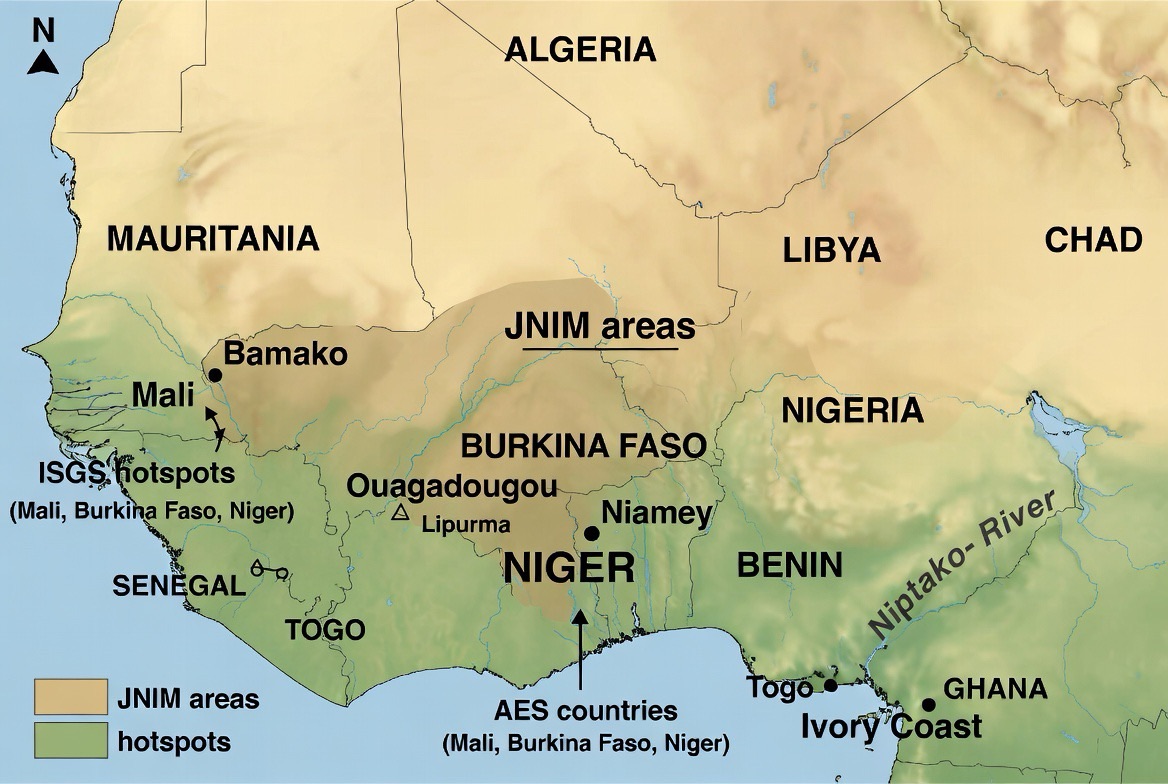
The UN has acknowledged that weapons looted from Libyan stockpiles following the collapse of the Libyan state have found their way into the hands of extremist groups operating across the Sahel, including Nigeria. For a country that has spent more than a decade battling Boko Haram, ISWAP, bandits and other armed groups, this is not merely an observation. It is an indictment of a disastrous intervention whose consequences were entirely foreseeable.
The time has come for Nigeria and other affected African nations to seriously consider pursuing compensation from the states and alliance responsible for creating the conditions that destabilised an entire region.
The War That Was Supposed to Save Libya
In 2011, NATO launched military operations against Libya under United Nations Security Council Resolution 1973, ostensibly to protect civilians during the uprising against Libyan leader Muammar Gaddafi.
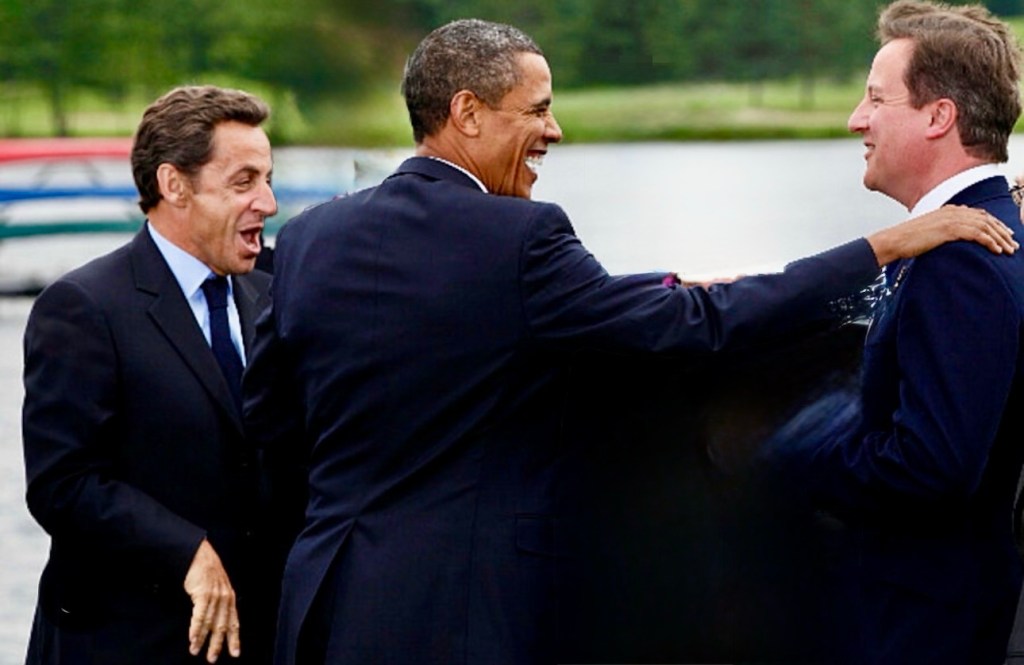
The principal political champions of the intervention were then British Prime Minister David Cameron, French President Nicolas Sarkozy and United States President Barack Obama.
In April 2011, the three leaders jointly declared that military operations would continue until Gaddafi was removed from power. Although the intervention had been presented as a civilian protection mission, it had clearly evolved into a regime-change operation.
The objective was achieved.
Gaddafi was overthrown and killed.
What followed was chaos.
The Collapse Nobody Planned For
The removal of the Libyan government created a security vacuum that was rapidly filled by rival militias, extremist organisations and criminal networks.
Libya descended into years of civil war and fragmentation. The country’s vast arsenals, accumulated during decades of Gaddafi’s rule, were left unsecured. Thousands of weapons disappeared into the black market.
These weapons did not remain in Libya.
They travelled south.
Through established smuggling routes, arms flooded the Sahel and West Africa, strengthening terrorist groups and insurgents across the region.
Nigeria became one of the principal victims.
Groups such as Boko Haram gained access to increasingly sophisticated weaponry. Regional instability intensified. Border security deteriorated. Terrorist violence expanded. Thousands of Nigerian soldiers and civilians lost their lives in conflicts fuelled by weapons that originated from Libya’s shattered stockpiles.
The United Nations has now publicly confirmed what security experts have argued for years: weapons looted during the Libyan conflict ultimately found their way into Nigeria and other countries in the region.
Even Obama Admitted Failure
Perhaps the most remarkable aspect of the Libya story is that one of its chief architects later acknowledged the disaster.
In a 2016 interview, Barack Obama described the failure to plan adequately for Libya after Gaddafi’s removal as the “worst mistake” of his presidency.
Obama argued that while the military campaign itself succeeded, the coalition failed to prepare for what came next. He specifically criticised the lack of effective post-conflict planning and stabilisation efforts after the regime collapsed.
His admission was significant.
It amounted to a recognition that the intervention’s architects had devoted enormous resources to removing a government but insufficient attention to building a stable replacement.
The consequences of that failure are still being felt today from Tripoli to Maiduguri.
Britain’s Own Parliament Delivered a Damning Verdict
Obama’s admission was later reinforced by an even more devastating assessment.
In 2016, the United Kingdom’s Foreign Affairs Committee published its landmark report titled Libya: Examination of Intervention and Collapse and the UK’s Future Policy Options.
The committee’s conclusions were extraordinary.
It found that the intervention was based on flawed assumptions and incomplete intelligence. It concluded that the British government failed to appreciate the complex realities on the ground and that the mission drifted from civilian protection into regime change without a coherent strategy for rebuilding Libya afterwards.
The report further concluded that the intervention contributed to political collapse, militia violence, humanitarian crises and the growth of extremist organisations.
Most significantly, the committee placed ultimate responsibility on Prime Minister David Cameron for the failures surrounding the intervention.
In effect, Britain’s own Parliament acknowledged that the operation had produced consequences far beyond those originally presented to the public.
Africa Paid the Price
The tragedy of Libya is that those who paid the highest price were not the politicians who launched the intervention.
David Cameron retired from office.
Nicolas Sarkozy returned to domestic political battles in France.
Barack Obama left the White House and moved on to post-presidential life.
Meanwhile, countries thousands of kilometres away continue dealing with the fallout.
Nigeria has spent billions of dollars fighting insurgencies and terrorism.
Entire communities have been destroyed.
Millions have been displaced.
Economic activity across large parts of Northern Nigeria has suffered devastating setbacks.
Military personnel have paid with their lives.
Ordinary Nigerians continue to live with the consequences of a conflict they neither started nor supported.
The Case for Compensation
From a legal perspective, pursuing compensation against NATO or its member states would be complex.
Questions of sovereign immunity, international law and causation would create formidable obstacles.
Yet the moral and political case is compelling.
If international actors can claim credit for removing Gaddafi, they cannot entirely disown responsibility for the foreseeable consequences of their actions.
Compensation need not necessarily come in the form of direct financial payments.
It could include:
- Long-term counter-terrorism funding.
- Reconstruction assistance for communities affected by insurgency.
- Enhanced intelligence-sharing arrangements.
- Border security support.
- Programmes aimed at recovering and tracing illicit weapons.
- Development initiatives targeting regions devastated by terrorism.
The principle is simple: those who contributed to creating the problem should contribute to solving it.
A Question Nigeria Must Ask
For years, African leaders warned that the collapse of Libya would destabilise the region.
Those warnings were ignored.
Today, the evidence is overwhelming.
The UN has linked Libya’s looted weapons to extremist groups in Nigeria and across the Sahel.
Barack Obama admitted that post-war planning failed.
Britain’s Parliament concluded that the intervention was based on flawed assumptions and resulted in catastrophic consequences.
The facts are no longer seriously disputed.
What remains unanswered is whether the countries that engineered the intervention will ever be held accountable for its aftermath.
Nigeria has spent years paying for the mistakes of others.
The question now is whether it should continue bearing that burden alone.
As the evidence mounts, a serious conversation about responsibility, accountability and compensation is no longer radical.
It is overdue.

