

There was a time when buying a car meant owning a machine. You received keys, a logbook, and the freedom to fix it with a hammer, a spanner and questionable confidence. Today, buying a modern hypercar increasingly resembles acquiring a long-term software licence with leather seats.
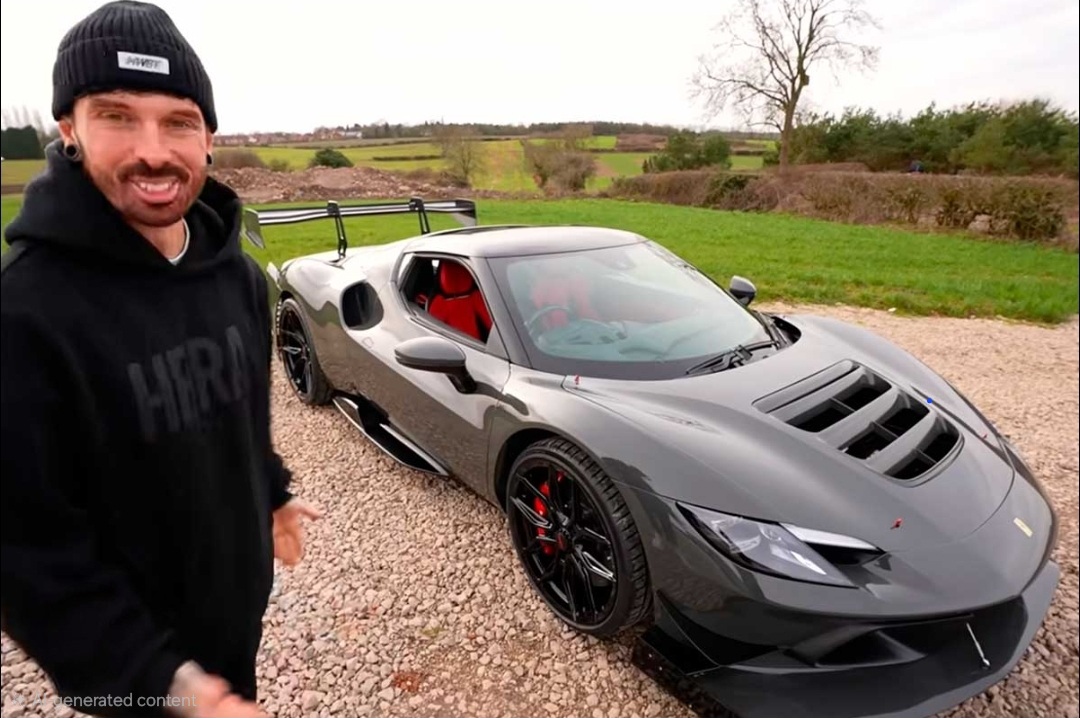
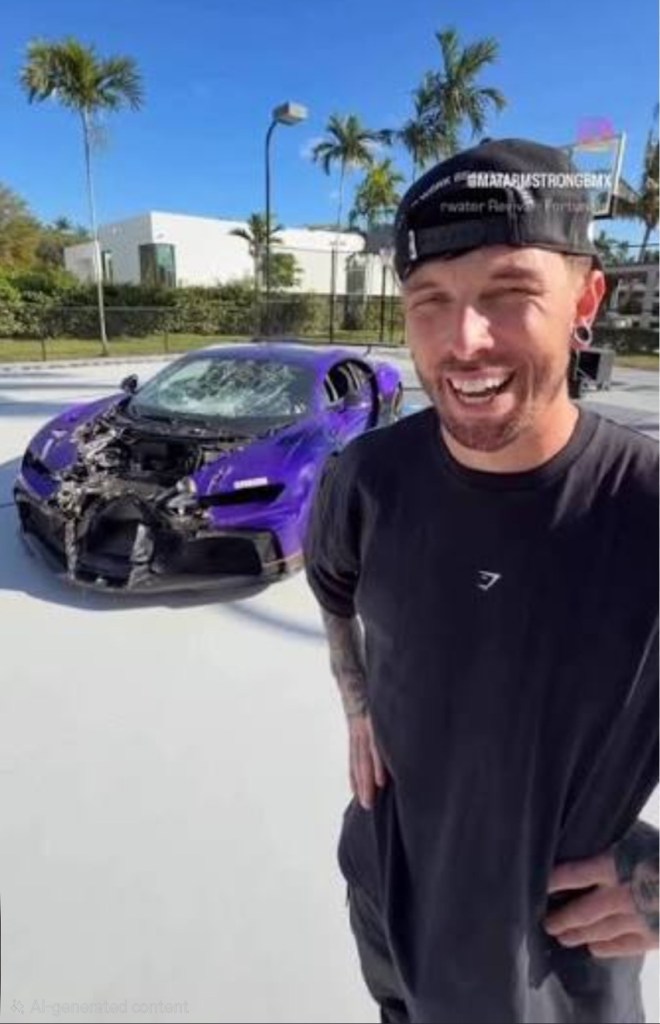
That reality exploded into public view with the ongoing conflict between YouTube automotive rebuilder Mat Armstrong and the luxury automotive aristocracy of Ferrari and Bugatti.
At stake is not merely the fate of a damaged Ferrari 296 GTB or a rebuilt Bugatti Chiron. The real battle concerns a far larger question: when you buy a £2 million car, do you actually own it, or are you merely renting permission from the manufacturer?
The Rise of the Salvage Surgeon
Mat Armstrong built an enormous audience doing what car enthusiasts secretly fantasise about after watching insurance auctions at 2 a.m.: buying catastrophically damaged luxury cars and painstakingly rebuilding them.
His formula was irresistible. A wrecked Lamborghini here, a drowned McLaren there, all restored through engineering skill, persistence, and the occasional emotional breakdown caused by wiring harnesses.
The appeal was simple. Armstrong represented the old mechanical spirit of motoring — the belief that machines are ultimately understandable, repairable and redeemable.
Then came Ferrari and Bugatti.
Mechanically, Armstrong managed what many thought impossible. He rebuilt a Bugatti Chiron that had suffered catastrophic damage. The engineering feat alone deserved admiration. But modern hypercars are no longer merely mechanical objects. They are rolling data centres with carbon-fibre body panels.
And that is where the trouble began.
The Car That Refused To Wake Up
The Ferrari 296 GTB became the symbol of the new automotive age.
Despite repairing the vehicle physically, Armstrong reportedly found himself trapped behind software barriers. The car’s electronic control systems required manufacturer authorisation to fully initialise and reactivate critical systems.
In simpler language: the car had been repaired, but Ferrari allegedly retained the digital power to decide whether it could live again.
Imagine repairing your house after a fire only for the original architect to remotely refuse to turn the electricity back on because the wallpaper was not installed by an approved technician.
Luxury manufacturers argue that these controls are necessary for safety, cybersecurity, emissions compliance, intellectual property protection and brand integrity. And to be fair, a 296 GTB is not a 1998 Toyota Corolla with a loose bumper and optimism holding it together.
Modern hypercars contain astonishingly complex software ecosystems managing hybrid drivetrains, battery systems, active aerodynamics, traction controls and driver safety systems. A faulty calibration at 200 mph is not a minor inconvenience; it is potentially fatal.
But critics argue that manufacturers are using legitimate safety concerns to establish permanent post-sale control over vehicles long after ownership transfers.
The concern is no longer whether companies build the car. It is whether they retain feudal authority over it forever.
Enter Elon Musk, Stage Left
Like an unsolicited software update arriving at 3 a.m., Elon Musk entered the drama.
In a viral intervention that sounded somewhere between a technological manifesto and a declaration of war on dealership monopolies, Musk reportedly described software locks on privately owned vehicles as “a form of theft.”
That sentence alone probably caused several luxury-car legal departments to simultaneously spill espresso.
According to the announcement, teams from Tesla and SpaceX had developed open-source diagnostic tools intended to initialise proprietary ECUs and restore functionality to locked vehicles.
Musk also pledged support for Armstrong should the matter evolve into a major legal confrontation, potentially even offering legal backing through amicus briefs if courts became involved.
One can almost hear the collective scream from automotive executives:
“You mean owners may actually own things?”
The Death of Mechanical Ownership
This conflict goes far beyond YouTube drama.
For decades, automakers earned money primarily at the point of sale. Increasingly, however, manufacturers are evolving toward a subscription-and-control model.
Cars now contain:
- subscription heated seats,
- remote feature activation,
- cloud-based diagnostics,
- software-tied repairs,
- digitally paired replacement parts,
- and proprietary service restrictions.
The vehicle industry has quietly borrowed the philosophy of Silicon Valley:
“You bought the hardware. We still own the ecosystem.”
It is no coincidence that modern dealerships increasingly resemble Apple Stores with tyre pressure.
The danger for consumers is obvious. If manufacturers maintain exclusive control over software access, independent garages, rebuilders and owners themselves become dependent vassals in a closed corporate ecosystem.
A £300,000 Ferrari could effectively become an immobile sculpture unless the manufacturer grants digital permission for operation.
That fundamentally changes the meaning of ownership.
The Right-To-Repair Earthquake
The Armstrong dispute sits within the broader global “right-to-repair” movement already challenging companies across technology, agriculture and electronics.
Farmers have battled tractor manufacturers over locked software systems. Smartphone users have fought for independent repair access. Gamers have challenged digital ownership restrictions.
Now the same war has arrived in the hypercar world.
If courts eventually determine that manufacturers cannot indefinitely withhold software access from lawful owners, the consequences would be enormous.
Independent repairers could gain unprecedented legitimacy. Salvage rebuilding could become economically viable again. Secondary markets for damaged supercars could explode in value.
More importantly, it would establish a principle with implications far beyond cars:
Ownership must include the practical ability to use, repair and restore property.
Without that, ownership becomes ceremonial.
Ferrari’s Real Fear
Ferrari’s greatest concern may not actually be safety.
It may be control.
Luxury brands survive partly because they tightly curate exclusivity, servicing standards and reputation. A poorly repaired Ferrari bursting into flames on TikTok damages the brand whether Ferrari touched it or not.
From the company’s perspective, unrestricted third-party software access risks counterfeit parts, unsafe modifications and reputational disaster.
But there is also a less romantic truth: post-sale servicing and software dependency are enormously profitable.
The modern luxury business model increasingly resembles a monarchy: the customer may possess the castle, but the king still controls the gates.
The Future Of Cars Is Also The Future Of Freedom
What makes the Armstrong saga fascinating is that it captures a broader societal anxiety.
People increasingly feel they own less of what they purchase:
- digital books can disappear,
- software licences can expire,
- smart devices can be remotely disabled,
- tractors can refuse repairs,
- and now even hypercars can allegedly refuse resurrection.
The screwdriver is losing to the software key.
For generations raised on the romance of mechanical freedom, that represents more than inconvenience. It feels philosophical.
A car once symbolised independence. Increasingly, it symbolises conditional access governed by terms and conditions nobody reads.
Mat Armstrong’s battle therefore resonates because it is not really about one Ferrari.
It is about whether modern technology will leave citizens as genuine owners — or merely approved users living at the mercy of corporate permission systems.
And somewhere in Maranello, an executive is probably staring nervously at a YouTube mechanic with a laptop and wondering if the entire business model is about to need a software update.

