

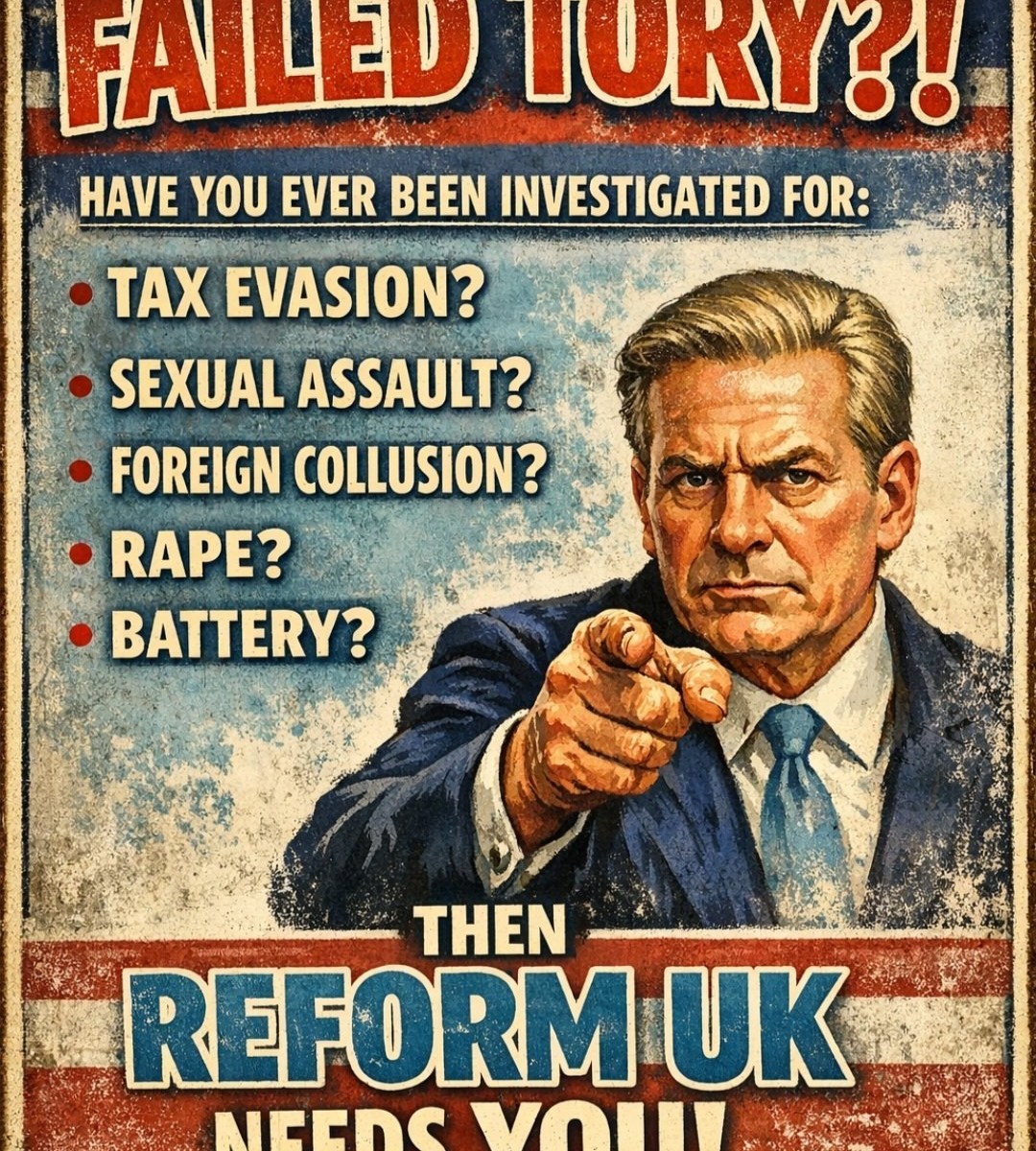

There is a peculiar mood haunting modern politics. It is not merely anger. Democracies have always had angry voters. It is something darker: a cultivated sense of siege, humiliation and impending collapse. The feeling that the nation is being stolen, replaced, diluted or betrayed. The feeling that catastrophe is not coming tomorrow but is already here, living next door, crossing the Channel in a dinghy, teaching in universities, broadcasting on television or sitting in parliament.
Across Britain and much of the western world, the contemporary far right trades in this emotional economy of panic.
One day it is “diversity” destroying Britain. The next it is migrants “invading” Europe. Then comes the warning that civilisation itself will collapse because women are having fewer children, or because LGBTQ rights exist, or because some local council has installed a rainbow crossing in Croydon. Every social change is framed as existential warfare. Every compromise becomes surrender. Every disagreement becomes treason.
And like all successful political movements, the modern far right understands one thing exceptionally well: politics is not won by statistics alone. It is won by emotion.
Fear mobilises faster than policy papers.
A frightened electorate will tolerate things a calm electorate never would.
The historical temptation is to simply shout “fascism” and leave it there. Certainly, there are disturbing echoes of Europe’s darkest century. The language of national purity. The obsession with enemies within. The fantasies of cleansing society through force. The romanticisation of strongmen. The suggestion that democratic institutions are obstacles rather than safeguards.
But history never repeats itself so neatly. Today’s far right is not a carbon copy of the interwar fascism of Benito Mussolini or Adolf Hitler. The uniforms are mostly gone. The marching paramilitaries are rarer. Instead of mass rallies lit by torches, there are livestreams, podcasts and rage-bait TikToks filmed from the front seat of a Ford Transit.
The modern far right arrives not always in jackboots, but often in expensive suits, algorithm-friendly clips and carefully rehearsed performances of “common sense”.
That is what makes it more slippery.
Much of today’s radical right loudly claims to defend democracy. Indeed, it insists it represents the “real people” against corrupt elites, judges, journalists, academics and civil servants. Democracy, in this worldview, only truly exists when the “correct people” win elections. Independent courts become enemies. Human rights laws become obstacles. A free press becomes “the establishment”. Constitutional checks and balances become intolerable interference.
The message is simple: if “the people” voted for us, why should anything restrain us?
That logic is profoundly dangerous because democracy without restraints eventually becomes majoritarian vengeance.
The irony is that many of the grievances fuelling this politics are not imaginary. Wage stagnation is real. Housing insecurity is real. Deindustrialisation is real. The collapse of public trust is real. Since the financial crisis of 2008, millions across Britain, Europe and America have watched living standards flatline while billionaires multiplied like rabbits after a tax cut.
The neoliberal promise was that globalisation would enrich everybody eventually. Instead, many communities got Amazon warehouses, zero-hour contracts and sewage-filled rivers courtesy of privatised utilities paying handsome dividends to shareholders.
When politics ceases to improve material life, people begin searching for culprits.
The left traditionally blamed systems: inequality, corporate concentration, deregulated finance, weakened labour rights.
The far right offers something emotionally simpler and more intoxicating: blame people.
Blame migrants.
Blame Muslims.
Blame feminists.
Blame refugees.
Blame “wokeness”.
Blame academics.
Blame the BBC.
Blame judges.
Blame human rights lawyers.
Blame “globalists”, that wonderfully elastic word capable of meaning almost anything the speaker dislikes.
The genius of far-right populism lies not necessarily in solving problems, but in converting frustration into cultural revenge.
Economic despair alone does not automatically create extremism. If it did, every recession would end in dictatorship. What matters is who successfully interprets the anger.
And increasingly, the far right has mastered the art of interpretation.
It promises not merely prosperity but restoration. A return to a mythologised past where everything supposedly worked: families were stable, borders were firm, communities were unified and nobody had pronouns in their email signatures. Never mind that this golden age often existed largely in nostalgia and television reruns.
The deeper promise is emotional. You may not become richer, but someone else will be punished on your behalf.
That is why the politics becomes so obsessed with sex, birth and identity. Refugees are portrayed not simply as economic burdens but as predators. Women’s autonomy becomes a demographic crisis. Minority rights become existential threats. Every cultural shift is recast as civilisational warfare.
It is politics conducted in the key of permanent emergency.
Social media supercharges all this. Old fascist movements needed newspapers, rallies and party structures. Modern extremists need only engagement metrics. Algorithms reward outrage, paranoia and emotional extremity because fury keeps users scrolling longer than moderation ever could.
The modern demagogue behaves less like a traditional statesman and more like an influencer monetising civilisational collapse.
Rage is now a business model.
That does not mean everybody voting for populist parties secretly desires authoritarianism. Many voters are simply exhausted, alienated or distrustful of established institutions that often appear detached from ordinary life. But political movements are not judged solely by the frustrations of their voters. They are judged by the direction in which they channel those frustrations.
And here lies the danger.
Far-right populism offers impossible promises. It claims complex economic and social problems can be solved through national purification, cultural confrontation and displays of strength. But societies are not repaired through permanent scapegoating. Eventually the movement either fails to deliver or escalates its search for enemies.
History suggests both outcomes are ugly.
There is also a peculiar contradiction at the heart of modern far-right politics. It presents itself as defending civilisation while constantly feeding social breakdown. It speaks of law and order while flirting with political violence. It condemns corruption while frequently indulging in spectacular corruption once in office. It claims to defend national unity while surviving politically by keeping populations permanently angry and divided.
It is a movement fuelled as much by destruction as by governance.
Yet for all its noise and menace, the contemporary far right is not invincible. Its strength depends heavily on hopelessness: the belief that democratic politics can no longer improve ordinary life.
If governments continue offering managed decline, collapsing infrastructure, insecure work and performative technocracy, then rage entrepreneurs will continue thriving. If mainstream politics becomes merely the art of explaining why nothing meaningful can change, eventually voters will turn to those promising to smash the entire system with a rhetorical chainsaw.
Democracy cannot survive indefinitely as an administration of disappointment.
The answer, however, is not panic, censorship or sanctimonious lectures from comfortable elites who spent years dismissing legitimate economic anxieties while enthusiastically deregulating everything except hurt feelings on social media.
The answer is rebuilding democratic confidence itself: functioning public services, economic security, social solidarity, accountable institutions and a politics capable of offering belonging without requiring enemies.
Because once a society becomes addicted to permanent panic, it eventually stops distinguishing between political theatre and political violence.
And history shows that is when republics begin walking backwards into disaster while insisting they are merely “taking their country back.”
 Centre for Nigeria Progress