

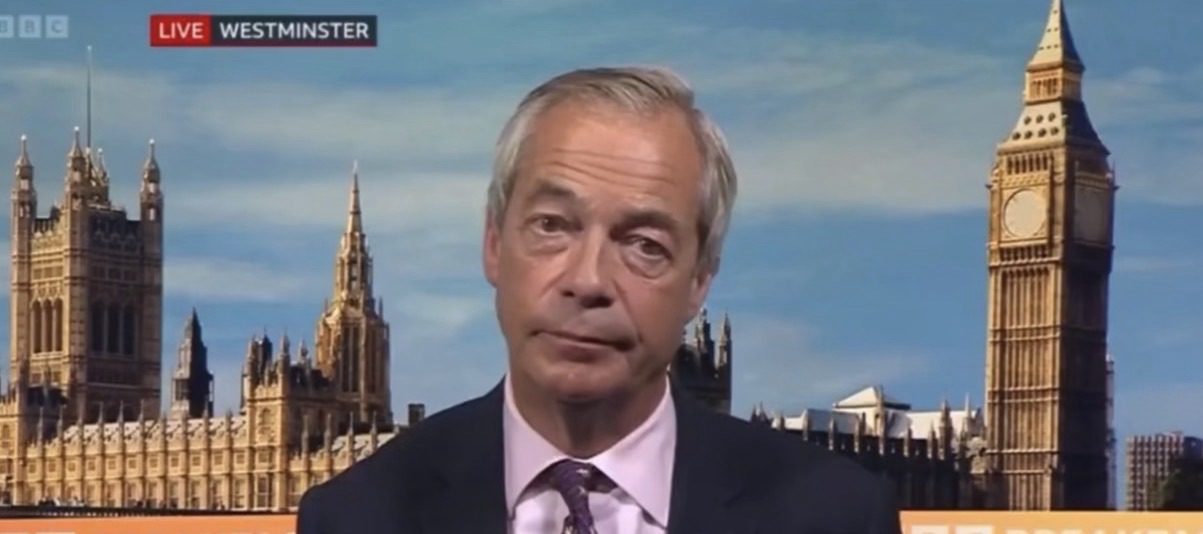

It is often said that a week is a long time in politics, but for Nigel Farage, the timeline of consistency is apparently measured in minutes.
Following a bruising electoral defeat in Makerfield, Farage took to the airwaves to handle a few burning questions regarding a staggering £5 million gift from a cryptocurrency billionaire. What followed wasn’t a masterclass in political defense, but rather a masterclass in shifting goals, moving goalposts, and reinventing the very nature of a multi-million-pound payout on the fly.
The Evolution of a Gift: From “Unconditional” to “Ultra-Specific”
When initially pressed on the true nature of the £5 million, Farage was quick to establish that the money was entirely his to play with. In fact, he claimed complete autonomy over the windfall, throwing out a rather vivid picture of personal luxury:
“Let’s be clear. It’s an unconditional gift, I can spend it on cars if I want to, it’s entirely up to me, right?”
But freedom of choice apparently lacks the gravitas required for a public official under scrutiny. Sensing that a “free sports car fund” might not resonate beautifully with voters, Farage immediately pivoted to a completely different, remarkably noble justification. Within the same breath, the “unconditional gift” magically transformed into an essential lifetime protection fund:
“But there is a specific reason for this. I have been physically the most attacked and endangered politician in Britain for now well over a decade… I know because of division in politics that I will need protection until the day that I die. And that is my intention, that’s what it’s for.”So, which is it? A personal fortune to burn on a garage full of supercars, or a critical security shield necessitated by a decades-long threat? By trying to have it both ways, Farage exposes the inherent contradiction at the heart of his defense. The moment money is declared a crucial fund for personal survival, it ceases to just be a casual plaything—and it certainly ceases to be “none of our business.”
The Accountability Deficit
The true crux of the issue isn’t just how Farage plans to use the money; it’s his aggressive refusal to be accountable for it. When asked a perfectly logical follow-up question—if this money is strictly for your personal safety, how much of it have you actually spent on security?—the drawbridge was promptly hauled up.
Farage’s defense mechanism was to resort to a classic tactic of deflection: comparing a £5 million political donation from a tech magnate to a normal citizen buying a pint of beer or filling up their car with petrol.
“How much of your salary do you spend on beer? On petrol? It’s none of your business,” he fired back at the interviewer.
But here lies the fundamental flaw in his logic. The salary of a journalist or the weekly budget of a worker in a Makerfield pub is not subject to the scrutiny of the Parliamentary Standards Committee. A massive, previously undeclared injection of cash into the pocket of a prominent political figure absolutely is.Conclusion: A Failure to Account
By stonewalling questions, retreating behind a wall of “willful” silence, and lashing out at public interest, Farage demonstrates a profound failure to be accountable to the very public he seeks to represent.
You cannot claim to be a champion of the ordinary “man and woman in the pub” while simultaneously sitting on a hidden crypto-fortune that you refuse to explain. When politicians decide that transparency is optional and that standard rules of oversight don’t apply to them, it isn’t just a failure of a single interview—it is a fundamental failure of public duty.
 Centre for Nigeria Progress
The article argues that transparency and accountability are essential in public life. When explanations about significant political donations appear inconsistent, it is reasonable for the public to seek clear answers and expect openness from elected leaders.
LikeLiked by 1 person