

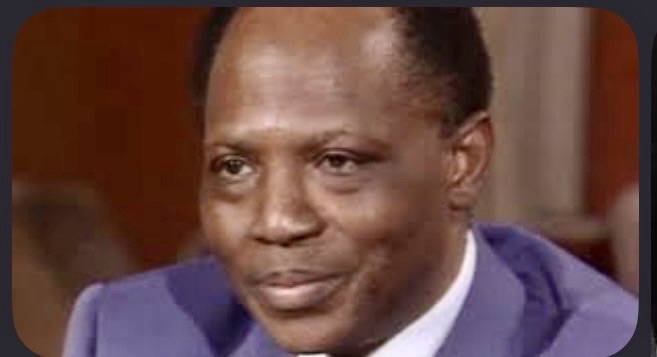

In the turbulent theatre of Nigeria’s Second Republic, few names inspired as much fear, loyalty, controversy, and political mythology as Umaru Dikko. To his admirers, he was a brilliant political organiser and indispensable power broker. To his enemies, he symbolised the excesses, patronage politics, and authoritarian instincts of the civilian government that collapsed in 1983.
Yet decades after the soldiers overthrew the Second Republic, Umaru Dikko remains one of the most misunderstood political figures in Nigerian history. He was not merely a minister accused of corruption. He was the architect of a political machine, a northern establishment tactician, and one of the men who helped define how power would be contested in modern Nigeria.
Understanding Umaru Dikko requires understanding the antecedents that produced him: colonial northern politics, the legacy of the First Republic, military intervention, and the emergence of political godfatherism as a survival mechanism in Nigerian democracy.
The Northern Political Establishment After Independence
The roots of Umaru Dikko’s influence can be traced to the political order established in Northern Nigeria before independence.
After colonial amalgamation in 1914, the British governed Northern Nigeria largely through indirect rule, empowering emirs and conservative elites. This system produced a disciplined political hierarchy that valued loyalty, consensus among elites, and centralised control of power.
By the 1950s, the dominant northern political force became the Northern People’s Congress led by Ahmadu Bello, the Sardauna of Sokoto. Unlike the more ideological politics of the South, northern politics evolved around networks of patronage, regional solidarity, and elite management.
Young politicians who emerged from this system learned that political survival depended not merely on popularity, but on mastering relationships, alliances, and access to state resources.
Umaru Dikko was one of the sharpest students of that political culture.
From Civil Servant to Political Operator
Born in 1936 in Wamba, present-day Kaduna State, Umaru Dikko initially trained as an administrator and businessman. Unlike flamboyant populists, he projected the image of a quiet strategist operating behind the scenes.
He became politically active through northern political networks linked to the NPC establishment. However, the military coups of 1966 and the subsequent civil war interrupted the civilian political class and destroyed the First Republic order.
When General Olusegun Obasanjo initiated the transition to civilian rule in the late 1970s, many old political actors resurfaced under new banners.
The successor to the NPC tradition became the National Party of Nigeria (NPN), a party designed as a broad conservative coalition with strong northern foundations but national ambitions.
This was where Umaru Dikko became indispensable.
The Making of the NPN Political Machine
The NPN was not merely a political party. It was a coalition of regional elites, businessmen, traditional rulers, retired bureaucrats, and power brokers seeking to maintain national dominance after years of military rule.
At the centre of this machine stood Shehu Shagari as the acceptable national face of the party. But many observers believed the operational brain behind much of the NPN’s electoral machinery was Umaru Dikko.
Dikko understood something fundamental about Nigerian politics:
Elections in Nigeria were not won merely through ideology. They were won through organisation, patronage, logistics, elite bargaining, and control of political structures.
He became famous for his ability to mobilise delegates, neutralise opponents, distribute patronage, and maintain party discipline. In many ways, he pioneered the modern Nigerian concept of the “political fixer.”
Long before the era of today’s “godfathers,” Dikko had already perfected the mechanics of backstage political control.
Minister of Transport and the Politics of Patronage
When Shagari became president in 1979, Umaru Dikko was appointed Minister of Transport.
Transport ministries in postcolonial states were enormously powerful because they controlled ports, contracts, import licences, shipping arrangements, and infrastructure spending. In an import-dependent economy flush with oil money, this was political gold.
Nigeria during the oil boom years experienced massive state spending. Government contracts became instruments of political loyalty. Public offices became centres for distributing favours and consolidating networks.
Critics accused the Second Republic politicians of converting governance into patronage politics on an industrial scale. And no figure became more associated with that accusation than Umaru Dikko.
He became a symbol of what Nigerians called “settlement politics” — the idea that political support could be maintained through the distribution of state resources.
Whether fairly or unfairly, Dikko evolved into the public face of the NPN’s excesses.
The “Rice Armageddon” and Public Backlash
One of the most damaging controversies associated with Umaru Dikko was the rice import scandal of the early 1980s.
Nigeria’s oil boom had encouraged dependence on imports rather than domestic production. Massive rice importation became both an economic necessity and a lucrative political business.
The government’s import licensing regime created enormous opportunities for corruption allegations. Dikko was accused by critics of benefiting politically from import arrangements tied to rice distribution.
Although many allegations were never judicially proven, public perception hardened rapidly. To struggling Nigerians facing inflation, unemployment, and austerity after the oil boom collapsed, Umaru Dikko became the embodiment of elite extravagance.
The phrase “rice politics” entered Nigeria’s political vocabulary as shorthand for patronage-driven governance.
Ironically, many later governments would replicate similar patronage systems while condemning the Second Republic for inventing them.
The 1983 Election Crisis
The turning point came during the controversial 1983 general elections.
The NPN sought re-election aggressively. Opposition parties accused the government of widespread rigging, intimidation, and abuse of state power.
States like Ondo became flashpoints of violence after disputed results triggered unrest. Faith in democratic institutions collapsed rapidly.
Again, Umaru Dikko’s name surfaced repeatedly because he was perceived as one of the key enforcers of the ruling party’s political strategy.
To supporters, he was defending the mandate of the government.
To opponents, he represented electoral manipulation elevated into state policy.
The military would soon use this public anger as justification for intervention.
The Military Coup and the Demonisation of Dikko
On December 31, 1983, the military led by Muhammadu Buhari overthrew the Shagari government.
The coup leaders accused the civilian administration of corruption, indiscipline, and economic mismanagement.
Many Second Republic politicians were arrested and jailed.
But Umaru Dikko escaped abroad.
His escape elevated him from controversial politician into hunted political fugitive.
The Buhari regime considered him one of the most important symbols of the ousted order.
The Dikko Affair: Nigeria’s Most Infamous Kidnap Plot
In 1984 came one of the most extraordinary episodes in diplomatic history: the attempted kidnapping of Umaru Dikko in London.
Agents linked to the Nigerian government attempted to abduct him and transport him back to Nigeria inside a crate falsely labelled as diplomatic baggage.
British authorities intercepted the operation before the crate left the country.
The incident caused a massive diplomatic scandal between United Kingdom and Nigeria.
Suddenly, Umaru Dikko transformed from corrupt ex-minister into an international political figure at the centre of a Cold War-style espionage scandal.
Ironically, the kidnapping attempt unintentionally rehabilitated parts of his image. Some Nigerians who disliked him still considered the operation unlawful and embarrassing for Nigeria’s international reputation.
The “Dikko Affair” remains one of the most infamous intelligence failures in African political history.
Historical Legacy: Villain or Political Genius?
History has treated Umaru Dikko with unusual complexity.
He is often remembered narrowly as a symbol of corruption. But that interpretation alone is incomplete.
His real historical significance lies in how he shaped the mechanics of Nigerian political power:
- He helped institutionalise modern patronage politics.
- He demonstrated the importance of political organisation over ideology.
- He pioneered elite coalition management on a national scale.
- He exposed how state resources could become instruments of political dominance.
- He became one of the earliest examples of the “godfather politician” later replicated across Nigeria.
Many techniques associated with contemporary Nigerian politics — delegate control, elite consensus-building, patronage networks, and backstage power brokering — were refined during the Dikko era.
In many ways, modern Nigerian politics still operates within structures built during the Second Republic.
The Tragedy of the Second Republic
The tragedy of the Second Republic was not merely corruption.
It was that Nigeria attempted Westminster-style democracy without building strong democratic institutions capable of restraining political excess.
The system became personality-driven, patronage-heavy, and dependent on oil revenue.
Umaru Dikko did not create those weaknesses alone. He merely mastered them better than most of his contemporaries.
That is why he remains historically important.
Not because he was uniquely corrupt.
But because he understood earlier than others that in Nigeria, political power often belonged not to the loudest speaker, but to the man controlling the structure behind the curtain.
And few controlled the curtain better than Umaru Dikko.

